How to QA AI Generated Code at Scale with Deep Agent
TL;DR
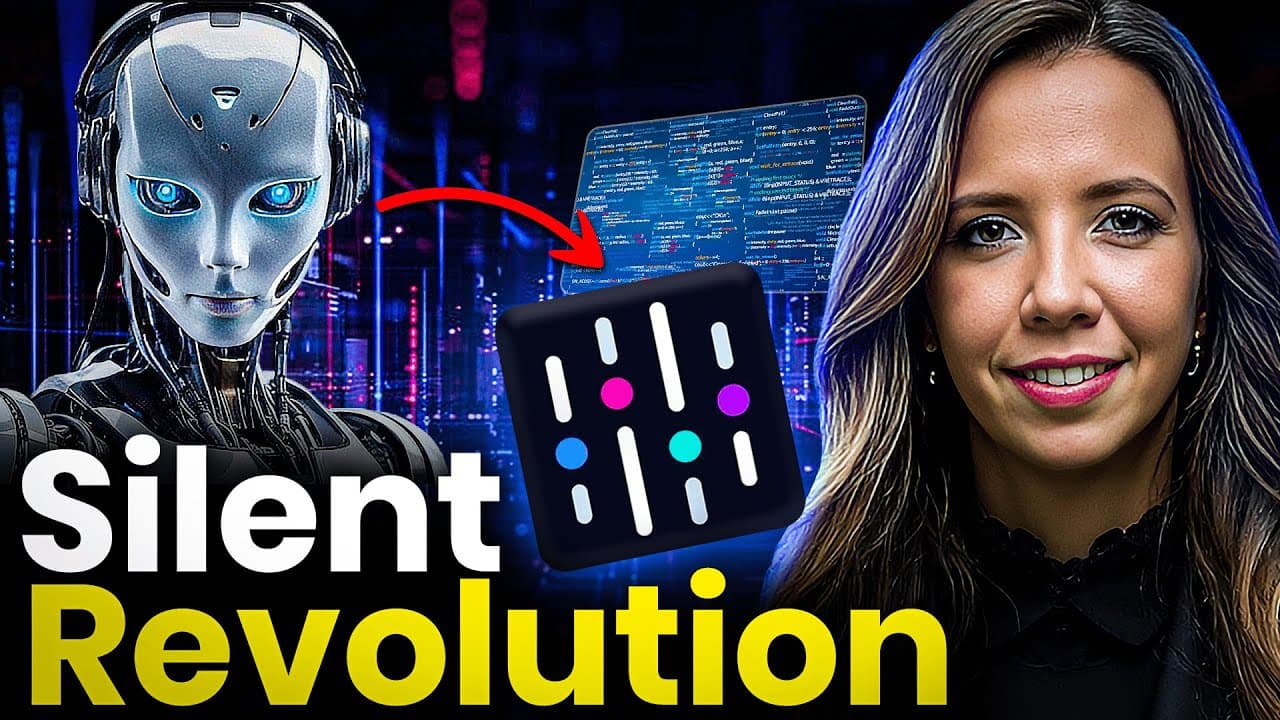
AI coding is fast but QA is the bottleneck. Deep Agent automates QA thinking, expanding coverage and testing edge cases while letting humans focus on sign-off. By 2025, teams will be hybrid humans and AI, shipping daily with confidence as trust scales with speed in development.
Transcript
Right now, something unprecedented is happening. AI can write code faster than humans ever could. We crossed that threshold months ago. But here's what nobody's telling you. [music] When code becomes instant, there's one thing that doesn't scale with it. Quality assurance. And that single bottleneck is about to cost companies everything. I've spent... Read More
Key Insights
- AI can write code faster than humans but quality assurance remains a bottleneck that does not scale.
- Deep Agent is not just a test tool; it automates QA thinking, proposing what to test and why.
- QA coverage expands to high risk areas, edge cases, and user behavior automatically with Deep Agent.
- Automated QA becomes a complete workflow, enabling testing from multiple perspectives such as admin, power user, and customer journeys.
- Quality surface includes any user touching feature surfaces like landing pages and onboarding, not just in product features.
- The goal is not replacing QA teams but giving them superpowers through AI driven QA.
- By end of 2025, every software company will have hybrid teams combining humans and AI.
- Trust and speed become the core pillars of modern software development and competition favors those who solve trust at scale.
Install to Summarize YouTube Videos and Get Transcripts
Explore YouTube Video Summarizer or Get YouTube Transcript Extractor
Questions & Answers
Q: What problem does AI create when code is written faster than before?
The problem is that quality assurance does not scale with AI generated code. Even as development velocity explodes, traditional QA cannot keep pace with daily releases, risking more bugs reaching customers and eroding trust. This gap is described as a velocity and trust mismatch that must be addressed.
Q: What is Deep Agent designed to do differently from other testing tools?
Deep Agent is designed to automate QA thinking, not just run test scripts. It takes feature requirements or notes and proposes what to test and why, expands coverage where risk is highest, runs structured checks, and performs exploratory testing until there is real confidence.
Q: How does Deep Agent affect different roles within a software team?
Deep Agent shifts the QA role to a more strategic position by testing from multiple angles such as admin, power user, and edge case perspectives. It behaves as if the QA engineer is thinking like several users at once, protecting outcomes and building trust at scale.
Q: What surfaces beyond the product are affected by QA, according to the video?
QA must cover all surfaces that touch users, including landing pages, onboarding flows, pricing pages, and lead forms. Any broken flow on these surfaces can affect growth, so Deep Agent applies rigorous testing there as well as inside the product.
Q: What is the expected industry shift by the end of 2025 regarding QA and AI?
By the end of 2025, the expectation is that every software company will have hybrid teams with humans and AI working together. The focus will be on who moves first to integrate AI into QA and development, not on whether it happens.
Q: What is the central claim about AI and QA in relation to trust and speed?
The central claim is that AI can write code instantly while trust must also be instant. Automated QA at scale is the way to keep pace with automated programming, ensuring that speed does not come at the cost of reliability and customer trust.
Q: What is the practical outcome for teams using Deep Agent according to the video?
Teams using Deep Agent can ship faster with confidence because QA becomes a complete workflow that scales with development velocity. This enables daily releases without sacrificing quality, creating a sustainable model where trust and speed reinforce each other.
Q: Why is the concept of automated QA described as a competitive advantage?
Automated QA at scale creates a reliability moat by ensuring that rapid code changes are thoroughly vetted. Companies that solve trust at scale can ship daily with confidence, while those that lag risk irrelevance in a fast moving AI driven software landscape.
Summary & Key Takeaways
-
QA bottlenecks emerge as AI writes code faster, requiring a shift in testing from scripts to reasoning.
-
Deep Agent automates QA thinking and structured checks, then performs exploratory testing to cover edge cases.
-
By 2025, software teams will rely on hybrid human AI QA to sustain rapid, trustworthy software delivery.
Read in Other Languages (beta)
Share This Summary 📚
Summarize YouTube Videos and Get Video Transcripts with 1-Click
Try YouTube Summary with ChatGPT & Claude or YouTube Transcript Generator
Explore More Summaries from Julia McCoy 📚



Summarize YouTube Videos and Get Video Transcripts with 1-Click
Try YouTube Summary with ChatGPT & Claude or YouTube Transcript Generator