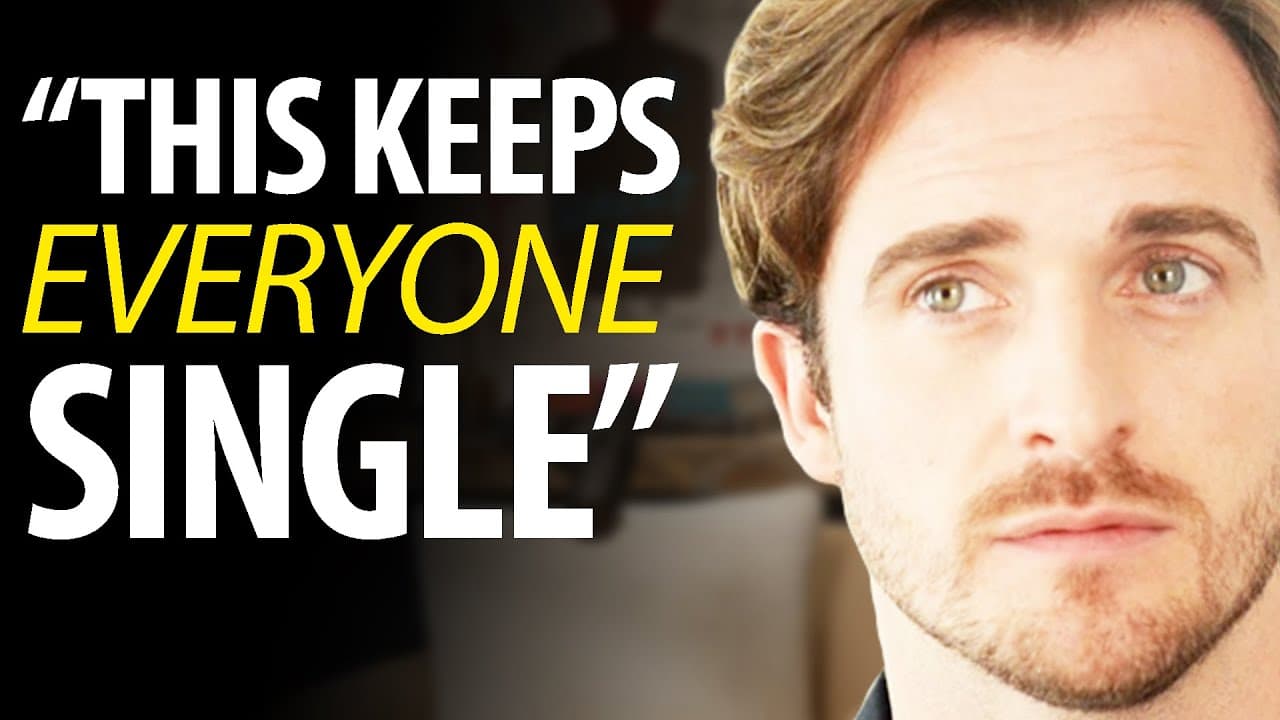
This KEEPS 90% Of People Single! (BIGGEST DATING MISTAKES) | Matthew Hussey & Jay Shetty
TL;DR
People fall in love too fast because they turn a few impressive dates into a fantasy about an entire relationship before truly knowing the person. Matthew Hussey says early charm may reflect a desire to impress rather than connect, while partner quality emerges through consistency over weeks, months, sickness, and anxiety. Read on to learn how mindful dating, better values, and a realistic view of ghosting can prevent this mistake.
Transcript
if you are getting crazy nervous on a date you're already that's already a reflection of the fact that you've valued the wrong things one of the biggest problems is people falling for people really quickly yes falling in love too fast where it's because they went on a couple of great dates with a guy and they can look at the date and go he was amaz... Read More
Key Insights
- Falling in love too fast is one of the biggest dating problems because people build a fantasy of a person after only a few great dates, extrapolating 95 percent of who someone is from the 5 percent they have actually seen.
- Nervousness on a date reflects valuing the wrong things. If you value looks, status, or perception you can be nervous, but if you value how a person connects with, relates to, and gives to you, that nervousness disappears.
- A narcissistic streak in early dating is the desire to impress rather than connect. Everyone has it to some degree, and a great date may be about the feeling someone wants you to have, not genuinely about you.
- You cannot know a partner's real quality until later stages. A person who is great in week eight but ghosts you in week nine simply had eight good weeks in them, not sixteen.
- Mindful dating means being on the date you are on, not date two or date thirty-two in your imagination. When your mind constructs the future, you are living off fantasy rather than the reality in front of you.
- Heartbreak is the loss of the imagined future life you thought you would have with someone. You end up grieving a fantasy your mind scripted, obsessing over what a person could have been rather than what they actually were.
- The Talented Mr. Ripley illustrates charming people: when Dickie's attention shines on you it is like the sun, but when it moves on it is very cold. Many charming people lose their shine and prove flaky over time.
- The poet versus poetry distinction is key: many people are charming poets on a date, but poetry is the actual relationship. Poets are a dime a dozen while people willing to write the poetry over years are rare and worth valuing far more.
Install to Summarize YouTube Videos and Get Transcripts
Explore YouTube Video Summarizer or Get YouTube Transcript Extractor
Questions & Answers
Q: Why do people fall in love too fast when dating?
People often treat a couple of great dates as proof that someone is an amazing partner, even though they still know very little about that person. Their minds then write a future relationship, including decades of imagined life, before the second date is over. They fall for that fantasy rather than the limited reality they have observed.
Q: Why do I get so nervous on dates?
Matthew Hussey says intense nervousness can mean you are overvaluing someone’s looks, status, or the person you perceive them to be. Instead, value how they give, connect with you, relate to you, and see you. Those qualities reveal what the person is like in relation to you and reduce the importance of surface traits.
Q: Can a great first date prove someone will be a good partner?
No; an amazing date may show that someone can create a powerful impression, but it does not establish their quality as a partner. The experience may be driven by what they want you to feel by the end of the date rather than genuine connection. You need time, such as week four or month three, to observe more of who they are.
Q: What is the difference between impressing and connecting in early dating?
The desire to impress focuses on producing a particular reaction, such as making the other person think the date was amazing. Connecting is about how someone gives, relates to you, and sees you. Hussey describes the early desire to impress as a narcissistic streak that people can exhibit without being diagnosable narcissists.
Q: What is mindful dating?
Mindful dating means being mentally present on the date you are actually having. If your body is on date two while your mind is already on date thirty-two, you begin constructing fantasies about the person and the relationship. Staying present keeps your judgment grounded in what is happening now.
Q: Does being ghosted give you closure?
Hussey says the act of ghosting is itself closure. Someone who was great through week eight but disappeared in week nine showed that they had eight good weeks in them; their earlier behavior does not prove they would still have been great in week sixteen. Their final action is part of the evidence about who they are as a partner.
Q: Why does heartbreak involve grieving an imagined future?
Heartbreak is partly the loss of the life you thought you would have with someone. After a breakup, you may obsess over what the person or relationship could have been, even though that future never happened. Hussey describes the belief that it should have happened as fantasy rather than the reality in front of you.
Q: What does the poet-versus-poetry analogy mean in dating?
A charming person on a date is the poet, while the relationship built over time is the poetry. Poets are described as a dime a dozen, but people willing to keep writing the relationship for one, two, five, or ten years are rare. The analogy encourages valuing sustained partnership more than early charm.
Summary
In this video, the speaker discusses the pitfalls and misconceptions of dating and falling in love too quickly. They emphasize the importance of valuing the right things in a relationship and how early nerves can be a reflection of valuing the wrong things. They also discuss the need for intentional dating, creating a culture of connection, and the importance of being honest and vulnerable in relationships. The speaker also touches on the concepts of idiot compassion and wise compassion, and the significance of listening and allowing others to hear themselves.
Questions & Answers
Q: What are some reasons why people fall in love too quickly?
One of the biggest problems is people falling for people too quickly because they value the wrong things. They may have had a couple of great dates and become infatuated with the person's appearance, status, or other superficial qualities without truly knowing them. We often fall into the trap of impressing rather than connecting with someone, which can lead to misguided feelings of love early on.
Q: How can early nerves be a reflection of valuing the wrong things in a relationship?
If you are getting crazy nervous on a date, it's likely that you are valuing the wrong things in that interaction. Nervousness often arises when we are overly concerned with someone's looks, status, or what they can offer us. True value in a relationship comes from deeper connections, understanding, and mutual support. When we focus on the right things, such as how much the person gives, connects, and relates to us, we can eliminate early nerves and build stronger relationships.
Q: How can we create a culture of connection in dating?
We often find ourselves part of a culture that promotes superficiality and selfishness in dating. However, we have the power to create our own culture. By being intentional in our dating and focusing on true connections rather than games or superficial qualities, we can influence the dating environment around us. When we bring positive energy, compassion, and authenticity to our interactions, we attract and bring out the best in others. This helps us find genuine connections and build healthier relationships.
Q: What are the signs of a healthy relationship early on?
In the early stages, it's important to look for a person who genuinely seeks to understand you and shows compassion. Pay attention to how they react to vulnerability, conflicts, or honest conversations about the relationship itself. Do they judge or show curiosity? Are they willing to apologize and work on themselves? Healthy relationships involve both partners being a team that supports and understands each other, even through difficult moments. It's also crucial to assess how someone argues, as productive and rebuilding arguments are key to a healthy relationship.
Q: How can we navigate the fear of rejection in dating?
The fear of rejection often leads us to stay in stagnant or unfulfilling relationships. However, it's important to remember that rejection is a natural part of dating, and we shouldn't let it paralyze us. When approaching dating, we should give an amount of energy we're willing to lose. By taking risks, being open, and showing our true selves, we attract people on a similar wavelength and discover genuine connections. Rather than fearing rejection, we should focus on finding people who reciprocate our energy and value us for who we are.
Q: What is the difference between idiot compassion and wise compassion?
Idiot compassion involves enabling or avoiding tough conversations to maintain false harmony. It's when we don't address or challenge problematic behavior in others, whether out of fear or discomfort. Wise compassion, on the other hand, entails holding up a clear mirror to help someone see themselves and navigate through life more effectively. It means being able to listen and offer support without fixing or ignoring the truth. Wise compassion is about fostering growth and understanding, even if it means discomfort or facing difficult revelations.
Q: How can we create space for meaningful conversations and honest sharing in relationships?
We often tend to focus on sharing problems or negative experiences, but it's important to create a balance in our conversations. Choosing the right audience is crucial, as not everyone is willing to truly listen and offer support. It's also essential to develop the art of deep listening, where we allow the other person to hear themselves by providing a safe space for vulnerability. This involves resisting the urge to immediately problem-solve and instead offering empathy, understanding, and compassion.
Q: Why do we sometimes struggle to be honest with others while expecting honesty from them?
There's a dichotomy between our online presence, where we often share only positive aspects of our lives, and our in-person interactions, where we tend to focus on problems and complain. However, we need to be aware of how we communicate with others and whether we are truly listening. Sometimes, we demand honesty from others but struggle to provide it ourselves. It's important to examine our own motivations and be willing to listen and share honestly, creating a balance in our relationships.
Q: How can we shift the conversation from problem-driven to positive in our interactions?
Choosing the right audience and being intentional in our conversations are key components in shifting the narrative. Often, we use our friendships to unload problems without truly listening to others. However, becoming better listeners and creating space for positive conversations allows for mutual growth and understanding. We can choose to focus on sharing positive experiences, aspirations, and gratitude, which not only strengthens our relationships but also fosters a more positive mindset.
Q: How can we choose healthier patterns and relationships?
We must recognize the choices we make that contribute to repeating unhealthy patterns. This involves taking responsibility and being aware of our own role in creating unhappiness or discomfort. Therapy can be helpful in understanding these patterns and making conscious choices to break them. It's essential to also recognize that it's okay for others to not forgive or accept us. Sometimes, we need to focus on forgiving ourselves and making the necessary changes to create healthier relationships and a happier life.
Takeaways
Creating meaningful connections and building healthy relationships require us to value the right things and be intentional in our interactions. Nervousness and early nerves often stem from valuing superficial qualities, whereas focusing on deeper connections eliminates early nerves. We have the power to create our own culture of connection, promoting authenticity, compassion, and positive energy in dating and relationships. Healthy relationships involve genuine understanding, effective communication, and the ability to navigate conflicts. It's important to listen, be honest, and create space for vulnerability in our conversations. Recognizing the difference between idiot compassion and wise compassion helps us offer genuine support and encourage growth in others. By taking responsibility for our choices, embracing vulnerability, and choosing healthier patterns and relationships, we can create a happier and more fulfilling life.
Summary & Key Takeaways
-
One of the biggest dating problems is falling for people too quickly after a couple of great dates. A person may deliver an amazing date, but that performance can be about the feeling they want you to have by the end, not genuinely about you. You still know nothing yet.
-
Nervousness in early dating reveals you are valuing the wrong things, like looks, status, or your perception of someone, rather than how they give, connect, relate to, and see you. Valuing the right things eliminates early nerves because those surface qualities become worth zero.
-
Real partner quality only shows over time, through sickness, anxiety, and later relationship stages. Charming people can lose their shine and prove flaky. The relationship itself is the poetry, and people willing to write it over years are rare and deserve to be valued more than charming poets.
Read in Other Languages (beta)
Share This Summary 📚
Summarize YouTube Videos and Get Video Transcripts with 1-Click
Try YouTube Summary with ChatGPT & Claude or YouTube Transcript Generator
Explore More Summaries from Dating, Relationships & Love 📚





Summarize YouTube Videos and Get Video Transcripts with 1-Click
Try YouTube Summary with ChatGPT & Claude or YouTube Transcript Generator