How Does Python Work and How Should You Learn It?
TL;DR
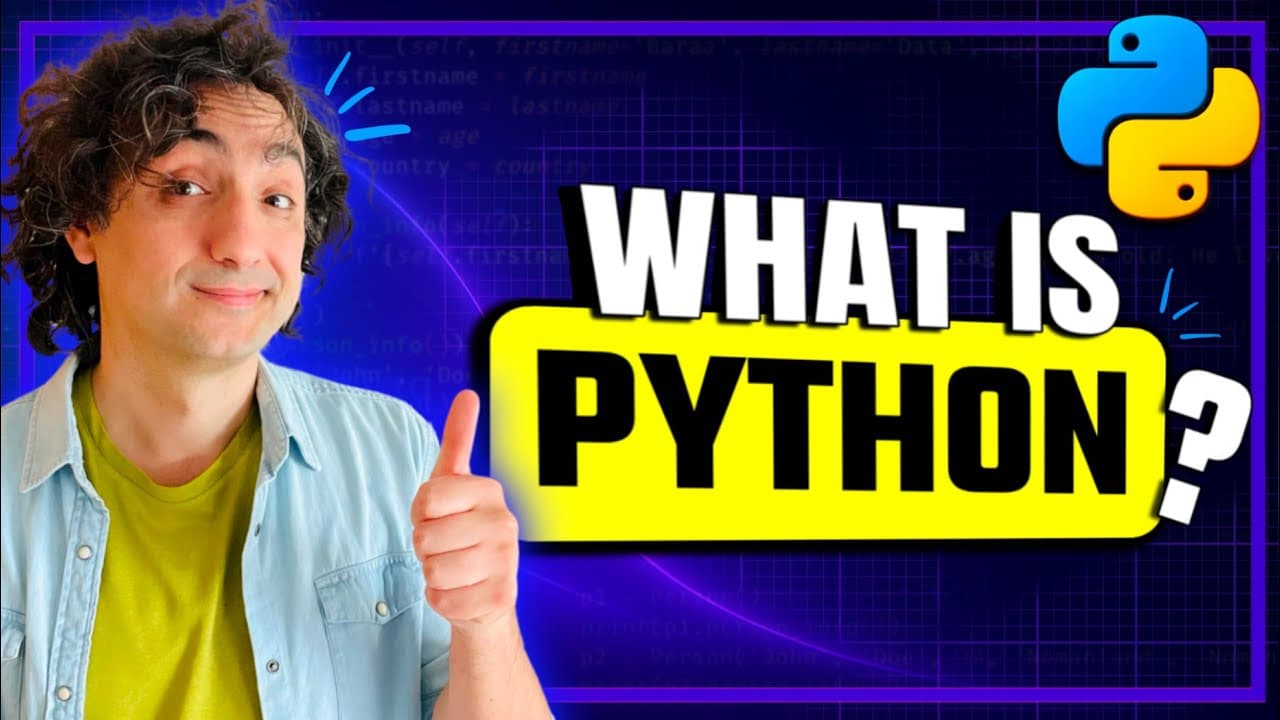
Python lets people give computers readable instructions, then automatically compiles that source code into bytecode and runs it through the Python virtual machine. Begin with syntax, variables, data types, control flow, and functions, continue through exceptions, object-oriented programming, modules, files, APIs, testing, and web scraping, then specialize in a path aligned with your interests and career goals.
Transcript
Hey friends, so what is Python? Okay, so now let's start with basics. What is programming language? So now imagine that you want to give your computer a task and you say, "Hey computer, calculate 5 + 5." Well, your computer will not understand what is exactly are talking about and nothing going to happen. So we cannot use the natural human language... Read More
Key Insights
- A program is a set of instructions written in a language that a computer can follow. Natural human language is too complex for direct computer execution, so programming languages provide a structured way to express tasks, such as calculating a value and displaying the result.
- Python is a high-level language that stays closer to human thinking than machine language. Its simplified and logical syntax hides much of the complexity found at lower levels, making programs easier for people to read, write, understand, and learn.
- Machine language is composed of binary code using ones and zeros, which is what a computer can directly understand. Moving downward through language levels brings instructions closer to machine thinking, while moving upward brings them closer to natural human expression.
- Python execution is an automated process that begins with source code in a .py file. Python compiles that code into bytecode, can connect it with useful libraries, and passes the bytecode to the Python virtual machine for execution on the computer.
- The Python interpreter is the collection of processes and tools that compile, translate, and execute Python code. It manages the behind-the-scenes journey from readable high-level instructions to bytecode and finally to the machine code required by the computer.
- Python is useful across websites, task automation, data work, games, robotics, artificial intelligence, and machine learning. Its broad range of applications allows learners to build a common programming foundation before deciding which technical direction best matches their interests.
- The Python community is a source of tutorials, blog posts, free libraries, and open-source GitHub projects. This shared material helps learners find explanations and existing solutions when they become stuck or encounter a complicated programming task.
- The recommended Python roadmap is to master a shared beginner, intermediate, and advanced core before specializing. Possible paths include data engineering, data science, artificial intelligence, machine learning, web development, and game development, with additional fields explored gradually after gaining expertise in one path.
Install to Summarize YouTube Videos and Get Transcripts
Explore YouTube Video Summarizer or Get YouTube Transcript Extractor
Questions & Answers
Q: What is Python and why is it considered a high-level language?
Python is a programming language used to write structured instructions that computers can ultimately execute. It is considered high level because its syntax is closer to natural human expression than to machine language. Python hides much of the complexity of low-level instructions and binary code, which makes programs simpler to read, write, understand, and learn.
Q: How does Python code run behind the scenes?
Python code is usually written as source code in a file with the .py extension. When the program runs, Python compiles the source into bytecode, may link that bytecode with prewritten libraries, and sends it to the Python virtual machine. The virtual machine then runs the instructions as machine code that the computer can understand.
Q: What is Python bytecode and why is it created?
Python bytecode is a lower-level translation of readable Python source code, associated in the explanation with compiled .pyc files. It is created because a computer cannot immediately execute high-level Python instructions. The compiler performs this translation automatically, producing code that the Python virtual machine can understand and execute with any required libraries.
Q: What does the Python virtual machine do?
The Python virtual machine is software that understands Python bytecode and takes care of running it. After Python source code has been compiled and any needed libraries are available, the virtual machine processes those materials and converts the instructions into machine code made from ones and zeros, allowing the computer to produce the program's intended result.
Q: Why should beginners choose Python for programming?
Python combines simple, readable code with the ability to build serious applications using relatively few lines. It can be used for websites, automation, data work, games, robotics, artificial intelligence, and machine learning. Beginners also benefit from a large community that shares tutorials, blog posts, free libraries, open-source projects, and solutions to difficult programming tasks.
Q: What Python topics should a beginner study first?
A beginner should first learn how to write simple code, use variables, work with data types, control the flow of a program, and create functions. Functions help organize code into small, reusable blocks. These subjects form the common foundation needed by future data engineers, artificial intelligence developers, web developers, game developers, and other Python specialists.
Q: What should be studied after the Python fundamentals?
After the fundamentals, learners should study error and exception handling, object-oriented programming, modules, and file operations. Advanced learning can then cover connecting to APIs, collecting data from the internet, testing code, and scraping websites automatically. This stage should also include real projects and practical problem solving so programming skills become more professional and useful.
Q: How should you choose a Python specialization?
Choose a path that matches your interests and career goals after completing the shared Python core. Data engineering focuses on pipelines, automation, and moving data. Data science uses tools such as pandas, NumPy, and Plotly. Artificial intelligence and machine learning use PyTorch, Transformers, and TensorFlow, while web development can involve Flask, Django, and Requests.
Summary & Key Takeaways
-
Python is a high-level programming language designed to be simpler for people to read and write than low-level or machine languages. It acts as an abstraction over machine complexity, allowing instructions such as calculations to be expressed clearly while Python handles the automated translation needed for the computer to execute them.
-
Python source code is commonly written in files with the .py extension. When it runs, Python compiles the code into bytecode, may connect it with prewritten libraries, and uses the Python virtual machine to execute it as machine code. These compilation, translation, and execution tools collectively form the Python interpreter.
-
A structured learning path starts with code fundamentals, variables, data types, control flow, and functions. Intermediate study adds exceptions, object-oriented programming, modules, and files, while advanced work introduces APIs, testing, web scraping, projects, and practical problems. After mastering this shared core, learners should choose one specialization and expand gradually.
Read in Other Languages (beta)
Share This Summary 📚
Summarize YouTube Videos and Get Video Transcripts with 1-Click
Try YouTube Summary with ChatGPT & Claude or YouTube Transcript Generator
Explore More Summaries from Data with Baraa 📚

Summarize YouTube Videos and Get Video Transcripts with 1-Click
Try YouTube Summary with ChatGPT & Claude or YouTube Transcript Generator