What Are the Biggest Unanswered Philosophical Questions?
TL;DR
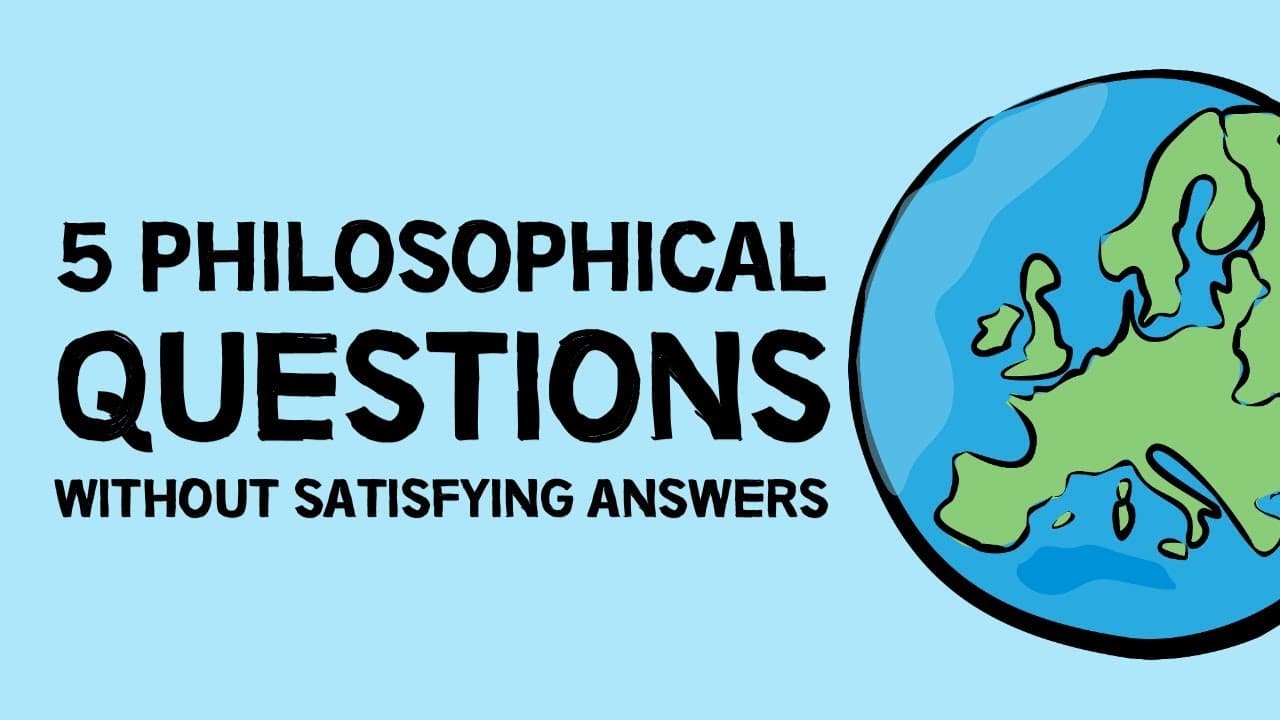
Five major philosophical questions lack satisfying answers: the existence of God remains debated without definitive proof; free will is questioned amidst predetermined paths and subconscious decision-making; the purpose of human existence varies across cultures; the definitions of good and evil are subjective; and beliefs about the afterlife range from religious concepts to cyclical reincarnation.
Transcript
some questions have been keeping humanity busy since the dawn of time moreover complete civilizations and religions have been built around these questions no matter how much we have debated researched and observed there just doesn't seem to be a satisfying answer to these questions and it's unlikely that we'll get them anytime soon however we canno... Read More
Key Insights
- 🖤 The existence of God remains a topic of debate, with diverse beliefs and lack of definitive proof.
- 🥶 Free will's complexity involves predetermined paths, subconscious influences, and potential simulated realities.
- 🛟 Human existence's purpose varies from religious duties to embracing life's inherent absurdity.
- 😈 Defining good and evil is subjective, influenced by culture, personal beliefs, and philosophical frameworks.
- 🧡 The concept of an afterlife ranges from religious paradises to cyclical reincarnation or the possibility of reaching Nirvana.
Install to Summarize YouTube Videos and Get Transcripts
Explore YouTube Video Summarizer or Get YouTube Transcript Extractor
Questions & Answers
Q: Does God exist, and can we prove it?
The existence of God remains a contentious topic with atheists, agnostics, and theists presenting conflicting arguments. While holy books and unexplained events support belief, concrete proof remains elusive.
Q: Do humans possess free will?
The concept of free will is intricate, with factors like predetermined paths, subconscious decision-making, and potential simulated realities influencing our choices. Scientific studies even suggest our conscious minds may not govern decisions.
Q: What is the purpose of human existence?
Different religions and philosophies propose varying reasons for human existence, from serving a divine purpose to embracing life's absurdity. The quest for meaning continues, with interpretations ranging from spiritual enlightenment to nihilistic acceptance.
Q: How do we define good and evil?
The distinction between good and evil is subjective and often influenced by cultural norms and personal perspectives. Philosophical traditions offer frameworks like virtue ethics or the concept of natural flow to determine moral actions.
Summary & Key Takeaways
-
Does God exist? Atheists, agnostics, and theists provide varying perspectives without definitive proof.
-
Do we have free will? Complex interplay between predetermined paths, simulations, and subconscious decision-making.
-
Why are we here? Various religious and philosophical beliefs on the purpose of human existence.
Read in Other Languages (beta)
Share This Summary 📚
Summarize YouTube Videos and Get Video Transcripts with 1-Click
Try YouTube Summary with ChatGPT & Claude or YouTube Transcript Generator
Explore More Summaries from Einzelgänger 📚




Summarize YouTube Videos and Get Video Transcripts with 1-Click
Try YouTube Summary with ChatGPT & Claude or YouTube Transcript Generator