What Is Time and How Does It Affect Our Reality?
TL;DR
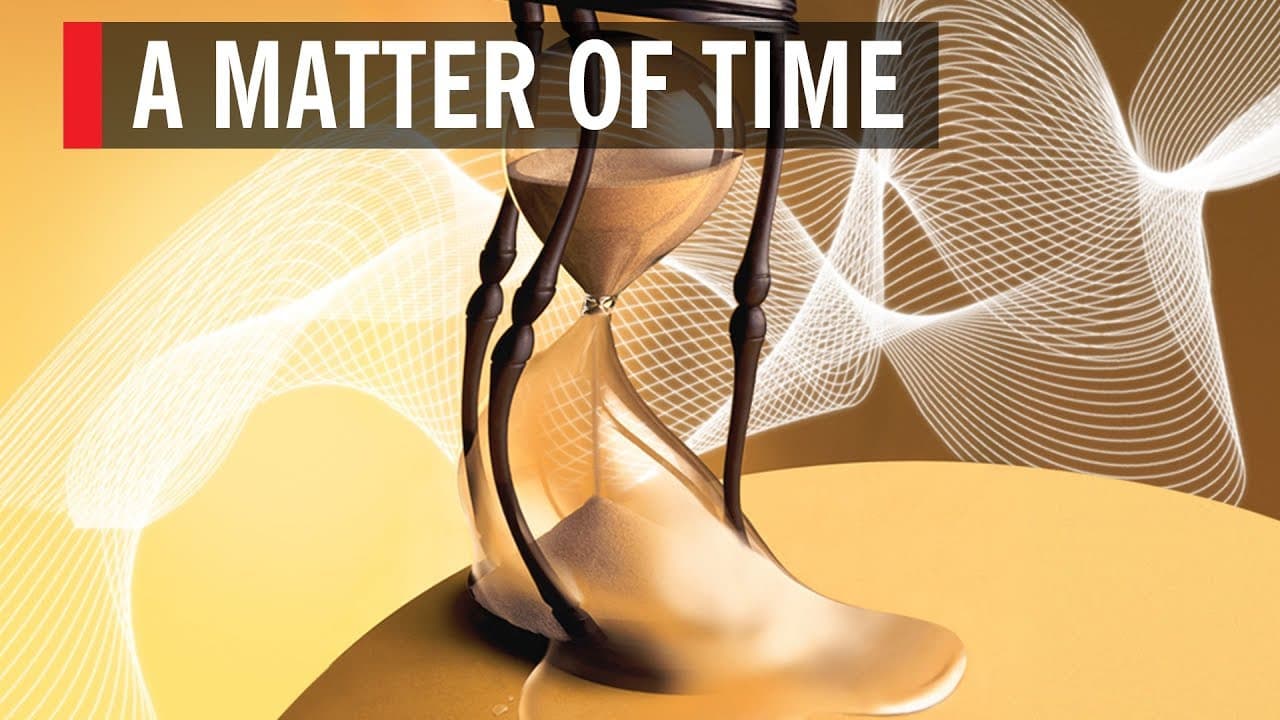
Time is not an absolute concept; it is influenced by factors like motion and gravity, as evidenced by Einstein's theory of relativity and experiments demonstrating time dilation. The origins of time are linked to the Big Bang, while its potential end may be marked by black hole singularities. Understanding time remains a complex challenge that intertwines physics and philosophy.
Transcript
tonight we're going to talk about the word you use most often during the day I think time well this speak New York and maybe the second most used word you used during the day uh but time is is universal think about all the times and I'm saying it again when you use the word time during the day I don't have the time what time is it you know do you h... Read More
Key Insights
- 🧑🔬 Time is a universal concept used in everyday life, studied by scientists and philosophers alike.
- 🧑🏭 Einstein's theory of relativity challenged traditional notions of time, showing that it is influenced by factors like motion and gravity.
- ⌛ Time dilation experiments and observations support the idea that time can move differently for objects in different states.
- ⁉️ The origin and end of time remain open questions, with theories suggesting the Big Bang as the beginning and events such as black hole collapse marking potential endpoints.
- ⏳ The perceived flow of time may be an illusion, as there is no physical measurement or evidence of time passing.
Install to Summarize YouTube Videos and Get Transcripts
Explore YouTube Video Summarizer or Get YouTube Transcript Extractor
Questions & Answers
Q: How does Einstein's theory of relativity contradict our everyday perception of time?
Einstein's theory shows that time is not an absolute concept but is instead influenced by factors like motion and gravity. This means that time can move differently for objects in different states of motion or experiencing different gravitational forces, which challenges our everyday experience of time as a linear and uniform progression.
Q: Can time travel to the future occur?
Yes, according to Einstein's theory of relativity, time travel to the future is possible by traveling at speeds close to the speed of light. The faster an object moves, the slower time passes for it relative to a stationary observer. This phenomenon, known as time dilation, would allow a person to experience less time passing compared to someone remaining still, effectively traveling to the future.
Q: What is the significance of the concept of "flow of time" in understanding time?
The perceived flow of time, or the sense of time passing, is a subjective experience that may not align with the objective nature of time. While we often think of time as flowing from the past through the present to the future, physics suggests that time is not something that moves or flows, but rather a dimension in which events occur. The perceived flow of time may be an illusion created by our brain's processing of information.
Q: Why do some scientists argue that time is an illusion?
Some scientists argue that the flow of time is an illusion because there is no physical measurement of the flow of time itself. Time can be measured in intervals, but the concept of time flowing or passing is subjective and not supported by physical evidence. The illusion of time may be a result of our brain's need to organize and make sense of our experiences in chronological order.
Summary & Key Takeaways
-
Time is a commonly used word in our daily lives, but its meaning and existence have been pondered by scientists, philosophers, and theologians across disciplines.
-
Einstein's theory of relativity challenged our understanding of time, showing that it is not absolute but instead influenced by factors such as motion and gravity.
-
Scientists have conducted experiments using atomic clocks and observed phenomena like time dilation to provide evidence for the relativity of time.
-
The origin and end of time remain open questions, with theories suggesting the Big Bang may be the beginning and events like the collapse of black holes could mark the end of time.
Read in Other Languages (beta)
Share This Summary 📚
Summarize YouTube Videos and Get Video Transcripts with 1-Click
Try YouTube Summary with ChatGPT & Claude or YouTube Transcript Generator
Explore More Summaries from World Science Festival 📚

Summarize YouTube Videos and Get Video Transcripts with 1-Click
Try YouTube Summary with ChatGPT & Claude or YouTube Transcript Generator