What Is the Difference Between Fiscal and Monetary Policy? | Fiscal Policy Q&A

TL;DR
Fiscal policy covers federal government spending and tax plans, while monetary policy is independently managed by the Federal Reserve through the money supply and its effects on short-term interest rates, inflation, and growth. The central challenge is supporting an economy still far from full employment while credibly reducing serious long-term debt tied partly to Medicare, Medicaid, and Social Security obligations. Read on to understand who controls each policy and how the competing goals might be balanced.
Transcript
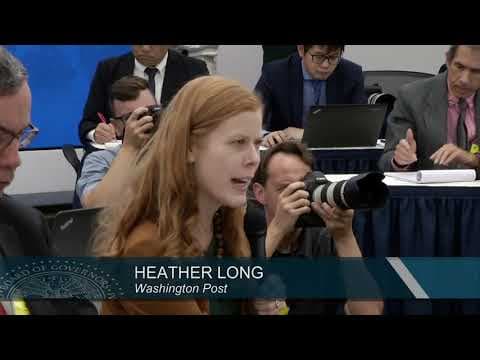
Go ahead. >> It's okay. >> Okay, [inaudible] measure help the economy and the feds monetary policies. >> So I first have to say that the Federal Reserve is nonpartisan so we have to be very careful not take one side or the other in terms of one fiscal issue or another. Before I try to jump into that for one moment let me just make sure that...ju... Read More
Key Insights
- ❓ The Federal Reserve manages monetary policy independently, while fiscal policy decisions are made by Congress and the administration.
- ❓ Understanding the difference between fiscal and monetary policy is crucial.
- 🍉 Balancing short-term economic support and long-term fiscal debt reduction is a challenge.
- 🍉 Reducing long-term debt can provide more flexibility for short-term economic measures.
- 🍉 The government is responsible for tackling long-term budget issues.
- 🤑 Managing the money supply and interest rates is the role of the Federal Reserve.
- 🍉 The desire to stimulate the economy conflicts with the need to address long-term fiscal debt.
Install to Summarize YouTube Videos and Get Transcripts
Explore YouTube Video Summarizer or Get YouTube Transcript Extractor
Questions & Answers
Q: What is the difference between fiscal and monetary policy?
Fiscal policy concerns the federal government's spending and tax plans. Monetary policy is independently made by the Federal Reserve, which manages the money supply and thereby affects short-term interest rates, inflation, and growth.
Q: Who is responsible for making fiscal policy decisions?
Congress and the administration make fiscal policy decisions about government spending and taxes. The Federal Reserve may advise them, but it has no authority over fiscal policy.
Q: What is the Federal Reserve's role in monetary policy?
The Federal Reserve independently manages monetary policy by managing the money supply. Its actions help affect short-term interest rates and therefore inflation, while also affecting economic growth.
Q: Why must the Federal Reserve be careful when discussing fiscal policy?
The Federal Reserve is nonpartisan, so it must avoid taking one side or another on fiscal issues. Fiscal policy belongs to Congress and the administration rather than the Federal Reserve.
Q: What short-term fiscal challenge does the economy face?
Although the economy is in a recovery, it remains far from full employment. That creates an incentive to provide additional support and to avoid spending cuts or tax increases that would harm the recovery.
Q: Why are long-term federal budget problems considered serious?
The long-term fiscal situation is pressured by an aging society and rising medical costs. Government obligations involving Medicare, Medicaid, Social Security, and other programs contribute to the long-term debt problem.
Q: How can long-term debt reduction create flexibility for short-term economic support?
A credible commitment to taking the steps necessary to reduce long-term debt could persuade the public that the country is serious about its budget problems. That credibility could create more space to use expansionary fiscal policy to support the current recovery.
Q: How should policymakers balance economic recovery with long-term debt reduction?
The suggested approach is to be more supportive in the short run while becoming more frugal over the long run. The challenge is finding credible ways to reduce long-term debt without undermining today's recovery.
Summary & Key Takeaways
-
The Federal Reserve is nonpartisan and manages the money supply, affecting short-term interest rates, inflation, and economic growth.
-
Fiscal policy refers to government spending and tax plans, which are determined by Congress and the administration.
-
Balancing short-term economic support and long-term fiscal debt reduction is a challenging task.
Read in Other Languages (beta)
Share This Summary 📚
Summarize YouTube Videos and Get Video Transcripts with 1-Click
Try YouTube Summary with ChatGPT & Claude or YouTube Transcript Generator
Explore More Summaries from Federal Reserve 📚


Summarize YouTube Videos and Get Video Transcripts with 1-Click
Try YouTube Summary with ChatGPT & Claude or YouTube Transcript Generator