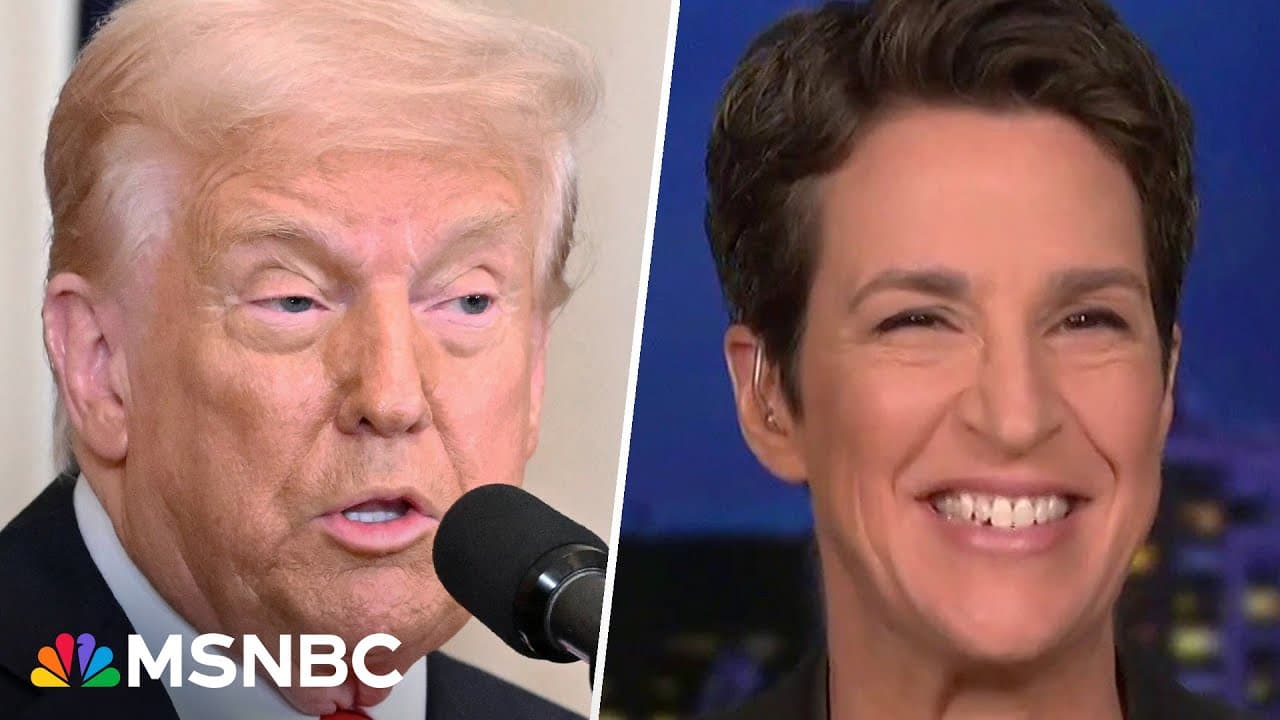
Maddow: Why Did the Trump Administration’s JFK Files Release Expose Private Data?
TL;DR
The JFK files release exposed private data because President Donald Trump ordered the documents published without any redactions, revealing information previously hidden for privacy. More than 60,000 pages were posted, including Social Security numbers, birth dates, and birthplaces, while many documents had already been released before. Read on to see who was affected, what officials reportedly knew, and how the administration responded.
Transcript
OR INSTEAD YOU. >> COULD HAVE. >> WHAT WE. >> HAVE. ON MONDAY. >> THIS. >> WEEK. PRESIDENT DONALD TRUMP WENT TO. >> THE KENNEDY. CENTER IN WASHINGTON. >> DC, WHERE HE HAS RECENTLY. >> FIRED THE ENTIRE BOARD. >> AND APPOINTED HIMSELF AS THE NEW CHAIRMAN. >> WHILE SKULKING AROUND THAT NATIONAL CULTURAL TREASURE ON MONDAY. WHERE HE NOW PERSONALLY I... Read More
Key Insights
- The records release contained more than 60,000 pages related to the investigation of President John F. Kennedy's 1963 assassination. Maddow says most of those documents had already been released under President Joe Biden or other presidents, limiting their value as new historical revelations.
- The removal of all redactions exposed personal identifiers that had previously been concealed. The revealed material included Social Security numbers, birth dates, and birthplaces belonging to people who had worked for the government or congressional investigative committees.
- More than 100 Senate Church Committee staff members and more than 100 House Select Committee on Assassinations staff members reportedly had Social Security numbers exposed. Maddow emphasizes that many of the affected former staff members were still alive when the records became publicly available.
- Joseph diGenova's personal information appeared in the unredacted records. The former Trump campaign lawyer, who had also represented Trump, called the disclosure outrageous, sloppy, and unprofessional, and described redacting such information as an elementary security rule.
- The White House reportedly started reviewing the files for exposed Social Security numbers on Wednesday, one day after publication. According to the account presented, the review therefore began only after hundreds of personal identifiers had already been made publicly accessible.
- Administration officials reportedly knew before publication that releasing the documents without redactions would expose some personal information. Maddow presents this detail as evidence that the disclosure was not merely an unforeseen technical mistake, but a predictable consequence of following the order literally.
- The administration's mitigation plan included directing the Social Security Administration to issue new Social Security numbers to affected individuals. Those people were also to receive free credit monitoring, although Maddow stresses the practical disruption of changing established identification records later in life.
- Maddow's central argument is that blind obedience can disable ordinary government safeguards. She portrays the episode as a failure of advisers and officials to challenge an impulsive directive, assess foreseeable privacy risks, or complete a protective review before making sensitive records public.
Install to Summarize YouTube Videos and Get Transcripts
Explore YouTube Video Summarizer or Get YouTube Transcript Extractor
Questions & Answers
Q: Why did the JFK files release expose private information?
President Donald Trump ordered all files related to the investigation released without redactions. Because earlier redactions had concealed Social Security numbers, birth dates, birthplaces, and other personal details, publishing the documents with nothing crossed out exposed that information.
Q: What private information appeared in the unredacted JFK records?
The records included full Social Security numbers, birth dates, and birthplaces. The information belonged to government workers, congressional committee staff members, Joseph diGenova, and other people, including individuals who were still alive.
Q: How many pages of JFK records did the National Archives publish?
The National Archives posted more than 60,000 pages online on Tuesday after Trump announced the release on Monday. The documents concerned the investigation of President John F. Kennedy’s 1963 assassination.
Q: Were the JFK documents newly released historical records?
Maddow says the documents were almost entirely records that had already been released under President Joe Biden or other presidents. The major difference was that the new release removed all redactions, exposing private information that earlier versions had concealed.
Q: How many congressional committee staff members had Social Security numbers exposed?
The release reportedly exposed Social Security numbers for more than 100 Senate Church Committee staff members. It also exposed more than 100 Social Security numbers belonging to staff members of the House Select Committee on Assassinations.
Q: Whose personal information was exposed in the JFK files?
Those affected included congressional committee staff members and other people who had worked for the government around the time the Kennedy assassination was investigated. Former Trump campaign lawyer Joseph diGenova, who had also represented Trump, was among the named individuals, and many affected committee staff members were reportedly still alive.
Q: Did administration officials know the release could expose private data?
According to reporting summarized in the existing page, administration officials knew before publication that an unredacted release would reveal some personal information. Maddow argues that officials nevertheless followed the directive without completing a protective review first.
Q: How did the administration respond after the personal data was published?
The White House reportedly began reviewing the records for exposed Social Security numbers on Wednesday, one day after publication. The administration also directed the Social Security Administration to issue replacement numbers and planned to provide affected people with free credit monitoring.
Summary & Key Takeaways
-
President Donald Trump announced on Monday that all remaining files related to the 1963 assassination of President John F. Kennedy would be released without redactions the following day. The National Archives subsequently posted more than 60,000 pages, most of which Maddow says had already appeared in earlier government releases.
-
Removing every redaction exposed information that earlier versions had concealed for privacy rather than historical secrecy. The published records contained Social Security numbers, birth dates, and birthplaces belonging to numerous government and congressional committee staff members, including former Trump campaign lawyer Joseph diGenova and people who were reportedly still alive.
-
The White House reportedly began searching the records for exposed personal information only after publication, despite officials knowing beforehand that an unredacted release would reveal some private data. Its response included replacement Social Security numbers and free credit monitoring, while Maddow argued that unquestioning obedience had overridden normal safeguards and deliberation.
Read in Other Languages (beta)
Share This Summary 📚
Summarize YouTube Videos and Get Video Transcripts with 1-Click
Try YouTube Summary with ChatGPT & Claude or YouTube Transcript Generator
Explore More Summaries from MS NOW 📚





Summarize YouTube Videos and Get Video Transcripts with 1-Click
Try YouTube Summary with ChatGPT & Claude or YouTube Transcript Generator