Scientist Thinks Mysterious Interstellar Object is Extraterrestrial
TL;DR
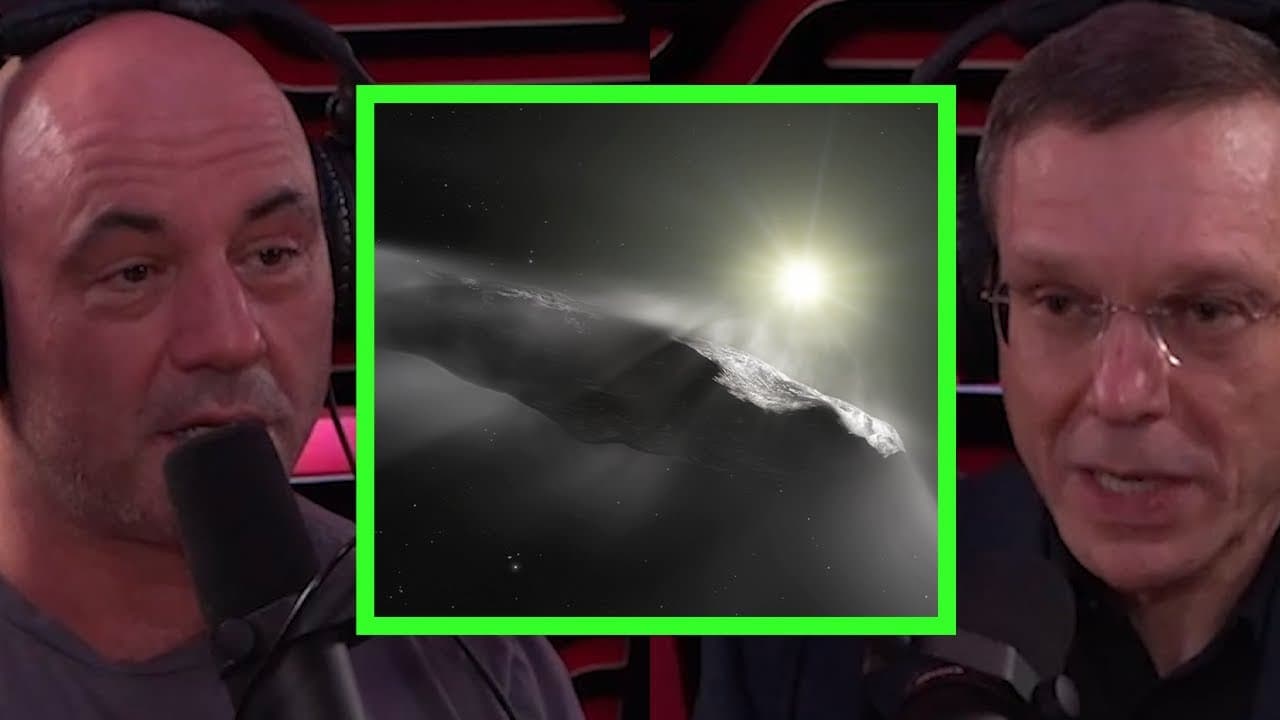
Oumuamua, the first interstellar object detected, may have artificial origins due to its peculiar properties, including an unexplained extra push away from the sun. It is hypothesized to be a thin, flat object resembling a light sail, reflecting sunlight for propulsion. This has sparked significant debate and resistance in the scientific community regarding the potential for extraterrestrial technology.
Transcript
the jurogan experience you came on my radar when uh you were discussing uh um that's the right thing which is an object that we detected in space that you believe could possibly have been extraterrestrial in origin meaning from some sort of a civilization right yeah why did you did what please explain to people what a muammuala is why it's so extra... Read More
Key Insights
- 🧑🔬 Oumuamua is the first interstellar object detected in the solar system, intriguing scientists with its unusual properties.
- 🖤 Anomalies like Oumuamua's lack of cometary features and extra push suggest it may be more than just a comet or asteroid.
- 🛰️ The controversy surrounding Oumuamua's potential artificial origin highlights the resistance to unconventional ideas in science.
- 🌚 Historical events like Galileo's persecution and Bruno's execution underscore the challenges faced by those proposing new astronomical concepts.
- 👾 Oumuamua's unique characteristics stimulate discussions about the possibility of extraterrestrial civilizations and technological artifacts in space.
- 👨🔬 Ongoing research and debates about Oumuamua showcase the dynamic nature of scientific inquiry and the importance of questioning established beliefs.
- 🙂 The analogy of a sail being pushed by light helps conceptualize how Oumuamua could be propelled through space without traditional forms of propulsion.
Install to Summarize YouTube Videos and Get Transcripts
Explore YouTube Video Summarizer or Get YouTube Transcript Extractor
Questions & Answers
Q: What makes Oumuamua unique compared to other celestial objects?
Oumuamua's anomalous behavior, like its lack of a cometary tail and extra push, sets it apart from typical comets and asteroids.
Q: Why did some scientists object to the idea that Oumuamua could be of extraterrestrial origin?
Some scientists were resistant to the idea due to the lack of concrete evidence and fear of deviating from established scientific norms.
Q: How does the concept of a light sail tie into the potential explanation for Oumuamua's behavior?
The theory suggests that Oumuamua could be propelled by sunlight reflecting off its surface, similar to how a light sail operates in space exploration.
Q: What historical examples were provided to illustrate the resistance to new astronomical ideas?
Examples like Galileo Galilei and Giordano Bruno demonstrate how new astronomical ideas have been met with skepticism and pushback throughout history.
Summary
In this video, the guest discusses the significance of an object called "Oumuamua" and why it may have originated from an intelligent civilization outside of our solar system. He explains that Oumuamua was the first interstellar object detected in our vicinity, and initially, astronomers thought it was a comet or asteroid. However, it lacked the typical characteristics of comets, such as a cometary tail. The object also exhibited an extra push away from the sun, even though there was no evidence of a cometary tail. Further analysis revealed that the object changed its brightness by a factor of 10, indicating an extreme geometry, most likely a flat object spinning around every eight hours. To explain these anomalies, the guest suggests that the object is a light sail, a thin object pushed by sunlight reflecting off its surface. The guest also mentions another recent object that showed a similar push without a cometary tail, which turned out to be a hollow structure from human origin. However, Oumuamua, due to its origin, speed, and unique properties, raises the possibility that it could belong to another civilization. The guest shares his surprise at the pushback from some colleagues who were upset about the suggestion of extraterrestrial origins, emphasizing that scientific exploration should embrace new discoveries and challenge our existing beliefs.
Questions & Answers
Q: What is Oumuamua, and why is it significant?
Oumuamua is an object that was discovered in 2017, and it is the first interstellar object that visited our solar system. Its significance lies in its extraordinary characteristics that do not match our existing understanding of comets or asteroids. These anomalies, such as the absence of a cometary tail and an extra push away from the sun, suggest that Oumuamua could possibly be of extraterrestrial origin.
Q: How do comets and asteroids differ?
Comets are rocks covered with ice, specifically water ice. When a comet gets close to the sun, the surface ice warms up and turns into gas, creating a cometary tail. On the other hand, asteroids are rocks without much ice. Comets usually come from the periphery of the solar system, and it was initially thought that Oumuamua could be a comet.
Q: What made Oumuamua different from typical comets?
Oumuamua did not exhibit a cometary tail, which is the main characteristic of comets. Additionally, it showed an extra push away from the sun, typically caused by the rocket effect resulting from cometary tail evaporation. However, since there was no observable tail, the mechanism behind this extra push remained a mystery.
Q: How did Oumuamua's brightness change, and what does it suggest?
Oumuamua's brightness changed by a factor of 10 or more, indicating that it is reflecting sunlight. The light we see from the object is simply reflected sunlight. This extreme change in brightness suggests that the object has an unusual geometry, most likely a flat shape tumbling around every eight hours.
Q: What is the proposed explanation for Oumuamua's extra push and peculiar behavior?
The guest suggests that Oumuamua is a light sail, a thin object pushed by sunlight reflecting off its surface. This technology is currently being developed for space exploration, as it eliminates the need for carrying fuel with the spacecraft. The guest and his postdoc theorized that Oumuamua's extra push came from sunlight reflecting off its surface, causing it to behave like a sail in the wind.
Q: Why were some colleagues upset about the suggestion of extraterrestrial origins for Oumuamua?
The guest was surprised by the pushback he received from some colleagues who were upset about the possibility of Oumuamua being of extraterrestrial origin. He believes that scientific exploration should embrace new discoveries and challenge existing beliefs. However, throughout history, people have shown resistance to the idea of other civilizations or objects beyond our understanding of the heavens, as it disrupts established beliefs and religious frameworks.
Q: What historical examples demonstrate resistance to new ideas about the cosmos?
One example is Galileo Galilei, who proposed that the Earth moves around the sun, contrary to the belief at the time that the sun moves around the Earth. His ideas were met with resistance from philosophers tied to religious beliefs. Another example involves Giordano Bruno, who suggested that there are other stars like the sun with planets like Earth, potentially hosting life. This idea was considered offensive to religious institutions, resulting in Bruno's execution. These historical examples demonstrate the resistance to open-mindedness when it comes to exploring the cosmos.
Q: How does the guest view the discovery of Oumuamua and the resistance to considering its extraterrestrial origin?
The guest sees the discovery of Oumuamua as a blessing and an opportunity to learn and revise our understanding of reality. He finds it both fascinating and alarming that some colleagues were upset and wished that Oumuamua never existed. He emphasizes that studying the heavens should be about uncovering new knowledge, challenging assumptions, and expanding our understanding of the universe.
Q: What is the significance of finding another civilization or a piece of something beyond our solar system?
Discovering another civilization or a piece of something from beyond our solar system would be the ultimate achievement in the study of the cosmos. It would revolutionize our understanding of the universe, our place in it, and the existence of other intelligent life forms. This kind of discovery would have profound implications for science, philosophy, and our perception of reality.
Q: What lessons can we learn from the resistance to exploring the unknown?
The resistance to exploring the unknown, as seen throughout history, demonstrates the dangers of clinging to fixed beliefs and refusing to accept new evidence. By maintaining ignorance and rejecting new discoveries, we hinder scientific progress and limit our understanding of the universe. Embracing new ideas and challenging established beliefs is crucial for advancing scientific knowledge and pushing the boundaries of human understanding.
Takeaways
The discovery of Oumuamua, the first interstellar object in our vicinity, has sparked widespread curiosity and debate. The guest, a scientist studying this object, suggests that its peculiar characteristics and behavior indicate the possibility of it being of extraterrestrial origin. However, some colleagues have pushed back against this notion, highlighting the resistance encountered throughout history when new ideas about the cosmos challenge established beliefs. The guest sees the discovery as an opportunity to learn and revise our understanding of reality. It serves as a reminder that scientific exploration should embrace new discoveries and push us out of our comfort zones. The potential existence of other civilizations or objects beyond our solar system has enormous implications for our understanding of the universe and our place in it.
Summary & Key Takeaways
-
Oumuamua, discovered in 2017, is the first object from outside the solar system.
-
Initially thought to be a comet or asteroid, it displayed strange characteristics like an extra push away from the sun.
-
Research suggests Oumuamua might be a thin, flat object similar to a light sail.
Read in Other Languages (beta)
Share This Summary 📚
Summarize YouTube Videos and Get Video Transcripts with 1-Click
Try YouTube Summary with ChatGPT & Claude or YouTube Transcript Generator
Explore More Summaries from PowerfulJRE 📚






Summarize YouTube Videos and Get Video Transcripts with 1-Click
Try YouTube Summary with ChatGPT & Claude or YouTube Transcript Generator