The Corporatization of Food
TL;DR
Despite claims that meat is harmful to health and the environment, there is biased evidence and manipulation of data to support this narrative.
Transcript
the jurgen experience meat is the most nutrient-dense perfect food for humans it just is it's such an exhausting conversation when you say that to people though like you said i think you know you're eating all that meat like what about your cholesterol what about you gonna have a heart attack yeah and it's working its way into policy which is reall... Read More
Key Insights
- 🍖 The demonization of meat is based on biased evidence and ideological beliefs, rather than scientific consensus.
- 👶 Initiatives like meatless Mondays and vegan Fridays in schools can deprive economically disadvantaged children of nutrient-dense meals.
- 🖤 The global burden of disease report's claim that meat is 36 times more likely to kill lacks transparency and strong evidence.
- 😋 There is a potential motive to consolidate food production and turn it into intellectual property, driven by profit interests.
- 🫵 Consumption of meat should be viewed in the context of a balanced diet, focusing on its nutritional benefits rather than exaggerated health risks.
- 🙈 Meat plays a vital role in maintaining healthy ecosystems, as seen in the positive impact on bird species in regenerative agriculture practices.
- ♻️ The perception of meat's impact on the environment is distorted, with claims about water usage ignoring the natural rain cycle and the forage-based nature of cattle.
Install to Summarize YouTube Videos and Get Transcripts
Explore YouTube Video Summarizer or Get YouTube Transcript Extractor
Questions & Answers
Q: How has the perception of meat as a nutrient-dense food been distorted?
The fear of consuming meat due to concerns about cholesterol and heart attacks ignores the nutritional benefits it provides. This distorted perception overlooks the fact that meat is highly nutrient-dense and a valuable part of a balanced diet.
Q: What is the significance of the global burden of disease report claiming that meat is 36 times more likely to kill?
The controversial claim made in the report lacks strong evidence and has prompted criticism from researchers. There are concerns about the transparency and objectivity of the study, which may have influenced its conclusions.
Q: Is there a potential agenda behind the demonization of meat?
There are suspicions that powerful interests aim to control the food system and turn it into intellectual property. This agenda could be driven by profit motives and a desire to consolidate food production globally.
Q: Why are meat alternatives being promoted despite their high cost and potential health issues?
There is evidence to suggest that the promotion of meat alternatives is financially driven. Companies stand to profit from the processing and sale of these alternatives, despite their higher prices and potential health concerns.
Summary
In this video, the speaker discusses the misconceptions and questionable science behind the negative portrayal of meat in terms of health and the environment. They raise concerns about the bias and lack of evidence in influential studies and suggest that there may be ulterior motives behind promoting alternatives to meat. The speaker also addresses the misleading infographics and inaccurate claims surrounding water usage and land allocation in meat production.
Questions & Answers
Q: Why is it so difficult to convince people that meat is the most nutrient-dense food for humans?
It can be an exhausting conversation because people are often concerned about cholesterol and its association with heart attacks. Furthermore, there is an ideological movement that promotes eating less meat for environmental and health reasons, citing studies like the China Study. However, these claims have been widely criticized and shown to be biased. The speaker mentions a recent controversial report by the Landsat that claims meat is 36 times more likely to kill you, but this claim is being questioned by other researchers.
Q: What is the motivation behind the biased portrayal of meat in global food policy?
While it is difficult to pinpoint a specific motivation, there seems to be a desire among certain individuals to consolidate food production globally. This consolidation is driven by a combination of factors, including the influence of technology and venture capitalism on the food industry. The speaker speculates that control over the food system and the potential intellectual property rights associated with it may be driving these efforts.
Q: Why are scientific standards loosening when it comes to citing sources and providing evidence in papers?
Until a few years ago, citing sources and providing evidence in scientific papers was a consistent practice. However, there has been a loosening of these standards, which allows for biased or incomplete studies to gain traction. This lack of rigor raises questions about the reliability and validity of the research findings.
Q: How has the perception of meat changed in recent years according to global food policy?
In 2017, diets high in red meat were not considered a significant cause of death globally. However, in just two years, the perception of meat drastically changed, with studies now claiming that meat is 36 times more likely to cause death. The speaker questions the methodology and motivations behind these claims, as no evidence or papers were provided to support this assertion.
Q: Who is Bill Gates and what is his role in promoting the reduction of meat consumption?
Bill Gates, the technologist and philanthropist, has become one of the leading voices promoting the reduction of meat consumption. He has suggested that cutting meat consumption is essential for improving health and combating climate change. Interestingly, Gates is also the largest owner of farmland in the United States and a major sponsor of the controversial study mentioned earlier. The speaker questions whether Gates has personal financial interests in promoting meat alternatives.
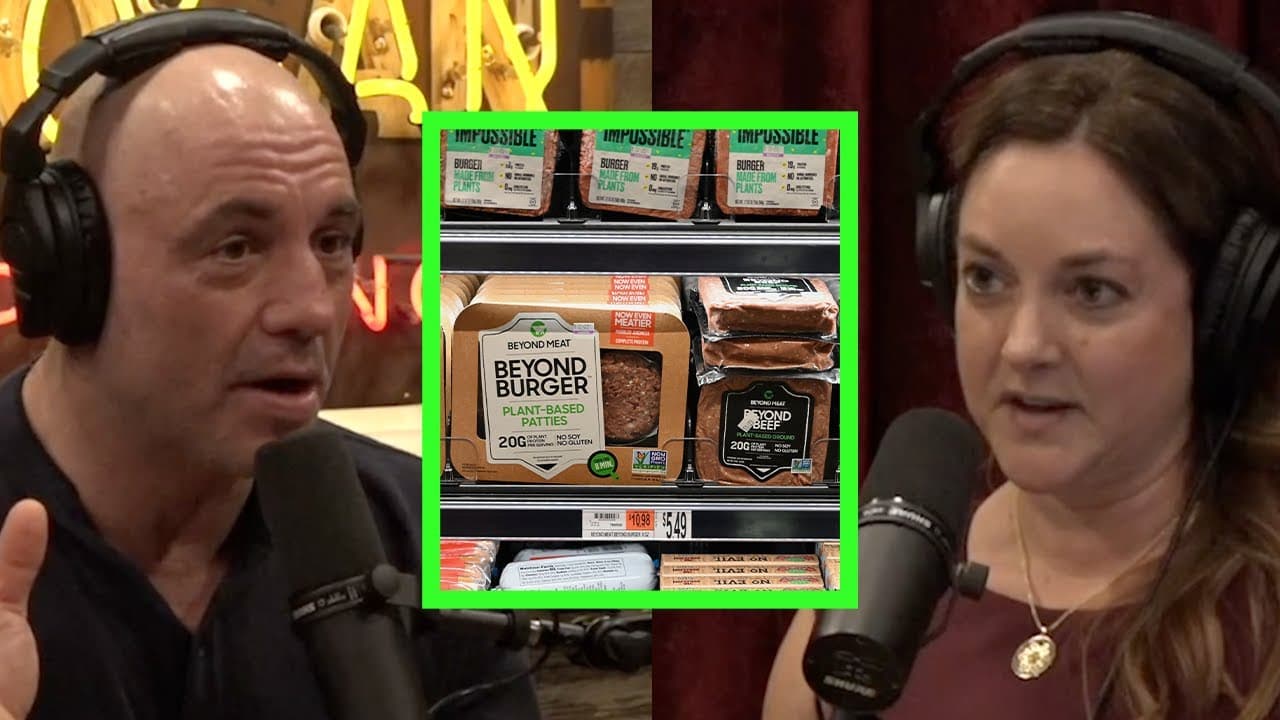
Q: Why are plant-based burgers becoming less popular despite the push for meat alternatives?
The speaker notes that plant-based burgers, such as the Beyond Burger, are not selling as well as expected. This may be partly due to increased awareness among consumers, including the vegan community, who have realized that these alternatives are highly processed and not necessarily healthier than organic grass-fed beef. Additionally, plant-based burgers tend to be more expensive than their meat counterparts.
Q: Why are meatless messages and infographics misleading when it comes to the impact of meat on health and the environment?
Meatless messages often simplify complex ecological and thermodynamic concepts, presenting them as sleek and airtight arguments against meat consumption. However, unpacking these claims requires a deeper understanding of ecology and non-equilibrium thermodynamics, making it less accessible or catchy. The speaker highlights specific examples, such as the misleading infographic on water usage, which fails to account for the different types of water involved and the actual impact on water sources.
Q: Are grass-fed beef and typical beef different in terms of water usage?
The speaker provides a breakdown of water usage for grass-fed beef and typical beef. They emphasize that the concern about draining lakes and streams is misplaced, as the majority of water usage for both types of beef comes from natural rain. Grass-fed beef actually has a slightly higher percentage of water from natural sources, such as rain, while typical beef has a small fraction attributable to rivers and lakes. The speaker also notes that the land used for grazing cattle is not usually suitable for other forms of agriculture.
Q: How does regenerative agriculture benefit ecosystems and bird species?
Regenerative agriculture, which involves pasture-based meat production, has been shown to positively impact ecosystems and biodiversity. In particular, the Audubon Society has observed the return of bird species in areas practicing pasture-based meat production. This restoration of bird populations is linked to the correction of ecosystem issues, which in turn enhances habitat quality and food sources for birds.
Takeaways
The video highlights the flawed science and biased narratives surrounding the portrayal of meat as detrimental to human health and the environment. The speaker questions the motivations behind promoting alternatives and consolidating food production, suggesting that vested interests may be at play. Additionally, the misleading infographics and incomplete information presented to support these claims underscore the need for critical thinking and a deeper examination of scientific studies. It is crucial to consider all perspectives and evidence before accepting or promoting any dietary or environmental claims.
Summary & Key Takeaways
-
Meat is being demonized based on ideological beliefs, with initiatives like meatless Mondays and vegan Fridays being implemented in schools, potentially leaving economically disadvantaged children with nutrient-poor meals.
-
The global burden of disease report, which heavily influences food policy, has claimed that meat is 36 times more likely to cause death. However, there are concerns about the lack of evidence and objectivity in this claim.
-
There is a potential motive to consolidate food production and turn it into intellectual property owned by corporations, which is driving the push for meat alternatives.
Read in Other Languages (beta)
Share This Summary 📚
Summarize YouTube Videos and Get Video Transcripts with 1-Click
Try YouTube Summary with ChatGPT & Claude or YouTube Transcript Generator
Explore More Summaries from PowerfulJRE 📚




Summarize YouTube Videos and Get Video Transcripts with 1-Click
Try YouTube Summary with ChatGPT & Claude or YouTube Transcript Generator