How Self-Respect and Silence Build Real Influence
TL;DR
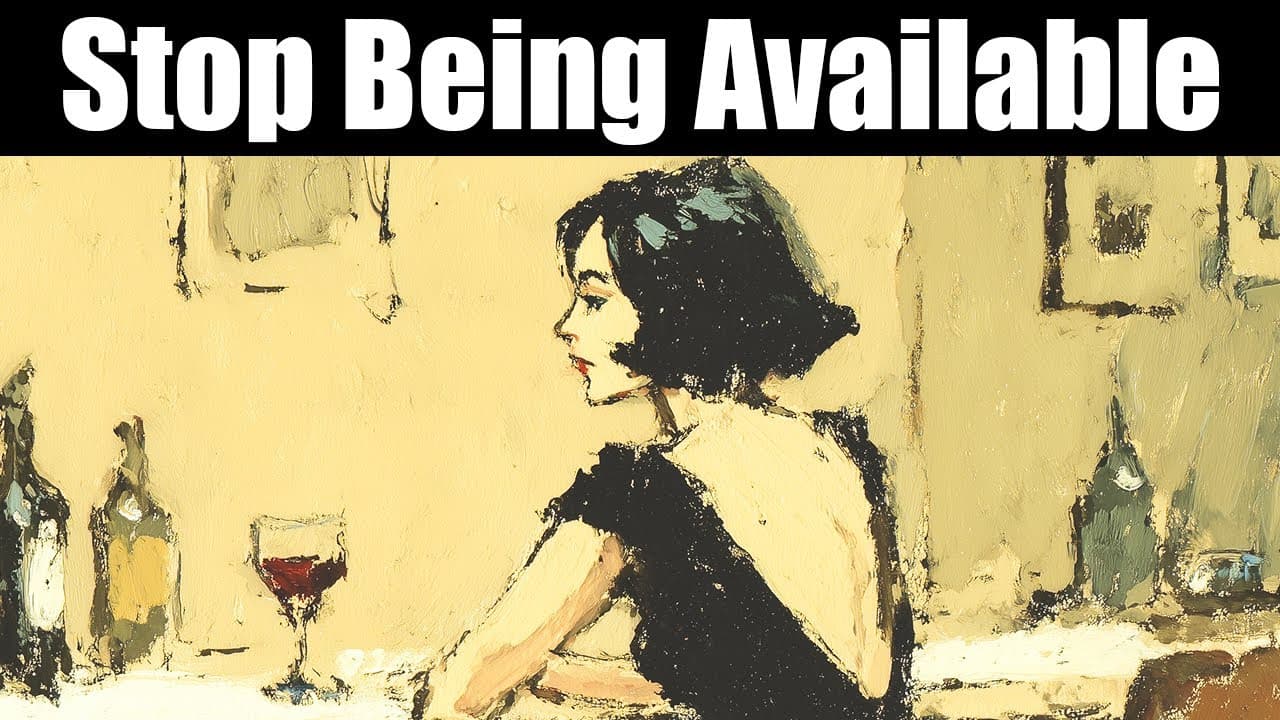
Constant emotional availability is a psychological prison, not a virtue, because predictability turns you into a tool others manage through your reactions. Drawing on Carl Jung, withdrawing into conscious silence and refusing to react conserves your psychic energy, breaks manipulation, and commands respect without a word. What is always available becomes commonplace and stops being valued.
Transcript
Have you ever observed individuals who possess an almost magnetic influence over their surroundings without uttering a single word? They don't raise their voices. They don't plead for attention. They simply step back and suddenly the entire atmosphere transforms. The energy shifts. People begin to question. they start pursuing. They feel compelled ... Read More
Key Insights
- Constant availability makes you predictable, and anything predictable becomes a tool in others' hands. People treat you as an emotional emergency button they press for attention or validation, then set aside once you are no longer useful to them.
- Carl Jung observed that everything that irritates us about others can lead to a better understanding of ourselves. When you become unreachable, the people who grow desperate or try to provoke a reaction reveal how much they were manipulating you.
- The psyche functions like an energy system where every thought, emotion, and reaction consumes psychic energy. Reacting impulsively, defending against undeserved criticism, and pleasing those who don't value you drains inner strength without return.
- What you resist persists, according to Jung. The more you react to draining people and situations, the more you bind yourself to the very things depleting you, keeping alive ghosts that should have died long ago.
- Manipulation works through silence and guilt rather than shouting. Opportunistic people simply trigger the emotional buttons you leave exposed, and you react predictably, so they never need to force or threaten you directly.
- The manipulator does not need to control you directly; they only need you to keep reacting the same way. When you stop reacting and respond with silence or withdrawal, the game breaks and their projections crumble.
- Excessive availability is a disguised form of self-abandonment driven by fear of rejection and abandonment. Wearing the persona, the mask Jung described, keeps you saying 'it's fine' while suffocating and justifying choices you don't owe anyone.
- The more available you are, the less others value you, because what exists in abundance becomes commonplace. No one respects what they don't have to earn or values what is always there waiting to serve their needs.
Install to Summarize YouTube Videos and Get Transcripts
Explore YouTube Video Summarizer or Get YouTube Transcript Extractor
Questions & Answers
Q: Why does being constantly available make people value you less?
Constant availability makes you predictable, and everything predictable becomes a tool in others' hands. What exists in abundance becomes commonplace, so no one respects what they don't have to earn or values what is always there waiting to serve their needs. People treat you as an emotional emergency button they press for attention, relief, or validation, then return you to the shelf. The cruelest irony is that the more available you are, the less others value you.
Q: What did Carl Jung say about what irritates us in others?
Carl Jung observed that everything that irritates us about others can lead us to a better understanding of ourselves. When you become unreachable, the people who grow desperate, irritated, or who try to provoke an emotional response from you reveal far more about themselves than about you. This behavior primarily exposes how extensively you've been manipulated without your conscious awareness, showing that their reactions stem from their own emptiness rather than anything you did wrong.
Q: How does silent manipulation actually work?
The most effective manipulation does not happen through shouting; it happens in the silence of guilt. Opportunistic people don't need to raise their voices, threaten, or force situations. They simply trigger the emotional buttons you've left exposed, and you react predictably. The manipulator does not need to control you directly, they only need you to keep reacting the same way. Jung called the related mechanism projection, where people project onto you what they cannot see in themselves and relate to their idea of you rather than the real you.
Q: Why is emotional availability described as a psychological prison?
Excessive availability isn't a virtue but a psychological prison because as long as you believe you must be accessible at all times, you will be manipulated, drained, and discarded the moment you are no longer useful. From childhood you've been programmed to believe your worth depends on how accessible you are. Being available all the time is a subtle form of self-abandonment, a disguised method of seeking approval, avoiding rejection, and controlling how others perceive you, all at a tremendous cost to your peace and vital energy.
Q: What does Jung's theory say about psychic energy and reactions?
Jung viewed the human psyche as an energy system where every thought, emotion, and action consumes a portion of energy. Every time you react impulsively, defend against criticism that didn't deserve attention, respond to provocation, or try to please those who don't value you, you waste psychic energy on what doesn't nourish you. Jung was clear that what you resist persists, so the more you react, the more you bind yourself to the very things that drain you, leaving you vulnerable and easy prey.
Q: How can conscious silence be more powerful than arguing?
Conscious silence, when it stems from awareness rather than avoidance, becomes an act of genuine power because true power isn't found in reacting but in choosing when and how to act. Silence can be more powerful than a thousand arguments. When you respond with silence, withdraw instead of explaining yourself, and refuse to react, the manipulator's game breaks and their projections crumble. Your unavailability becomes a threat because it forces others to confront their own emptiness and internal noise.
Q: What happens when you stop reacting to people who manipulate you?
When you stop reacting, start saying no, respond with silence, and withdraw instead of explaining yourself, the manipulation game breaks and the mask others placed on you falls away. This leaves people unsettled because they no longer know who you are. The same individuals who demanded your availability become irritated, accuse you, and claim you've become strange, not because you changed but because you've stopped being functional for their purposes and stopped serving as a convenient mirror.
Q: Why do people feel drained and empty from over-giving?
You become excessively available to those who don't deserve even a moment of your thoughtful silence, and with every forced agreement, immediate response, and emotional reaction, you surrender a fragment of your vital energy. Those who demand your constant availability don't actually want you; they want the validation, companionship, distraction, and emotional comfort you provide. The more you position yourself at the center of others' drama, the more you vanish from your own life, leaving exhaustion, frustration, and an inexplicable emptiness.
Summary & Key Takeaways
-
People with magnetic influence don't raise their voices or plead for attention; they step back, and the atmosphere shifts. When you stop being perpetually accessible emotionally, physically, and psychologically, those who thought they understood you realize they know nothing about your true nature, and the dynamics of control fundamentally change.
-
Carl Jung's concept of individuation frames withdrawal, when it stems from awareness rather than avoidance, as an act of genuine power. Constant availability is a psychological prison and a subtle form of self-abandonment, spending your limited, precious vital energy chasing approval and avoiding rejection at a tremendous cost to your peace.
-
The mind works like an energy system, and impulsive reactions waste psychic energy that leaves you drained and vulnerable to manipulative, opportunistic people. A healthy psyche conserves energy by saying no without guilt, staying silent without cowardice, and observing before acting, so true power lies in choosing when and how to respond.
Read in Other Languages (beta)
Share This Summary 📚
Summarize YouTube Videos and Get Video Transcripts with 1-Click
Try YouTube Summary with ChatGPT & Claude or YouTube Transcript Generator
Explore More Summaries from Queen 📚




Summarize YouTube Videos and Get Video Transcripts with 1-Click
Try YouTube Summary with ChatGPT & Claude or YouTube Transcript Generator