Why Do Ruthless People Seem to Succeed in Power?
TL;DR
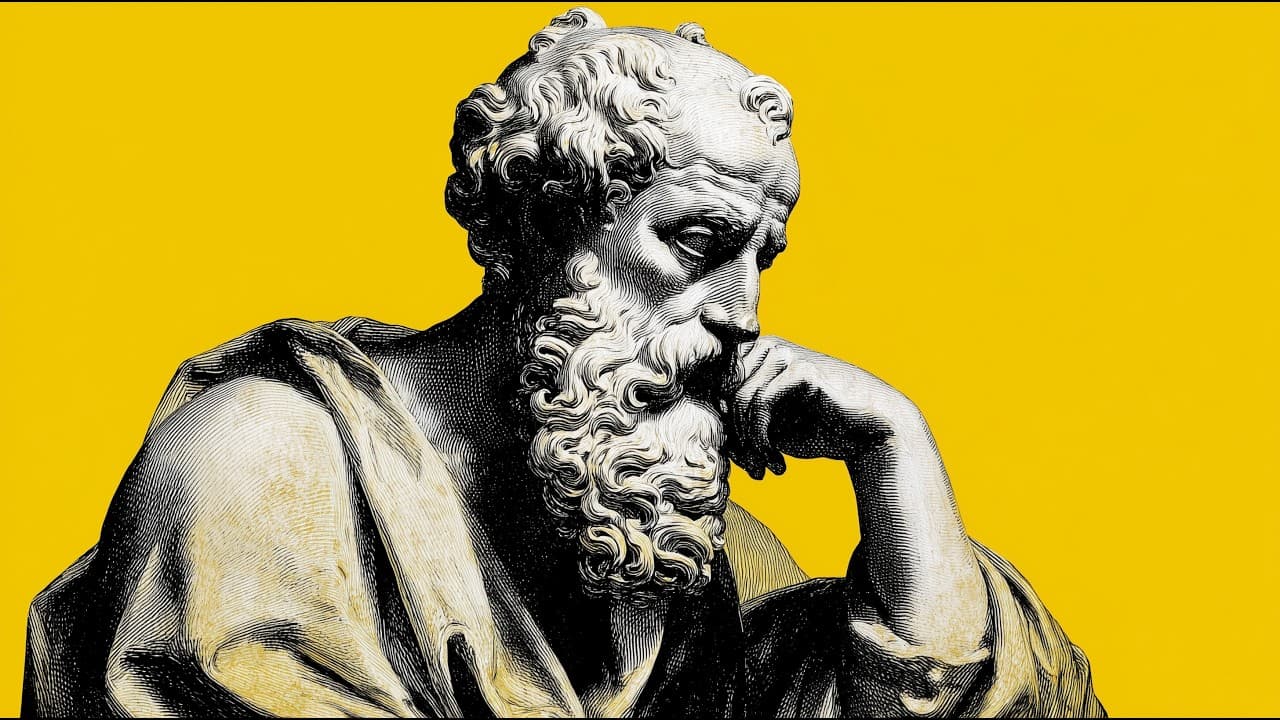
Ruthlessness often accelerates ascent because decisive action and dominance beat hesitation in a harsh world. Master morality elevates strength and will, while slave morality limits ambition; the Ubermensch proposes self overcomes and a balance of integrity with strategic power. The video argues success is not guaranteed by ethics but by understanding and navigating power dynamics.
Transcript
you're in a room full of people all striving for Success some play fair work hard and stay true to their values others lie manipulate and trample over anyone in their way and yet it's often the ruthless ones who climb the highest why is the world truly rigged in favor of the worst that while n observed at one point that most of what people regard a... Read More
Key Insights
- Power often rewards those who act decisively rather than those who wait for external validation.
- Master morality defines good as strength and dominance, while slave morality elevates humility and obedience.
- Slave morality can enable the rise of the ruthless by condemning ambition and the pursuit of power.
- The video frames the struggle for power as rooted in evolutionary psychology and social structures.
- The psychology of successful leaders includes high ambition and reduced empathy, enabling decisive action.
- Ruthlessness alone can lead to downfall if not guided by wisdom and strategy.
- The Ubermensch represents self overcomes and the will to power beyond conventional morality.
- Fairness is portrayed as a social construct that does not reliably predict power or success.
Install to Summarize YouTube Videos and Get Transcripts
Explore YouTube Video Summarizer or Get YouTube Transcript Extractor
Questions & Answers
Q: How does master morality differ from slave morality in the context of power?
Master morality is the morality of the strong, the rulers, and the conquerors, where what is good is what enhances their ability to dominate and shape the world. It is defined by strength, courage, ambition, and power, and does not seek external validation. Slave morality, by contrast, is the morality of the oppressed, valuing humility, obedience, and self sacrifice, and it treats power as inherently evil. This contrast explains why ruthlessness can rise to power while adherence to traditional virtue may hinder ascent.
Q: Why do ruthless individuals often rise to power according to the video?
Ruthless individuals rise because in scarce resource environments, hesitation and emphasis on fairness can be liabilities, while decisive action, boldness, and a willingness to act without permission create advantages. The psychology discussed highlights traits like high ambition, low fear, and occasional reduced empathy that help these individuals seize opportunities and dominate before more cautious rivals attempt to slow them down.
Q: What role does the Ubermensch concept play in the discussion of power?
The Ubermensch represents a path beyond conventional morality, emphasizing self overcomes and the will to power. It is not about brute domination or deception, but about forging a personal code that enables lasting influence without relying on external validation. This concept is presented as a way to transcend both weakness and cruelty while pursuing power responsibly.
Q: How is fairness depicted in relation to power in the video?
Fairness is described as a social construct and a comforting illusion that does not reliably predict who will rise. The video argues that just world beliefs can lead to passivity, while those who understand the game of power can progress by balancing integrity with strategic thinking rather than relying on fairness alone.
Q: What is the paradox of power and downfall mentioned?
The paradox is that while the ruthless often rise quickly, their lack of wisdom and overreliance on fear-based control can lead to spectacular downfalls. History shows that leaders who rule through fear may be toppled by the same mechanisms they leveraged, illustrating that power requires more than ruthless ascent.
Q: How does the video suggest one can reconcile strength with virtue?
The video suggests balancing integrity with strategic thinking, combining kindness with strength to rewrite rules without becoming a victim of circumstances. It advocates understanding the game of power while maintaining personal ethics, using the Ubermensch as a model for self mastery and responsible leadership.
Q: What is the key takeaway about power and morality?
The key takeaway is that power is a force of life that does not come with guaranteed fairness. Understanding the dynamics of dominance and integrating strategic action with ethical principles can enable sustained influence, rather than surrendering to either naive virtue or ruthless exploitation.
Q: Why does the video discuss historical figures in relation to power?
Historical figures like conquerors and modern leaders illustrate patterns where ambition, bold action, and a willingness to take risks correlate with ascent to power. Studying these examples helps illuminate how master morality interacts with social structures and how the dynamics of power have evolved across time.
Summary & Key Takeaways
-
The video explains that power tends to reward decisive individuals who act without hesitation, shaping outcomes in competitive environments.
-
It contrasts master morality, which defines good as that which enhances dominance, with slave morality, which venerates humility and obedience, arguing the latter can hinder ascent.
-
It introduces Nietzschean concepts such as the Ubermensch as a path to transcend conventional morality while maintaining self directed growth.
Read in Other Languages (beta)
Share This Summary 📚
Summarize YouTube Videos and Get Video Transcripts with 1-Click
Try YouTube Summary with ChatGPT & Claude or YouTube Transcript Generator
Explore More Summaries from Queen 📚




Summarize YouTube Videos and Get Video Transcripts with 1-Click
Try YouTube Summary with ChatGPT & Claude or YouTube Transcript Generator