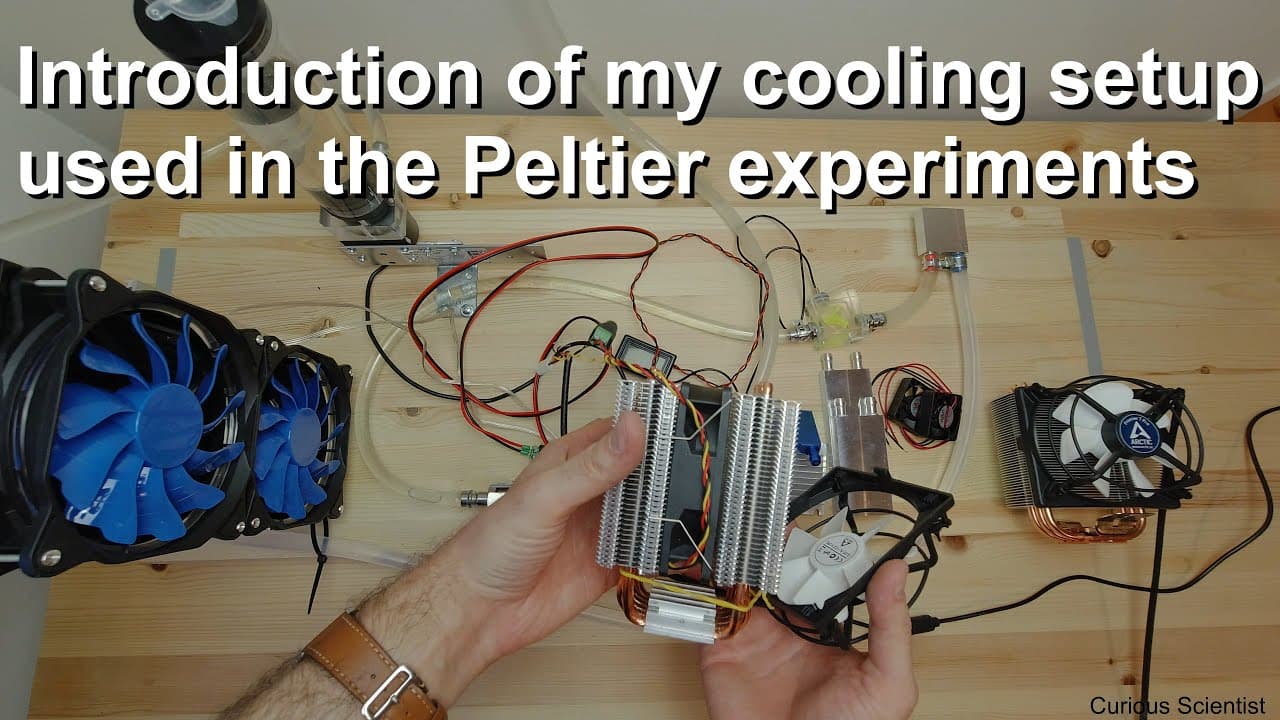
Introduction of my cooling setup used in the Peltier experiments
TL;DR
The video showcases practical cooling setups using air and water cooling techniques for electronics.
Transcript
welcome everyone in this video I'm going to share some cooling things that I use for the tightly cooling I taught to share these things to you because I developed some ideas and maybe some of them can be useful for you so I thought that why not make a video and share all these things so as you can see there are several different cooling equipment c... Read More
Key Insights
- ✋ Effective cooling is vital for maintaining the performance and longevity of electronic components, particularly in high-demand applications.
- 😎 Repurposing materials can serve as an economical and sustainable approach to constructing custom cooling solutions.
- 😎 Understanding the mechanics of airflow and fluid dynamics is crucial for optimizing performance in both air and water cooling setups.
- 👻 DIY projects can encourage creativity, allowing enthusiasts to innovate and tailor solutions to their specific requirements.
- 👁️🗨️ Proper installation and maintenance practices, such as bubble removal and leak checks, are essential for ensuring operational stability and safety.
- 😎 The importance of fan orientation and airflow direction is highlighted, influencing cooling efficiency and system effectiveness.
- 😎 Limiting air pockets in liquid cooling systems is vital for accurate temperature measurements and overall system performance.
Install to Summarize YouTube Videos and Get Transcripts
Explore YouTube Video Summarizer or Get YouTube Transcript Extractor
Questions & Answers
Q: What inspired the creator to explore different cooling methods?
The creator was motivated by the need for effective cooling solutions in their electronic setups, particularly after encountering limitations with existing cooling systems. This led them to experiment with both air and water cooling methods, aiming for improved performance and reliability in their projects.
Q: How does the water cooling setup work in the video?
The water cooling system consists of a main reservoir, a pump, a radiator, and hoses carrying water. This setup allows for transferring heat away from components, keeping them cool. The creator highlights a novel T-pipe system that simplifies releasing water from the circuit, making maintenance easier.
Q: What are the key components of the air cooling discussed?
The air cooling system prominently features CPU coolers, fans, and thermal grease. The creator demonstrates how to install these components effectively to ensure efficient airflow and heat dissipation, emphasizing the importance of fan orientation in maximizing cooling performance.
Q: What challenges does the creator mention regarding air bubbles in the cooling system?
Air bubbles can hinder the performance of both water and air cooling systems. The creator explains that trapped air can affect temperature readings and contribute to inefficiency. They suggest methods to remove air bubbles, such as adjusting setup orientation or momentarily stopping the pump.
Q: Why is it impractical to use these setups as air conditioning systems?
The creator points out that DIY cooling setups cannot match the cooling capacity of standard air conditioning systems due to their limited power and efficiency. They outline that achieving comparable cooling would require multiple units and elaborate configurations, making it unfeasible for typical use.
Q: How does the creator ensure there are no leaks in the water cooling setup?
The creator emphasizes the importance of testing for leaks before operation. They conduct thorough checks of all connections and fittings, ensuring tight seals and proper installation to prevent any water leakage during usage.
Q: What advantages do the creator's DIY setups have over commercially available cooling options?
DIY setups allow for customization and adaptability according to specific needs, often at a lower cost. The creator highlights the freedom to experiment with various cooling methods and configurations, which may not be available in commercial products.
Summary & Key Takeaways
-
The video introduces various cooling methods and components for electronics, emphasizing the importance of effective cooling solutions for optimal performance.
-
It discusses the creator's DIY approach, utilizing repurposed materials and custom setups to enhance cooling efficiency through both air and water systems.
-
The presenter shares troubleshooting tips and insights regarding common issues faced with cooling systems, making the content valuable for DIY enthusiasts and tech hobbyists.
Read in Other Languages (beta)
Share This Summary 📚
Summarize YouTube Videos and Get Video Transcripts with 1-Click
Try YouTube Summary with ChatGPT & Claude or YouTube Transcript Generator
Explore More Summaries from Curious Scientist 📚


Summarize YouTube Videos and Get Video Transcripts with 1-Click
Try YouTube Summary with ChatGPT & Claude or YouTube Transcript Generator