Is SearchGPT Better Than Google for Research?
TL;DR
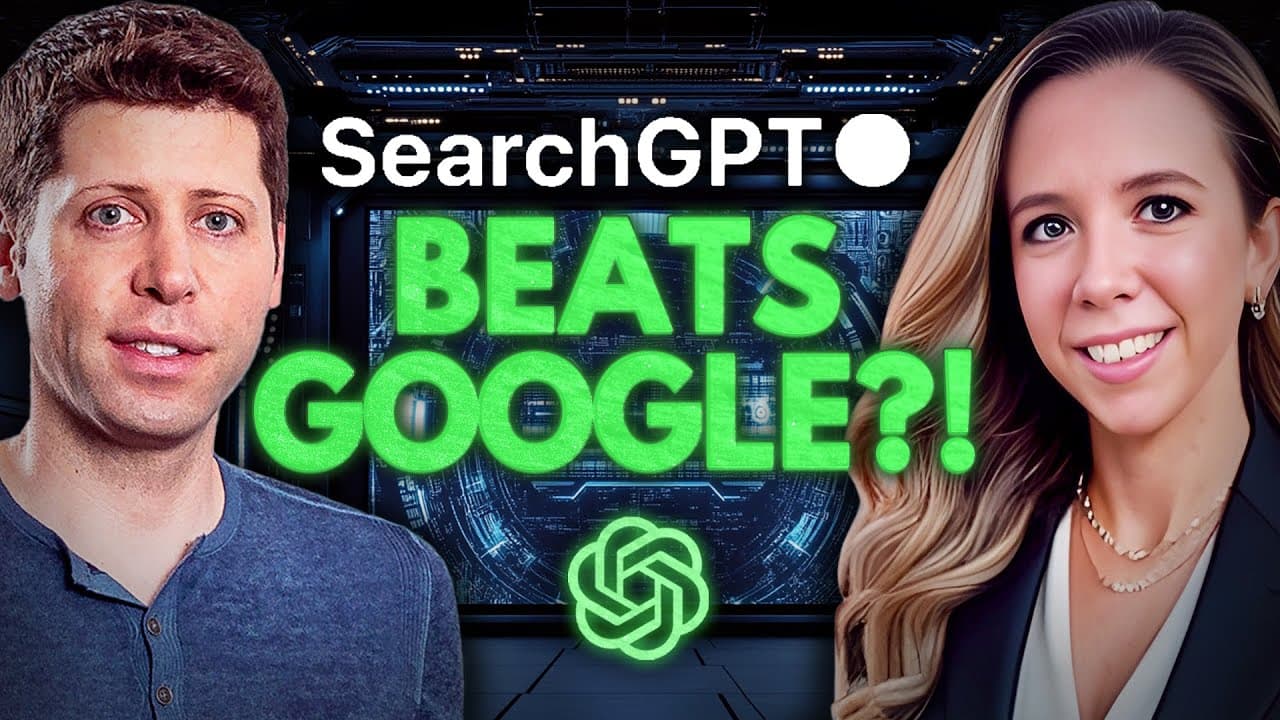
SearchGPT can replace Google for much everyday research by providing clean, finite answers with visible citations, creator-focused sources, images, maps, and current statistics. For producing an SEO blog article, however, the recommended workflow is still a Custom GPT or web-browsing plugin with ChatGPT, without SearchGPT enabled, because convenient search results do not automatically constitute a complete writing process.
Transcript
I've made the search engine default on my browser search GPT. For the past seven days I've used it. I lost count of how many times I am somebody that uses the internet and researches things constantly. It's the nature of the work that I do. And let me tell you, search GPT is blowing me away. For the majority of my research. I will be using it inste... Read More
Key Insights
- SearchGPT became Julie McCoy’s preferred tool for most research after seven days of use. Although Google had been deeply ingrained in her routine, she reported returning to it only twice across the many searches she conducted during the test period.
- The ChatGPT Search Chrome extension automatically changed the browser’s default search engine when installed. This made every browser-bar query flow through SearchGPT and significantly reframed the presenter’s normal search habits without requiring her to visit a separate search page.
- SearchGPT’s interface is clean, spacious, and finite rather than built around continuous scrolling. The presenter considered the absence of infinite scroll more refreshing and more compatible with healthy human behavior than the endlessly extending feeds and results found across other platforms.
- SearchGPT places citations and links in a panel on the right side of its results. Individual references can display the publication or resource name, site icon, date, and other relevant details, helping users inspect sources without searching through a long results page.
- SearchGPT can enrich answers with responsive visual elements. Demonstrated searches produced an image with a zoom effect and a responsive map, while the accompanying source links remained readily accessible, making both informational and local discovery queries easier to explore.
- SearchGPT appeared to favor relevant creators rather than relying only on large publications. McCoy contrasted this with Google results that often surface major publisher websites, arguing that creator-led sources may better reflect the knowledge of people who genuinely care about the subject.
- SearchGPT handled both everyday and research-oriented queries during the demonstration. It returned useful material for dinner recipes, places to take children, niche searches, and a current content-marketing industry question, with the cited statistic linked to a research and industry forecast website.
- SearchGPT is not the presenter’s preferred replacement for every stage of SEO article production. Her stated conclusion is that a Custom GPT or web-browsing plugin should still support the ChatGPT writing workflow, with SearchGPT turned off while generating the full article.
Install to Summarize YouTube Videos and Get Transcripts
Explore YouTube Video Summarizer or Get YouTube Transcript Extractor
Questions & Answers
Q: How does SearchGPT compare with Google for research?
SearchGPT was preferred for most research during the presenter’s seven-day test because it supplied focused answers in a clean interface, placed citations beside the response, and avoided the feeling of endless scrolling. It also supported varied queries involving recipes, local activities, niche subjects, and industry statistics. Google remained useful when she needed to inspect its search results for keyword research or when SearchGPT failed to return the desired information.
Q: What happens when you install the ChatGPT Search Chrome extension?
Installing the ChatGPT Search Chrome extension automatically changed the presenter’s Chrome default search engine to SearchGPT. After installation, queries entered directly into the browser’s search bar became ChatGPT searches. This reduced the effort required to adopt the service because she did not need to open a separate site first, and it caused her to conduct enough searches that she eventually lost count of them.
Q: Why did the presenter prefer SearchGPT’s interface?
The presenter preferred the interface because it was clean, spacious, visually responsive, and free from the clutter she associated with Google. Results stopped rather than continuing through an infinite scroll, citations appeared in a convenient panel, and relevant images or maps could be embedded directly in the answer. She described this finite presentation as refreshing and more friendly to normal human behavior.
Q: How does SearchGPT show citations and sources?
SearchGPT displays source links in a panel on the right side of the answer and also connects specific claims to citations within the response. The demonstrated references included the name of the publication or resource, a site icon, and a date. This arrangement let the presenter review available links quickly without having to scroll through all of the generated text or search a separate results list.
Q: What types of searches worked well in SearchGPT?
SearchGPT performed well across several types of queries shown or discussed by the presenter. These included easy, healthy fall dinner recipes, places where she could take her children to play, niche searches, and a question about the value of the content-marketing industry. The service also displayed images, a responsive map, current figures, and citations linked to a research and industry forecast website.
Q: Does SearchGPT favor independent creators in its results?
The presenter observed that SearchGPT appeared to favor relevant creators instead of filling its answers only with large publishers such as Entrepreneur.com or Forbes.com. She valued sources cultivated by people who care directly about their subject and believed this approach could benefit personal brands. This was her assessment based on the searches demonstrated, rather than a universal guarantee about every SearchGPT result.
Q: Can SearchGPT write a complete SEO blog article?
SearchGPT can support research for an SEO blog article, but the presenter did not recommend treating it as a complete replacement for her established writing workflow. Her stated conclusion was to use a Custom GPT or another web-browsing plugin with ChatGPT and to write without SearchGPT turned on. The distinction is that gathering clean, cited information is only one step in producing content intended to generate traffic and website value.
Q: When should a researcher still use Google instead of SearchGPT?
Google may still be necessary when the task specifically requires seeing Google’s own search results, as in the presenter’s keyword-research example. It is also a fallback when SearchGPT does not supply the information or format a user needs. During seven days of extensive searching, she reported returning to Google only twice, but those exceptions show that SearchGPT did not eliminate every specialized reason to use traditional search.
Summary & Key Takeaways
-
After seven days of extensive use, Julie McCoy preferred SearchGPT over Google for most research. Installing the Chrome extension automatically made it her browser’s default search engine, encouraging frequent use. She found its interface cleaner, its results more focused, and its finite presentation more comfortable than the infinite scrolling common across major platforms.
-
SearchGPT presents synthesized answers alongside prominent citations, publication details, dates, images, source links, and, for relevant local queries, a responsive map. McCoy reported returning to Google only twice, including once for keyword research and once when SearchGPT did not provide what she needed. She also praised its treatment of independent creators.
-
SearchGPT performed well on recipes, family activity ideas, niche questions, local results, and a current content-marketing industry query. However, research convenience and article production remain distinct tasks. For SEO blog writing, McCoy’s stated conclusion is to retain a Custom GPT or web-browsing plugin workflow and keep SearchGPT turned off during writing.
Read in Other Languages (beta)
Share This Summary 📚
Summarize YouTube Videos and Get Video Transcripts with 1-Click
Try YouTube Summary with ChatGPT & Claude or YouTube Transcript Generator
Explore More Summaries from Julia McCoy 📚





Summarize YouTube Videos and Get Video Transcripts with 1-Click
Try YouTube Summary with ChatGPT & Claude or YouTube Transcript Generator