How to Trust Your Intuition and Find Direction
TL;DR
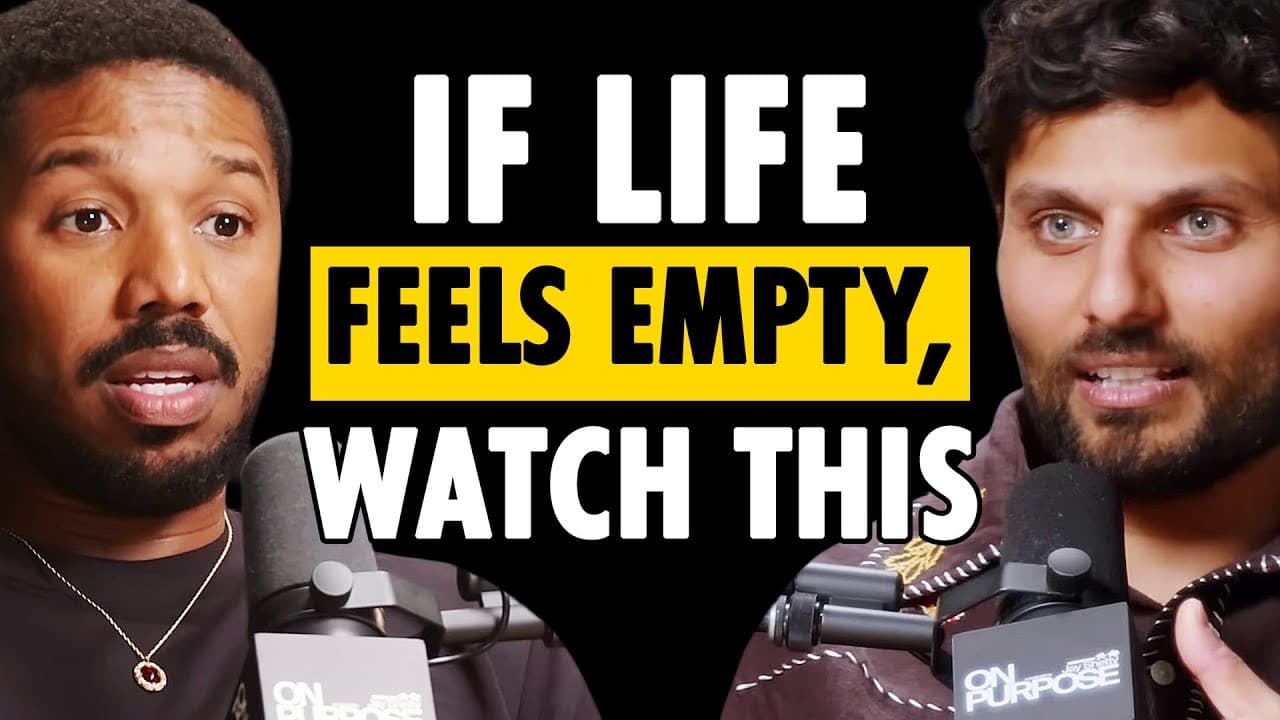
Be honest about where you stand and how you feel, because honesty gives others the opportunity to respond truthfully and makes feared outcomes less overwhelming. Michael B. Jordan connects clear direction with intuition, spiritual practice, continual self-improvement, supportive relationships, and a purpose rooted in service, while acknowledging that success and public attention can also create guilt, loneliness, and tension between private and public identity.
Transcript
being honest with where you stand and how you feel it's really giv another person an option and opportunity to be as honest with you mhm and whatever your fear of that is of that outcome is never really as big as what you make it up to be you know it's really not that tomorrow is not promised to anyone but time will move on you know you will move p... Read More
Key Insights
- Honest communication gives another person the opportunity to be equally honest. Jordan argues that directly stating where you stand and how you feel is valuable even when the response is uncertain, because imagined outcomes are often more frightening than what actually happens.
- A supportive childhood can feel abundant even when money is scarce. Jordan says his family grew up very poor, yet his parents protected their children from much of that burden and created memories centered on care, discipline, shared activities, church, and community service.
- Present parenting helped Jordan recognize risks and make constructive choices. He credits both parents with remaining aware of his environment, encouraging school, focus, discipline, and good decisions, while sacrificing to keep their children safe in Newark, New Jersey.
- Early professional success can create isolation as well as opportunity. Jordan traveled to New York City for auditions and returned home with experiences that few people around him could relate to, leaving him without many people who could understand or discuss those experiences.
- Success can produce guilt when opportunity is distributed unevenly. Jordan questioned why his career advanced while people who looked like him, including friends and familiar competitors in audition rooms, did not receive the same options or choose the same path.
- Service is central to Jordan's understanding of purpose. His parents regularly helped through block parties, church dinners, shared meals, camping trips, and an open home, giving him a model in which achievement and responsibility to others remain connected.
- Spiritual practice can provide direction before a destination is clear. Jordan describes growing up with church, spirituality, meditation, and awareness of the wider world, which supported his belief that he was destined for something even before he understood what it would be.
- Authenticity requires managing the boundary between public exposure and private identity. Jordan is cautious about when and where he speaks because publicity can serve other people's agendas, while thoughtful spaces can allow him to share personal experiences on his own terms.
Install to Summarize YouTube Videos and Get Transcripts
Explore YouTube Video Summarizer or Get YouTube Transcript Extractor
Questions & Answers
Q: How can honesty help when you feel lost or afraid?
Honesty can reduce uncertainty by turning private fears into a real conversation. Clearly stating where you stand and how you feel gives the other person an opportunity to answer with equal honesty. Jordan argues that the feared outcome is often not as large as imagination makes it seem. Even if the result is difficult, expressing what needed to be said can prevent regret and help time carry you forward.
Q: How does childhood environment shape a person's purpose?
A childhood environment shapes purpose through repeated examples of how adults respond to hardship, opportunity, and other people. Jordan grew up with parents who stressed discipline, school, sound choices, spirituality, and awareness of his surroundings. Their home also welcomed friends and supported community activities. Those experiences connected care with responsibility, leading him to view service as part of his identity rather than as something separate from success.
Q: Why can professional success lead to guilt and self-doubt?
Professional success can lead to guilt when a person sees equally capable people around them receiving fewer opportunities. Jordan began succeeding at a young age while friends and people who looked like him did not always have comparable options. That difference made him question why his life followed another path. He describes how repeated success can create doubt or guilt, even when it also reflects work, family support, available opportunities, and personal choices.
Q: How did Michael B. Jordan's parents influence his career and character?
Jordan credits his parents with being present, attentive, and conscious of the environment in which he grew up. They encouraged discipline, focus, education, good choices, and safety while making significant sacrifices for their children. They also modeled service through church dinners, neighborhood gatherings, shared meals, trips, and an open home. Their example gave him practical support for early auditions and a lasting belief that achievement should remain connected to others.
Q: Why can early career success feel isolating?
Early career success can feel isolating when new experiences separate someone from the people who normally provide understanding and feedback. Jordan traveled to New York City for auditions, booked work, and encountered places and situations that many people at home could not relate to. He sometimes avoided sharing those stories because he did not want others to feel inadequate, but that restraint also reduced his opportunities to process what was happening with trusted peers.
Q: How can spiritual practices help someone find direction?
Spiritual practices can create a sense of direction before a specific goal becomes visible. Jordan describes a home focused on church, spirituality, meditation, and awareness of the world. That foundation supported his feeling that he was destined for something, even when he could not name it. In his account, spiritual grounding does not provide every answer immediately, but it helps connect daily work, intuition, optimism, service, and a broader sense of purpose.
Q: What does authenticity mean when living in the spotlight?
Authenticity in public life requires choosing carefully when, where, and how to share personal experiences. Jordan says he does not do extensive press outside the seasons when a project must be promoted, partly because public conversations can become shaped by other people's agendas. A thoughtful setting gives him more control over how others understand him, allowing his private reflections, struggles, values, and personality to appear alongside his professional image.
Q: How can someone build genuine relationships while protecting privacy?
Genuine relationships depend on honest expression, mutual openness, and spaces where a person can speak without being reduced to a public image. Jordan's comments suggest that privacy and authenticity are not opposites. Protecting some parts of life can make deliberate sharing more meaningful. When fears are communicated directly and trusted people are given the chance to respond honestly, relationships can move beyond assumptions, publicity, status, and the pressure to maintain an external identity.
Summary & Key Takeaways
-
Michael B. Jordan traces his outlook to his upbringing in Newark, New Jersey, where present and attentive parents provided discipline, encouragement, spiritual grounding, and protection despite limited resources. Their sacrifices allowed him to remember childhood with gratitude, while their service to neighbors, friends, and church shaped his belief that personal purpose includes helping other people.
-
Beginning auditions and professional work at a young age exposed Jordan to experiences that many people around him could not share. As opportunities accumulated, he sometimes questioned why he succeeded while people who looked like him lacked similar options. That contrast produced self-doubt and guilt, but it also strengthened his sense of responsibility and purpose.
-
Jordan presents honesty, intuition, spiritual awareness, reflection, and continued self-development as ways to navigate uncertainty. He also addresses authenticity, teamwork, fame, loneliness, safe spaces, genuine relationships, and the division between public and private identity. His perspective emphasizes accepting difficult feelings, communicating directly, and remembering that feared outcomes are often smaller than imagined.
Read in Other Languages (beta)
Share This Summary 📚
Summarize YouTube Videos and Get Video Transcripts with 1-Click
Try YouTube Summary with ChatGPT & Claude or YouTube Transcript Generator
Explore More Summaries from Jay Shetty Podcast 📚






Summarize YouTube Videos and Get Video Transcripts with 1-Click
Try YouTube Summary with ChatGPT & Claude or YouTube Transcript Generator