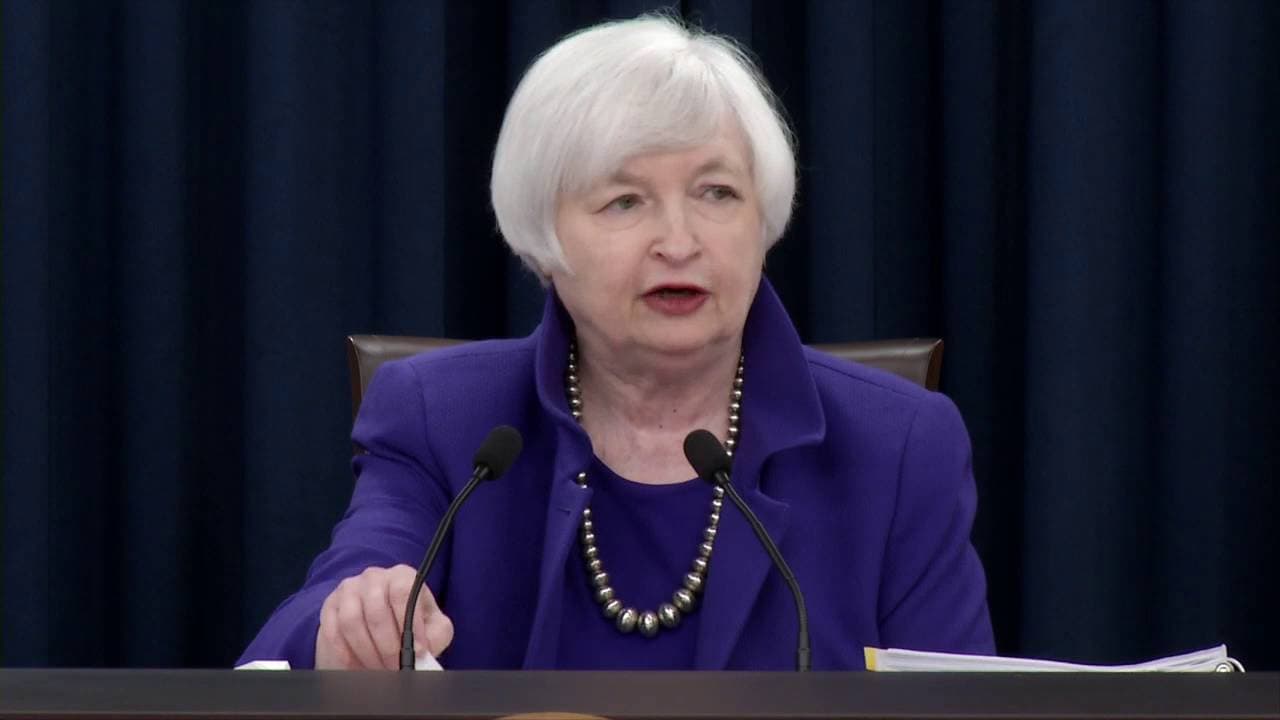
FOMC Press Conference December 16, 2015
TL;DR
The FOMC raised the federal funds rate target by 1/4 percentage point to a range of 1/4 to 1/2 percent because the labor market had improved and inflation was expected to return to 2 percent. The move ended seven years of near-zero rates, though Chair Yellen stressed that policy remained accommodative and normalization would likely be gradual. Read on for the employment, growth, and inflation data behind the decision.
Transcript
CHAIR YELLEN. Good afternoon. Earlier today, the Federal Open Market Committee decided to raise the target range for the federal funds rate by 1/4 percentage point, bringing it to 1/4 to 1/2 percent. This action marks the end of an extraordinary seven-year period during which the federal funds rate was held near zero to support the recovery of the ... Read More
Key Insights
- 🤨 The Federal Reserve's decision to raise interest rates reflects its confidence in the strength of the U.S. economy.
- 🤨 The raise in interest rates is small and monetary policy remains accommodative.
- ❓ The Federal Reserve will continue to monitor economic and financial conditions and make adjustments to policy as necessary.
- 🤪 Wage growth and inflation will be important factors in the Federal Reserve's decision-making process going forward.
- ☠️ The raise in interest rates may have minimal short-term impact on consumers, but could affect borrowing rates in the long-term.
- 🫢 The Federal Reserve is aware of the risks associated with the raise in interest rates, but believes that the U.S. economy is well-positioned to handle any potential shocks.
Install to Summarize YouTube Videos and Get Transcripts
Explore YouTube Video Summarizer or Get YouTube Transcript Extractor
Questions & Answers
Q: Why did the FOMC raise interest rates on December 16, 2015?
The FOMC judged that the labor market had improved further and was reasonably confident that inflation would return to its 2 percent objective over the medium term. It also expected the economy to continue strengthening, making a modest rate increase appropriate.
Q: How much did the FOMC raise the federal funds rate?
The FOMC raised the target range by 1/4 percentage point. This brought the federal funds rate target to a range of 1/4 to 1/2 percent.
Q: Why was the December 2015 rate decision historically significant?
The decision ended an extraordinary seven-year period during which the federal funds rate had been held near zero. That policy had supported the recovery from the worst financial crisis and recession since the Great Depression.
Q: What labor-market evidence supported the rate increase?
The economy added 2.3 million jobs during the year, while gains over the latest three months averaged an estimated 218,000 per month. The unemployment rate was 5 percent in November, down 0.6 percentage point from the end of the previous year.
Q: Did the FOMC believe the labor market had fully recovered?
No. Chair Yellen said labor-force participation remained below estimates of its demographic trend, involuntary part-time employment was somewhat elevated, and wage growth had not shown a sustained pickup.
Q: What was the FOMC's outlook for future interest-rate increases?
The FOMC expected interest-rate normalization to proceed gradually. Future policy decisions would depend on the economy's progress toward maximum employment and 2 percent inflation.
Q: Why was inflation below the FOMC's 2 percent objective?
Consumer price inflation measured by the personal consumption expenditures price index was only 1/4 percent over the 12 months ending in October. The FOMC attributed much of the shortfall to sharp energy-price declines and the dollar's appreciation, which held down import prices.
Q: How was the U.S. economy performing when the FOMC raised rates?
Real GDP was estimated to have grown at an average pace of 2-1/4 percent over the first three quarters of the year. Weak net exports were offset by solid domestic spending, supported by job gains and increases in real disposable income.
Summary & Key Takeaways
-
The Federal Reserve has decided to raise interest rates by 0.25 percentage points, bringing the target range for the federal funds rate to 0.25-0.5%.
-
The decision marks the end of a period of near-zero interest rates that lasted for seven years.
-
The Fed is confident in the strength of the U.S. economy, but acknowledges that further improvement in the labor market and inflation is still needed.
Read in Other Languages (beta)
Share This Summary 📚
Summarize YouTube Videos and Get Video Transcripts with 1-Click
Try YouTube Summary with ChatGPT & Claude or YouTube Transcript Generator
Explore More Summaries from Federal Reserve 📚


Summarize YouTube Videos and Get Video Transcripts with 1-Click
Try YouTube Summary with ChatGPT & Claude or YouTube Transcript Generator