Healthcare Has Left the Building
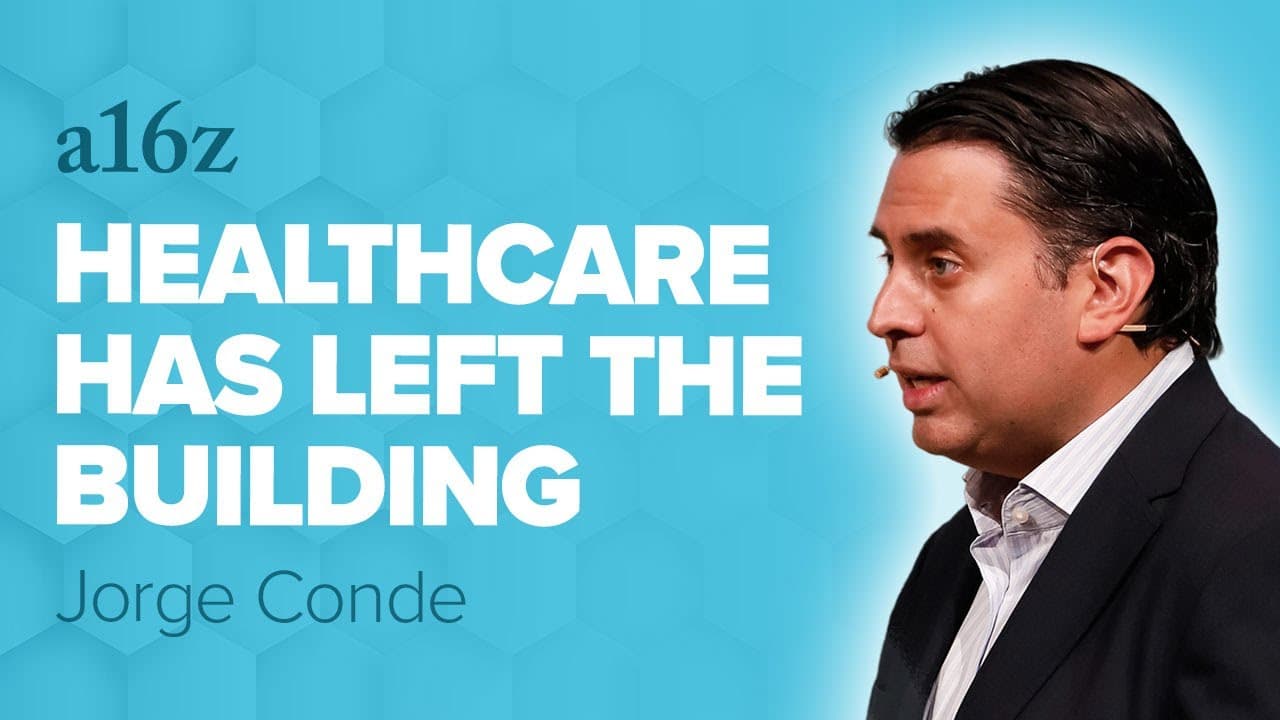
TL;DR
Technology is reshaping healthcare by moving access away from traditional hospitals and pharmacies toward personalized care at home and in retail settings. Innovations like AI and big data are enhancing diagnostics and treatment, while the healthcare delivery model shifts from institutional to individualized methods, promising a future where medical care is more accessible and effective.
Transcript
so what I want to talk about today is from our vantage point what we're seeing in terms of the future of healthcare so as Sam mentioned I work at Andreessen Horowitz we're a silicon valley-based venture capital firm and when we launched the firm about ten years ago one of the founders Marc Andreessen famously wrote an op-ed in the Wall Street Journ... Read More
Key Insights
- 😨 Technology is driving a shift in the healthcare industry, transforming access to care and delivery models.
- 😨 Hospitals will continue to exist but will specialize in complex procedures, while technology enables more personalized care in retail settings and homes.
- 😃 AI, big data, and specialized therapies are revolutionizing diagnostics, treatment, and patient monitoring.
- 😨 Modernizing the healthcare back-office is crucial for supporting new delivery models and value-based care.
- 🪡 Ecosystem development is needed to support the affordability and accessibility of advanced therapies like engineered cells and gene therapies.
- 👶 Technology is enabling the monitoring of treatment efficacy and cost justification for new therapies.
Install to Summarize YouTube Videos and Get Transcripts
Explore YouTube Video Summarizer or Get YouTube Transcript Extractor
Questions & Answers
Q: How is technology changing the structure of the healthcare industry?
Technology is breaking down industry silos, with insurers, payers, and technology companies merging to form monolithic healthcare companies. Traditional payers are becoming frustrated and demanding more from the healthcare system.
Q: How will technology change how we access healthcare?
Access to healthcare is moving away from hospitals and towards retail settings, urgent care clinics, and home settings. Telemedicine allows for remote access to specialists, and technology is enabling a broader range of care services to be provided at home.
Q: What is the future of pharmacies?
Traditional retail pharmacies are changing, with prescription medicines being delivered to patients' homes through services like Amazon's PillPack and drone technology. Digital therapies and personalized medicines will also change the concept of pharmacies.
Q: Will technology eliminate symptoms and sickness?
Although it may sound far-fetched, advancements in early detection through AI and medical physics, as well as everyday wearables, may lead to the prevention of symptoms and early intervention before diseases progress.
Summary
This video discusses the future of healthcare and how technology will shape it. It explores the transformation of the healthcare industry through software, challenges faced by the industry, and the emergence of new technologies. The speaker also discusses how access to healthcare is changing, the role of technology in delivering care, and the future of pharmacies. Furthermore, it covers the possibility of symptoms disappearing altogether and the need for modernizing the healthcare system to meet these changes.
Questions & Answers
Q: What did Marc Andreessen mean when he said "software is eating the world"?
Marc Andreessen meant that software or technology transforms nearly every industry it touches, including healthcare.
Q: Why has the healthcare industry faced challenges in adopting software?
The healthcare industry has faced challenges in adopting software due to its complexity and the indigestion caused by software. It has also faced challenges due to the specialization of medicine and the need for specialized technology and equipment.
Q: How has the healthcare industry evolved over time?
The healthcare industry has evolved by building grand institutions like hospitals to house the advancements in medicine and the specialization of physicians. These institutions have become centralized, leading to challenges in cost and patient care.
Q: What challenges does the healthcare industry face with regards to costs?
The healthcare industry faces challenges in terms of the dollar costs of hospitalizations, which amount to about a trillion dollars every year in the US. It also faces the human cost associated with medical errors and hospital-acquired infections.
Q: What are some key factors shaping the future of healthcare?
The future of healthcare is shaped by the dissolution of industry silos, with insurers, payers, and technology companies coming together to form monolithic companies across the continuum of care. The demands and expectations of consumers are also driving change, as well as the emergence of new technologies like artificial intelligence, big data, and new modalities of medicine.
Q: How is access to healthcare changing?
Access to healthcare is changing through the rise of retail clinics and urgent care clinics, where people can get access to a wider range of treatments in convenient settings. There is also a shift towards more care being provided at home, driven by demographic shifts. Additionally, telemedicine allows people to access specialists remotely.
Q: How is the delivery of care changing?
The delivery of care is changing through the emergence of new care models and the use of technology. Academic institutions are focusing on training physicians who are technology-native, and new specialties are emerging from the use of technology. Telemedicine allows for care to be delivered remotely, and technology companies are providing digital coaching for complex conditions.
Q: How is technology replacing pharmacies?
Technology is replacing pharmacies through advancements in manufacturing and the rise of personalized medicine. Medicines can be drop-shipped to patients' homes, and drone technology is being used to deliver medicines to remote areas. Digital therapies and living medicines are also changing how prescriptions are obtained.
Q: How is health being integrated into everyday life through technology?
Health is becoming integrated into everyday life through wearables and devices that monitor health on a regular basis. This allows for early detection of conditions and interventions before they become serious. Technology is becoming woven into our social fabric, making health a part of our daily lives.
Q: How will the healthcare system adapt to the future changes described?
The healthcare system will need to modernize its back-office operations to keep up with the use of new technologies. New models of care, such as value-based care, will require modernization. Additionally, the ecosystem and infrastructure need to be developed to support new therapies and cures, ensuring affordability and effectiveness.
Takeaways
The future of healthcare holds significant changes driven by technology. The delivery of care is shifting outside traditional walls, with access to care happening in retail settings, at home, and through telemedicine. Technology is changing the role of physicians and pharmacists, and the availability of medicines is being revolutionized. Monitoring technology and early intervention are becoming more prevalent, potentially reducing the prevalence of symptoms and improving patient outcomes. However, to realize this future, the healthcare system must modernize back-office operations and develop new models, infrastructure, and ecosystems to support innovative therapies. Overall, the collective efforts of healthcare professionals, innovators, and industry stakeholders will lead to a better healthcare system for all.
Summary & Key Takeaways
-
The healthcare industry is being transformed by technology, just as software has disrupted and transformed other industries.
-
Access to healthcare is shifting from hospitals to retail settings, urgent care clinics, and even homes, with technology enabling remote access to specialists.
-
Specialized technologies, like artificial intelligence and big data, are revolutionizing diagnostics, monitoring, and treatment in healthcare.
Read in Other Languages (beta)
Share This Summary 📚
Summarize YouTube Videos and Get Video Transcripts with 1-Click
Try YouTube Summary with ChatGPT & Claude or YouTube Transcript Generator
Explore More Summaries from a16z 📚






Summarize YouTube Videos and Get Video Transcripts with 1-Click
Try YouTube Summary with ChatGPT & Claude or YouTube Transcript Generator