How TSMC Founder Morris Chang Built Partnerships with Nvidia and Apple
TL;DR
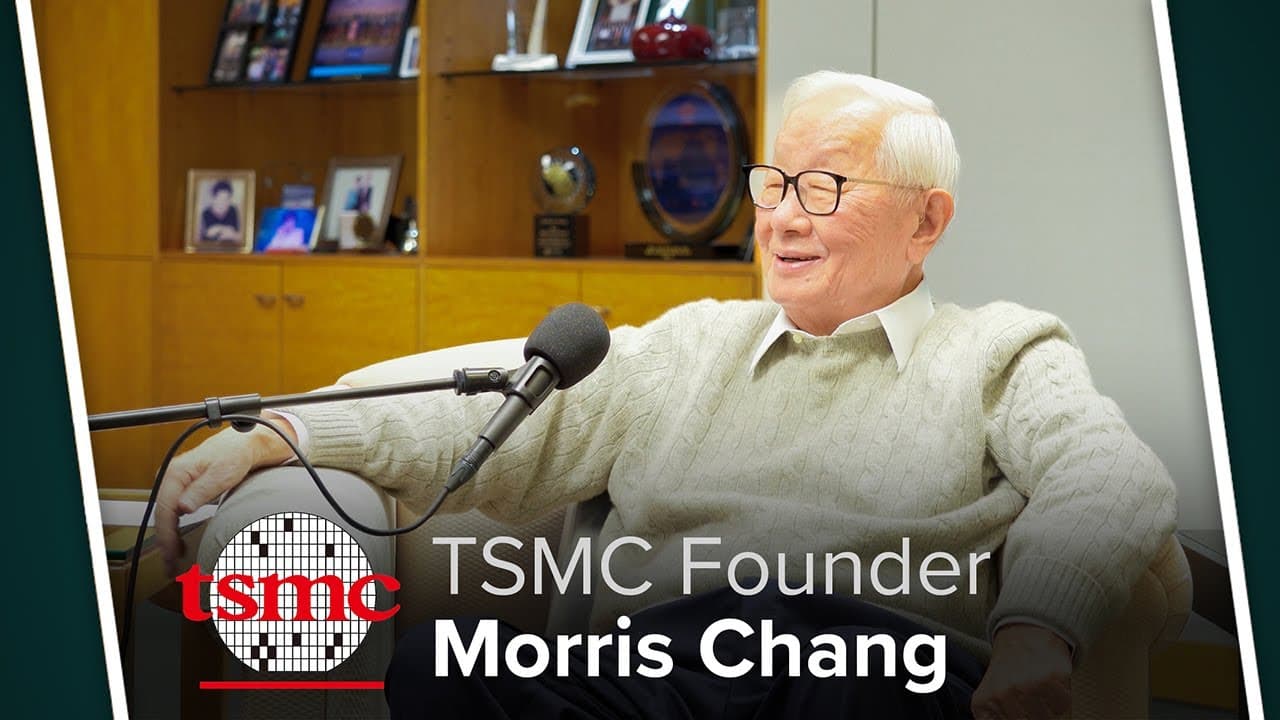
TSMC founder Morris Chang helped turn the company into a semiconductor manufacturing leader through its Pure Play Foundry model, decisive technology investments, and partnerships with Nvidia and Apple. Nvidia first contacted Chang in 1997, when it had roughly 50 or 60 employees and faced financial difficulties. The interview also explains TSMC’s 40nm crisis, 28nm investment, and learning-curve strategy. Read on for Chang’s account of these pivotal decisions.
Transcript
the podcast about great technology companies and the stories and play no no you said technology now we definitely have a cold opening all right I guess uh I really want us to be about technology companies again well this is a technology company it's a sign all right here we go who got the truth is it is it you is it you who got the truth no... Read More
Key Insights
- Morris Chang's strategic vision for TSMC included a focus on becoming a dedicated Pure Play Foundry, which allowed the company to avoid competing with its customers and maintain strong relationships with them.
- The relationship between TSMC and Nvidia began in 1997 when Nvidia sought a Foundry partner. Despite initial challenges, this partnership became pivotal for both companies.
- TSMC faced significant challenges with the 40nm node in 2009, leading to a temporary strain with Nvidia. Chang's leadership helped resolve the issue by directly engaging with Nvidia's CEO Jensen Huang.
- In 2009, TSMC underwent internal challenges, including layoffs that led to employee protests. Chang's approach to resolving these issues involved rehiring laid-off employees and focusing on long-term company health.
- TSMC's decision to invest heavily in the 28nm node was a turning point. This move, driven by Chang's belief in the node's potential, positioned TSMC as a leader in semiconductor manufacturing.
- The partnership with Apple was crucial for TSMC's growth. Despite initial setbacks, including Apple's preference for a 20nm node, TSMC's flexibility and strategic planning secured Apple's business.
- Chang's emphasis on the learning curve and experience curve theories was instrumental in TSMC's approach to scaling its operations and maintaining competitive pricing.
- The development of Taiwanese Science Parks played a critical role in TSMC's success by fostering a localized ecosystem of innovation and collaboration among semiconductor companies.
Install to Summarize YouTube Videos and Get Transcripts
Explore YouTube Video Summarizer or Get YouTube Transcript Extractor
Questions & Answers
Q: How did TSMC founder Morris Chang shape the company’s success?
Morris Chang focused TSMC on becoming a dedicated Pure Play Foundry that would not compete with its customers. He also guided major decisions involving Nvidia, Apple, the troubled 40nm node, and investment in the 28nm node.
Q: How did TSMC’s relationship with Nvidia begin?
The relationship began in 1997 when Jensen Huang sent Morris Chang a letter after Nvidia received no response from TSMC’s San Jose office. Chang called Huang and arranged a meeting because the letter made him curious and concerned that his sales team had neglected a potential customer.
Q: What was Nvidia’s situation when Jensen Huang contacted Morris Chang?
Nvidia was four years old, had roughly 50 or 60 employees, and was facing financial difficulties. Huang said the company had developed promising chips but needed a foundry partner.
Q: How did TSMC address its 40nm node problem with Nvidia in 2009?
Manufacturing and quality problems with the 40nm node strained TSMC’s relationship with Nvidia. Chang took back the CEO position, engaged directly with Jensen Huang, sought to understand the problem, offered a financial settlement, and worked to preserve future collaboration.
Q: Why was TSMC’s investment in the 28nm node significant?
The 28nm investment demonstrated TSMC’s commitment to leading-edge technology. Chang’s belief in the node’s potential helped position TSMC as a semiconductor manufacturing leader and supported its pursuit of major customers such as Apple.
Q: How did TSMC secure Apple as a customer?
The relationship began when Apple’s Jeff Williams approached Morris Chang. Although Apple initially preferred a 20nm node, TSMC used flexible planning, financial arrangements, and technology development to secure the business.
Q: How did Morris Chang respond to TSMC’s internal challenges in 2009?
Layoffs prompted employee protests within TSMC. Chang addressed the situation by rehiring laid-off employees and concentrating on the company’s long-term health and operational stability.
Q: How did learning-curve theory influence TSMC’s strategy?
Chang used learning-curve and experience-curve theories to guide TSMC’s expansion. The approach emphasized gaining manufacturing experience to reduce costs, improve efficiency, scale operations, and maintain competitive pricing.
Summary & Key Takeaways
-
In a rare interview, TSMC founder Morris Chang discusses the company's pivotal moments, including its partnerships with Nvidia and Apple. He highlights the strategic decisions that positioned TSMC as a leader in semiconductor manufacturing.
-
Chang shares insights into TSMC's challenges, such as the 40nm node issue with Nvidia and internal layoffs in 2009, and how these were addressed through leadership and strategic planning.
-
The interview also covers TSMC's investment in the 28nm node, its relationship with Apple, and the importance of the learning curve theory in guiding the company's growth and competitive strategy.
Read in Other Languages (beta)
Share This Summary 📚
Summarize YouTube Videos and Get Video Transcripts with 1-Click
Try YouTube Summary with ChatGPT & Claude or YouTube Transcript Generator
Explore More Summaries from Acquired 📚




Summarize YouTube Videos and Get Video Transcripts with 1-Click
Try YouTube Summary with ChatGPT & Claude or YouTube Transcript Generator