What Is the Future of AI According to Dmitry Shapiro?
TL;DR
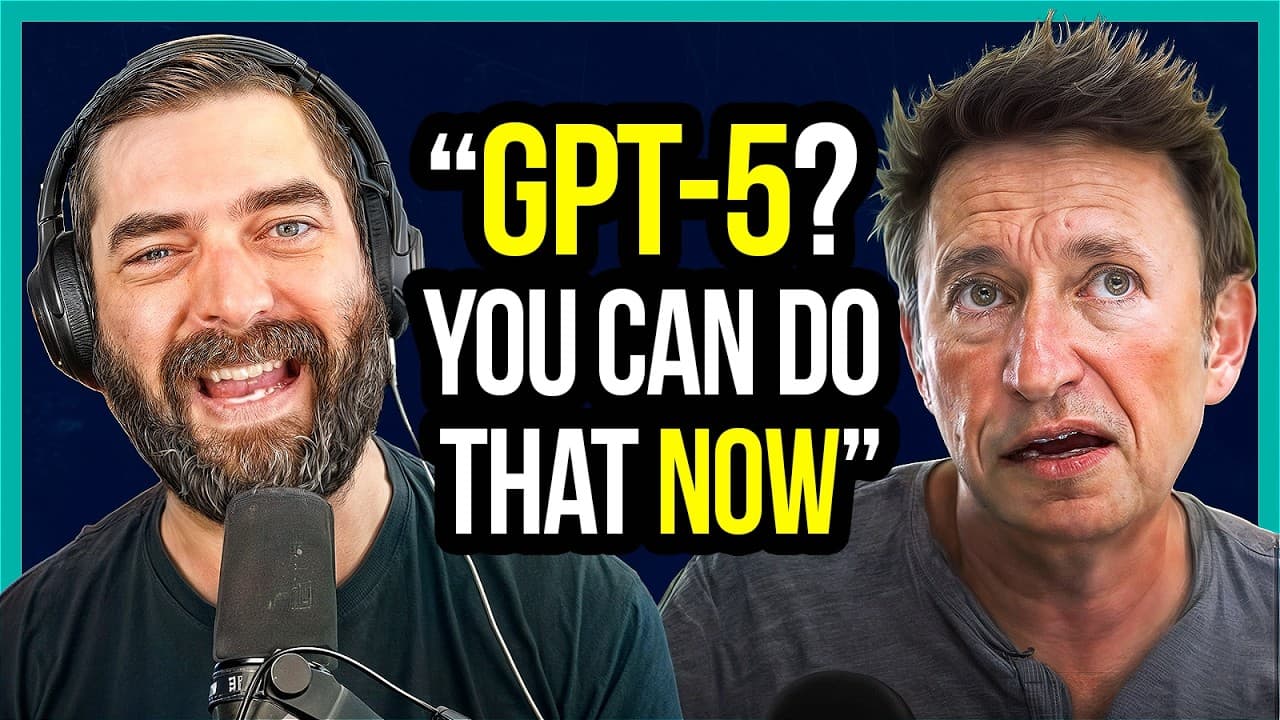
Dmitry Shapiro believes the future of AI lies in seamless, behind-the-scenes automation, which minimizes human intervention. His platform, Mind Studio, enables no-code automation of processes, making it accessible for users to enhance workflow efficiency. Current AI applications excel in areas like resume processing and sales, outperforming humans in understanding context and improving productivity.
Transcript
if you're paying attention to AI at all I really think you're going to find this discussion valuable a lot of what we talk about is counter to the common narrative that people hear in the AI world and there's a lot of things that I think people believe is where AI is going where our discussion tries to prove that no maybe it's actually going in a d... Read More
Key Insights
- 👻 Mind Studio allows for flexible, no-code automation, making it accessible for non-technical users and transforming workflow processes.
- 🈸 Current AI applications in enterprises focus on optimizing tasks such as resume processing and sales automation to enhance efficiency.
- ❓ AI systems can outperform humans in situations requiring meticulous understanding, particularly in sales contexts, by leveraging vast data analysis capabilities.
- 🐎 The conversation stresses the potential for AI to operate autonomously, reducing human involvement and increasing operational speed in various tasks.
- ⚾ Dimitri challenges existing narratives around AI safety and alignment, advocating for more tailored approaches based on specific applications.
- 🎑 The future of AI is expected to focus on automating processes while reducing human intervention requirements, promoting behind-the-scenes functionality.
- 🔨 Mind Studio exemplifies a modern shift where fewer, more integrated tools can replace a multitude of existing software solutions within organizations.
Install to Summarize YouTube Videos and Get Transcripts
Explore YouTube Video Summarizer or Get YouTube Transcript Extractor
Questions & Answers
Q: What is Mind Studio, and how does it leverage AI?
Mind Studio is a no-code automation platform founded by Dimitri Shapiro, designed to simplify workflow automation. By integrating various AI models, including GPT-3.5 Turbo, it allows users to automate processes without the need for constant prompting. This enables businesses to streamline operations while reducing reliance on manual intervention.
Q: What are the current standout use cases for AI in enterprises?
Enterprises are utilizing AI primarily for automation in processes such as resume screenings, multi-step workflows, and sales enhancement. For instance, AI can now triage resumes automatically and initiate project management processes that would typically require human oversight, leading to significant efficiency improvements.
Q: How do current AI models compare to human capabilities, particularly in sales?
Many AI models, according to Dimitri, outperform average human salespeople in understanding and interpreting customer interactions. AI can analyze conversations more thoroughly, recognizing unspoken concerns and adapting responses to guide prospects through the sales process effectively, providing benefits that typical human engagement may lack due to time pressures.
Q: What future predictions does Dimitri have about AI, particularly concerning voice interaction?
Dimitri predicts that while voice technology has applications, the central future of AI lies in processes operating behind the scenes without human input. He argues that productivity and innovative capabilities will increase as automation minimizes the need for human commands, asserting that most AI applications will perform effectively without direct human interaction.
Q: How does Dimitri view issues surrounding AI safety and alignment?
Dimitri believes alignment and safety discussions often miss the nuances required for different applications of AI. He contends that alignment should be specific to each use case rather than generalized. He emphasizes that large language models lack inherent understanding, focusing on statistical predictions rather than autonomous decision-making.
Q: What are some transformative applications of AI mentioned in the conversation?
Dimitri highlights several transformative applications, including automation of sales follow-ups, employee training alignment, and managing project workflows. These applications lead to improved productivity by enabling automated systems to take over repetitive tasks, allowing human employees to focus on more strategic elements of their roles.
Q: What is the potential impact of Mind Studio on modern business practices?
Mind Studio is positioned to revolutionize how businesses approach automation by drastically reducing the number of software solutions required to manage processes. By providing a no-code platform for workflow management, it enables organizations to modernize operations efficiently, promoting higher productivity and quality output.
Q: How will the shift towards automation affect the workforce?
Dimitri suggests that the shift towards automation will free employees from tedious tasks, allowing them to focus on higher-order responsibilities. As AI takes over routine processes, the workforce will potentially see enhanced job roles focused on strategic thinking and creativity, fostering a more efficient and engaged working environment.
Summary & Key Takeaways
-
Dimitri Shapiro discusses his journey in tech and the founding of Mind Studio, emphasizing the shift towards no-code automation utilizing AI models.
-
The conversation highlights the current practical applications of AI in enterprises, showcasing examples of automation improving efficiency in workflow processes and sales.
-
Predictions about AI's future suggest a movement towards behind-the-scenes operations, minimizing direct human interaction, and focusing on enhanced automation capabilities.
Read in Other Languages (beta)
Share This Summary 📚
Summarize YouTube Videos and Get Video Transcripts with 1-Click
Try YouTube Summary with ChatGPT & Claude or YouTube Transcript Generator
Explore More Summaries from Matt Wolfe 📚



Summarize YouTube Videos and Get Video Transcripts with 1-Click
Try YouTube Summary with ChatGPT & Claude or YouTube Transcript Generator