How to Use Micro Personas for Meta Ad Reach
TL;DR
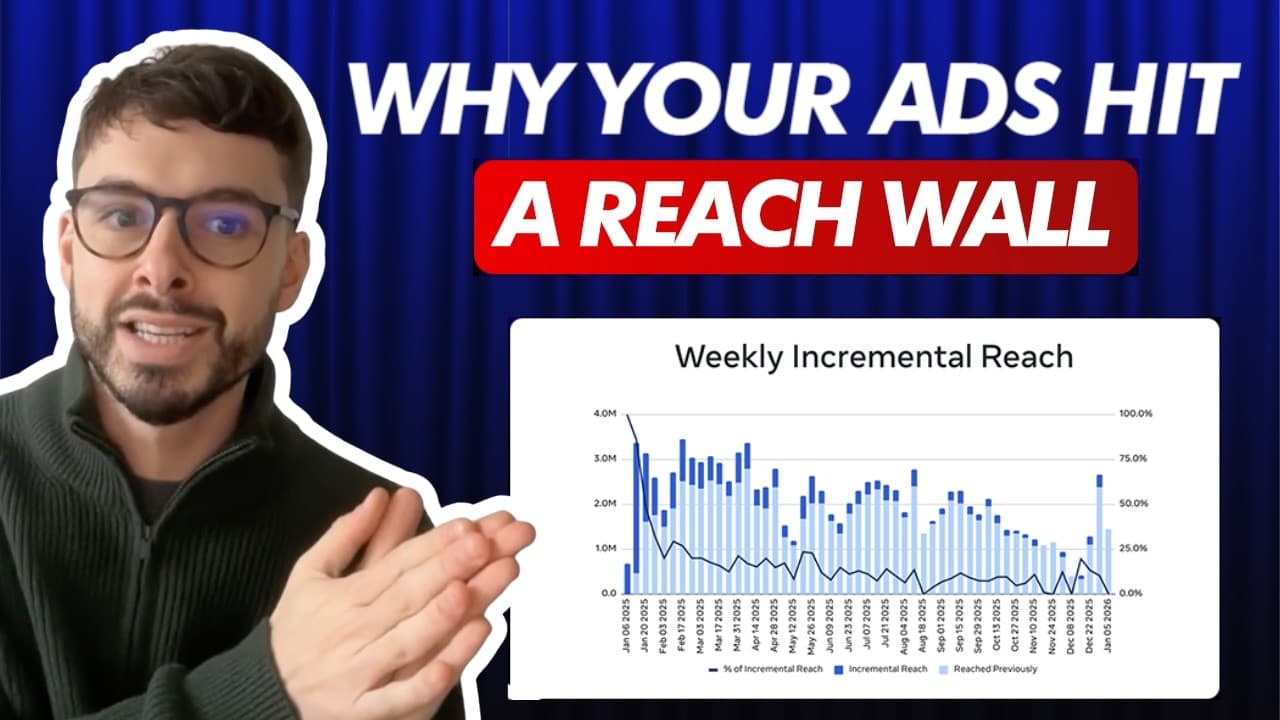
Build Meta creative around micro personas defined by emotional states, fears, desires, motivations, awareness levels, and contextual moments. This psychological diversity gives Andromeda clearer behavioral and engagement signals, helping DTC brands reach distinct audiences instead of repeatedly addressing the same people with more versions of similar messaging.
Transcript
Welcome back to another episode of DTOC Diaries. Today I'm super excited because we're going to be talking all things personas and micro personas. And I would say this has been one of our biggest unlocks [music] as an agency group and for the seven and eight figure brands that we work with over the last 3 months. We're going to go super deep into h... Read More
Key Insights
- Creative is now a major targeting mechanism on Meta because Andromeda interprets ad content alongside extensive behavioral and engagement data. The creative must give the algorithm clear signals about the motivations, fears, desires, and problems of the people most likely to respond.
- Demographic targeting alone is too broad to provide Andromeda with sufficiently precise signals. Two consumers can share an age, industry, and interests while responding to entirely different fears or aspirations, so effective creative must distinguish their psychological motivations rather than treat them as one audience.
- Creative diversity requires variation in both the advertising vehicle and the message. Podcast-style ads, high-production content, and raw one-shot videos may diversify formats, but they will still reach similar psychological profiles if each execution repeats the same emotional appeal.
- Strategic coverage is a better measure than creative output volume because producing more ads does not automatically expand reach. Brands should examine how many distinct emotional states and psychological landscapes their creative addresses, then identify gaps where important motivations or fears remain uncovered.
- A micro persona is defined by factors including emotional state, core desire, key motivation, fear, contextual moment, awareness level, skepticism, and psychological pull to convert. These details provide a more actionable foundation for messaging than age, gender, personality, or digital footprint alone.
- Awareness level determines how a micro persona should be addressed within the funnel. A problem-unaware customer requires different language and framing from a solution-aware customer, even when both share the same demographic characteristics, needs, or underlying product category.
- Contextual moments reveal situations in which a customer's pain becomes tangible and urgent. Creative can use those scenarios to agitate the current problem, contrast the actual self with the ideal self, and present the desired future state in personally relevant terms.
- Parents illustrate why one macro persona can contain several micro personas. One parent may fear social judgment based on a child's behavior, while another focuses on health implications such as sugar content, requiring separate creative concepts despite their shared identity as parents.
- More videos from this channel:
- More from this channel: D2C Diaries
Install to Summarize YouTube Videos and Get Transcripts
Explore YouTube Video Summarizer or Get YouTube Transcript Extractor
Questions & Answers
Q: How do micro personas improve Meta ad reach?
Micro personas improve reach by giving creative distinct psychological signals tied to specific fears, desires, motivations, emotional states, and situations. Meta's Andromeda system can use these signals, together with behavior and engagement data, to match ads with people likely to respond. This helps a brand address new audience segments instead of repeatedly serving similar messages to the same psychological profiles.
Q: What information should a Meta ad micro persona include?
A useful micro persona should include the customer's emotional state, core desires, key motivations, fears, contextual moments, awareness level, skepticism, and psychological reasons to convert. It should also clarify the present problem and the customer's envisioned future state. These elements make the persona actionable for creative concepting and scripting, rather than leaving it as a broad demographic description.
Q: Why are demographic personas insufficient for Meta advertising?
Demographic personas are insufficient because people with similar ages, interests, genders, or occupations can have very different reasons for buying. Those differences affect which problems, fears, and desired outcomes will capture attention. Meta's algorithm needs clearer creative signals than broad demographic labels provide, so brands must identify the psychological variations within each larger audience group.
Q: Why does producing more Meta ad creative sometimes fail to increase reach?
Producing more creative can fail when every advertisement speaks to the same emotional states and personas in essentially the same way. More hooks or formats then add output without expanding psychological coverage. Brands should conduct a gap analysis of the motivations, fears, desires, and awareness levels addressed by existing ads, then create concepts for the uncovered areas.
Q: What does creative is the targeting mean on Meta?
Creative is the targeting means that Meta uses the content and performance of an advertisement as signals for deciding who should receive it. Andromeda considers user behavior, views over time, comments, shares, conversion likelihood, and creative performance. An ad therefore needs messaging that clearly reflects a particular customer's problem, motivation, fear, or desire, rather than relying only on audience settings.
Q: How should Meta ads change across customer awareness levels?
Meta ads should adapt their language, framing, and argument to the customer's awareness level. A problem-unaware person first needs messaging that makes the problem recognizable and relevant. A solution-aware person can receive more direct discussion of the available solution, likely skepticisms, and reasons to convert. The same demographic persona may therefore require several different creative approaches across the funnel.
Q: What is strategic coverage in a persona-driven creative strategy?
Strategic coverage is the range of distinct psychological landscapes addressed by a brand's creative. It considers whether ads speak to different emotional states, fears, desires, motivations, contextual moments, and awareness levels. Measuring this coverage exposes messaging gaps that raw production counts cannot reveal, helping brands diversify who they address instead of merely increasing the number of similar ads.
Q: How can brands turn micro personas into Meta ad concepts?
Brands can map each macro persona into smaller groups based on specific emotional states, motivations, fears, desires, contextual triggers, and awareness levels. Each concept should then select one of those psychological profiles and use an appropriate creative vehicle, such as a raw one-shot or high-production execution. The script should consistently reflect that profile's problem, skepticism, and desired future state.
Summary & Key Takeaways
-
Meta's Andromeda algorithm distributes ads using extensive consumer data, behavioral patterns, engagement signals, and creative performance. Because creative now performs much of the targeting work, brands need ads that express distinct psychological signals. Changing formats without changing the underlying message does not provide meaningful strategic coverage or reliably expand reach.
-
Traditional personas based on age, gender, interests, personality, digital footprint, and broad problems are too shallow for the current environment. Micro personas add emotional state, core desires, motivations, fears, contextual moments, awareness level, skepticism, and psychological reasons to convert, enabling different messages for people who appear demographically similar.
-
Brands should evaluate creative diversity by mapping the psychological landscapes covered by their ads, rather than counting output alone. Each macro persona can contain multiple micro personas with different triggers and concerns. Concepting and scripting should then align every creative execution with a specific micro persona, emotional state, and stage of awareness.
Read in Other Languages (beta)
Share This Summary 📚
Summarize YouTube Videos and Get Video Transcripts with 1-Click
Try YouTube Summary with ChatGPT & Claude or YouTube Transcript Generator
Explore More Summaries from D2C Diaries 📚



Summarize YouTube Videos and Get Video Transcripts with 1-Click
Try YouTube Summary with ChatGPT & Claude or YouTube Transcript Generator