3. The Birth of Algebra
Transcript
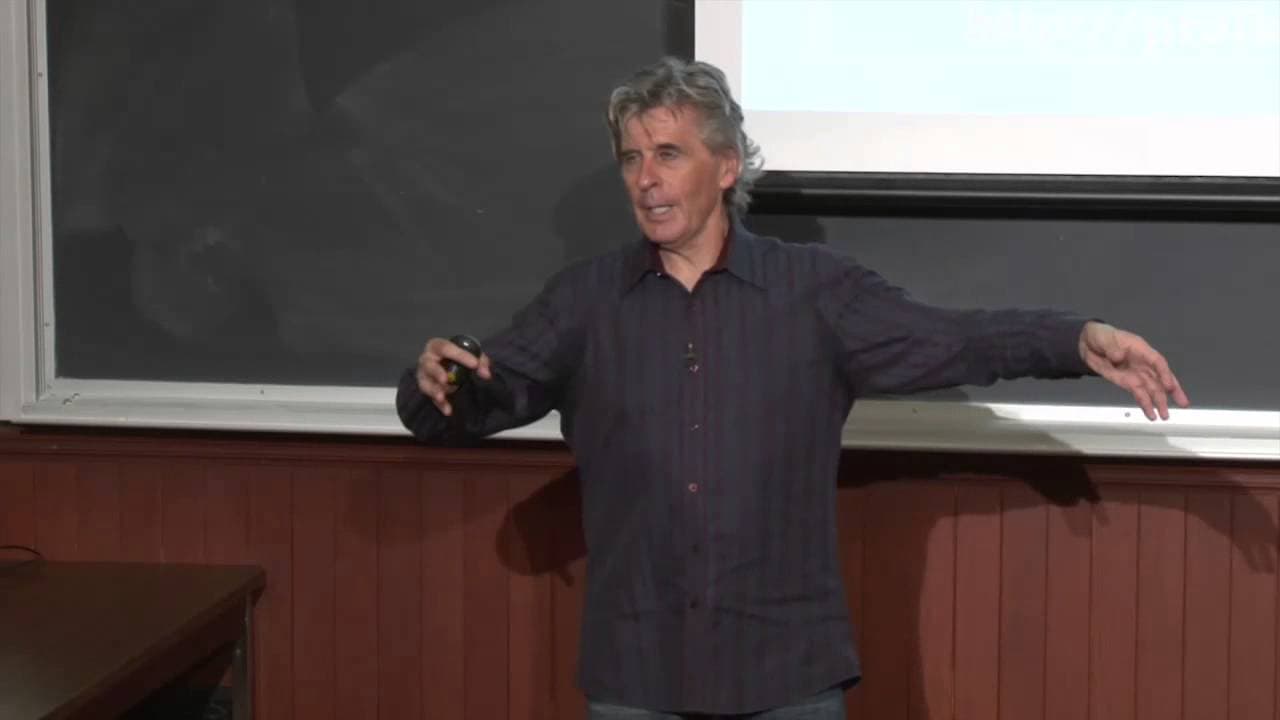
Stanford University welcome back and there's two topics tonight the first one is the one I began and just sort of got into a little bit at the beginning at the end of last time and so I'll pick up on that that's this thing about the birth of algebra which is part of a general sort of historical theme that's going to be running through this but I'm ... Read More
Install to Summarize YouTube Videos and Get Transcripts
Explore YouTube Video Summarizer or Get YouTube Transcript Extractor
Summary
This video discusses the history of algebra, from its origins in ancient civilizations like the Babylonians and Egyptians to its development in the Islamic world and later in Europe. The video touches on the distinction between geometric algebra and symbolic algebra, and highlights the practical applications of algebra in fields like commerce, engineering, and astronomy. The video also introduces key figures in the history of algebra, such as al-Khwarizmi, Omar Khayyam, and Leonardo Fibonacci.
Questions & Answers
Q: What is the difference between sophisticated arithmetic and higher algebra?
Sophisticated arithmetic, also known as meta arithmetic, refers to the kind of algebra that most people are familiar with from their high school education. It involves calculations and manipulations of numbers using formulas and equations. Higher algebra, on the other hand, is a more advanced form of algebra that is studied by mathematicians and involves abstract concepts and structures, such as groups, rings, and fields.
Q: How does algebra improve arithmetic calculations?
Algebra arose out of arithmetic as a way of improving arithmetic calculations. While arithmetic is focused on quantitative calculations, algebra is a qualitative discipline that involves reasoning logically about numbers. It allows us to reason about unknown quantities and solve equations, which in turn helps us in solving complex problems and making calculations more efficient.
Q: How was algebra recorded and written down in ancient times?
In ancient times, algebra was written down in words rather than symbols. This was done to ensure reliable copying of the texts, as the scribes who copied these texts might not have understood the symbols used in the calculations. While the concepts and reasoning behind algebra were there, the actual notation and symbolism that we use today didn't come until much later in history.
Q: How did algebra develop in different parts of the world?
Algebra developed in different parts of the world, including ancient civilizations like the Babylonians, Egyptians, and Greeks. However, it wasn't until the Islamic world in the 8th and 9th centuries that algebra gained significant advancements, driven by practical applications in trade, engineering, and commerce. The works of mathematicians like al-Khwarizmi, Omar Khayyam, and Abu Kamil contributed to the development of algebra as a powerful tool for solving problems.
Q: What were some practical applications of algebra?
Algebra was introduced for very practical reasons, such as solving problems related to inheritance, legacies, partitions, trade, and legal matters. It was used in commerce, engineering, and astronomy, providing a way to make calculations and analyze quantities more effectively. Algebra allowed people to solve problems involving unknowns, perform calculations, and reason about numbers in a logical manner.
Q: What is the significance of al-Khwarizmi and his works?
Al-Khwarizmi is considered to be one of the key figures in the development of algebra. He wrote the first recognizable algebra book, "Calculation with Hindu Numerals," and introduced the term "algebra" in his book on restoration and confrontation, which dealt with solving equations. His works laid the foundation for modern algebra and had a significant impact on the spread and use of algebra in the Islamic world and later in Europe.
Q: How did algebra transition from geometric reasoning to symbolic reasoning?
Algebra transitioned from geometric reasoning to symbolic reasoning through the introduction of symbols and notations. Though the early works of mathematicians used geometric methods to solve mathematical problems, the use of symbols became more prevalent in later centuries. It wasn't until the 16th century that modern symbolic algebra, as we know it today, emerged. Symbolic algebra allowed for more abstract and general reasoning about numbers and quantities.
Q: What were some key accomplishments of Omar Khayyam?
Omar Khayyam, known more as a poet, made significant contributions to mathematics as well. He worked on astronomy, calendar reform, and solved various equations, including cubic equations. His book, "Treatise on Demonstrations of Problems of Algebra," contained a wealth of mathematical knowledge, including methods for solving cubic equations using conic sections. Khayyam's work was highly detailed and helped advance algebra as a discipline.
Q: How did algebra progress after Leonardo Fibonacci?
After Leonardo Fibonacci, algebra continued to progress and spread in Europe. Many scholars and mathematicians built upon his work and further refined algebraic methods. Notable figures like Cardano, Tartaglia, and Viète made significant contributions to algebra in the 16th and 17th centuries. Algebra became a powerful tool in mathematics and found applications in various fields, paving the way for further advancements and developments.
Q: How is algebra taught in schools today?
Algebra is typically taught in schools as a form of problem-solving using symbolic manipulation. Students learn formulas, equations, and procedures for solving algebraic problems. However, the way algebra is taught can vary across different curricula and educational systems. Some argue that the current approach to teaching algebra may not effectively convey its practical applications and relevance to students.
Takeaways
Algebra has a rich and diverse history, beginning with ancient civilizations and evolving into a powerful tool for solving problems. It emerged from the need to improve arithmetic calculations and was influenced by practical applications in commerce, engineering, and other fields. Key figures like al-Khwarizmi, Omar Khayyam, and Leonardo Fibonacci made significant contributions to the development of algebra. Algebra's transition from geometric reasoning to symbolic reasoning allowed for more abstract and general reasoning about numbers and quantities. Algebra continues to be taught in schools, but there is room to improve how it is taught to convey its practical applications and relevance to students.
Read in Other Languages (beta)
Share This Summary 📚
Summarize YouTube Videos and Get Video Transcripts with 1-Click
Try YouTube Summary with ChatGPT & Claude or YouTube Transcript Generator
Explore More Summaries from Stanford 📚

Summarize YouTube Videos and Get Video Transcripts with 1-Click
Try YouTube Summary with ChatGPT & Claude or YouTube Transcript Generator