The Promise of Digital Transformation

TL;DR
AI is a general-purpose technology that has the potential to transform all industries, and now it is extending into the industrial edge, presenting unique challenges and opportunities for deployment.
Transcript
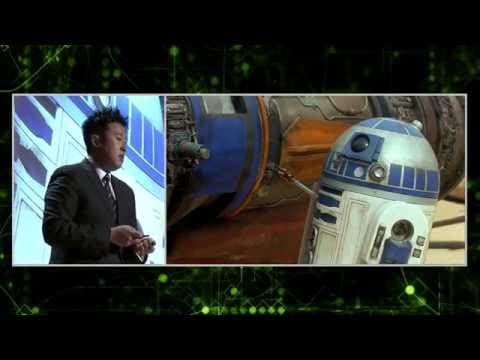
hello everyone and thanks for joining my talk i'm jerry chen i lead global business development for nvidia's manufacturing and industrial business as you're all fully aware we're now well into an industry transformation driven by ai now it might seem like ai is inescapable in our daily life nowadays with smart devices and internet services than eve... Read More
Key Insights
- ❓ AI is a general-purpose technology that has the potential to transform all industries and is considered the most impactful general-purpose technology.
- 😶🌫️ The AI of Things (AIoT) represents the next wave of AI, extending into industrial assets, and presents unique challenges compared to cloud-based AI services.
- ❓ Industrial sectors such as manufacturing, logistics, and agriculture will be transformed by AI, offering potential value creation.
- 🚂 NVIDIA is investing in solutions to address challenges in deploying AI for industrial applications, such as connectivity, cybersecurity, and training autonomous AI agents.
- ✊ AI-powered technologies, such as image-based quality inspection and physics-informed neural networks, are already being used in industries like manufacturing and automotive.
- 😒 The use of NVIDIA's Omniverse platform enables virtual planning and visualization of complex manufacturing processes.
Install to Summarize YouTube Videos and Get Transcripts
Explore YouTube Video Summarizer or Get YouTube Transcript Extractor
Questions & Answers
Q: What are some examples of general-purpose technologies that have sparked previous industrial revolutions?
Examples of general-purpose technologies include domesticated agriculture, written language, the internal combustion engine, electricity, and information technology.
Q: How did the first three industrial revolutions impact civilization?
The first industrial revolution was ignited by the internal combustion engine, transforming economic activities. The second industrial revolution was sparked by the deployment of electricity at an industrial scale. The third industrial revolution was driven by the adoption of information technology.
Q: What is the potential for AI to transform industrial sectors?
AI has the potential to transform all industrial sectors, including optimizing product design, quality inspection, predictive maintenance, supply chain optimization, worker safety and productivity assistance, and data analysis.
Q: What challenges arise when deploying AI for industrial applications?
The major challenges include connectivity, scalability, provisioning infrastructure, deploying and managing models in the field, cybersecurity, worker safety, training autonomous AI agents, and designing and optimizing factory operations in real-world physical spaces.
Summary & Key Takeaways
-
AI is a general-purpose technology that impacts all industries and has sparked previous industrial revolutions.
-
The fourth industrial revolution is ignited by AI, which has the potential to learn, improve, and operate autonomously.
-
The next wave of AI is represented by AI breaking out of the cloud and extending into industrial assets, known as the AI of Things (AIoT). This wave presents different challenges, such as connectivity and managing remote industrial assets.
Read in Other Languages (beta)
Share This Summary 📚
Summarize YouTube Videos and Get Video Transcripts with 1-Click
Try YouTube Summary with ChatGPT & Claude or YouTube Transcript Generator
Explore More Summaries from NVIDIA 📚


Summarize YouTube Videos and Get Video Transcripts with 1-Click
Try YouTube Summary with ChatGPT & Claude or YouTube Transcript Generator