How to Build a SaaS Using an Existing Audience
TL;DR
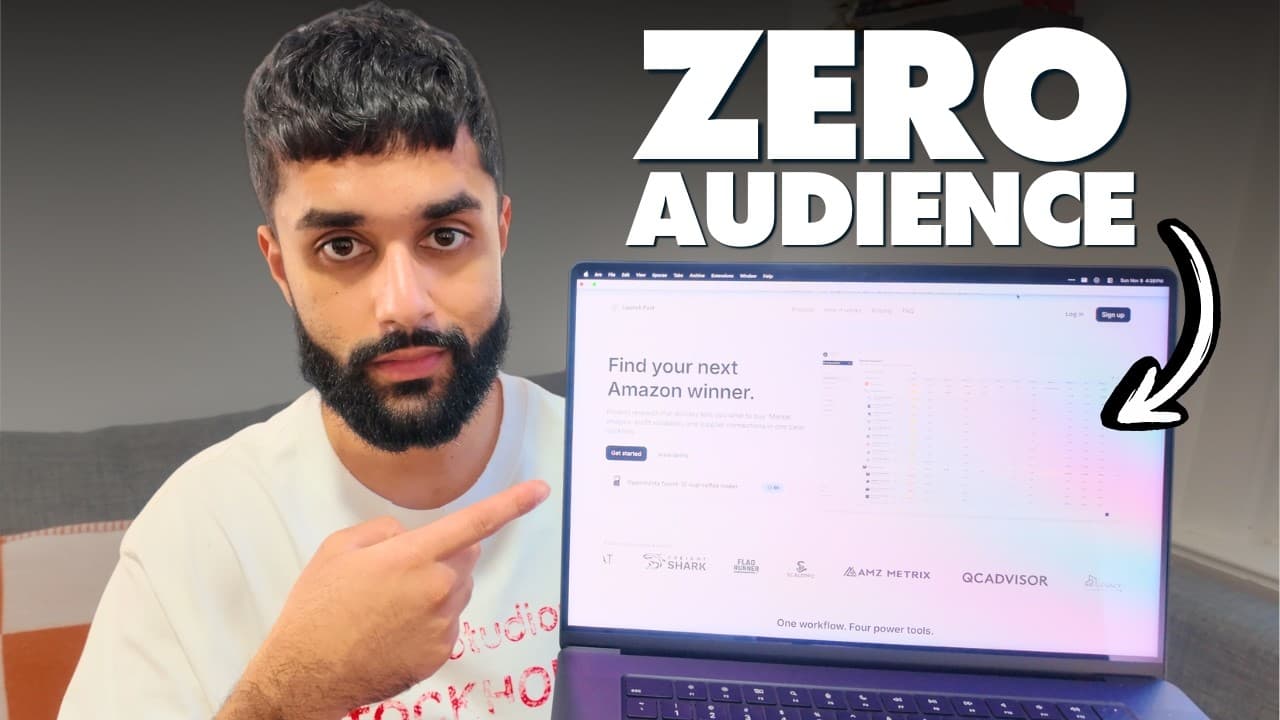
Build software around a problem you understand firsthand, then partner with an organization that already reaches your target customers. Hassam used Cursor to turn his Amazon-selling workflow into a functional product, traded equity for immediate distribution through Legacy X, and grew Launch Fast beyond $20,000 in monthly recurring revenue within 90 days.
Transcript
I took everything that I knew and built my first SAS. Meet Hassam, a non-technical guy who launched an app with Cursor. So, I spent literally all day for the next 48 hours building it out. And this is what I did. But he had no audience, no distribution, and no way to reach customers. So, he did something I've never seen anyone do before. He found a... Read More
Key Insights
- Launch Fast is an AI-powered Amazon product research tool designed for private-label sellers. It helps users find, validate, and source potential products in minutes rather than spending weeks moving data manually between research tools and spreadsheets.
- Domain knowledge was Hassam's primary advantage over generalist developers. Running Amazon brands taught him what sellers need, where existing products fail, and which workflows create frustration, allowing him to solve an experienced problem instead of guessing about an unfamiliar audience.
- Distribution was treated as part of the product strategy from the beginning. Hassam recognized that a strong tool would have little impact without customer access, so he approached Legacy X, whose coaching audience already consisted of active Amazon sellers.
- The partnership exchanged equity for immediate access to relevant customers. Hassam considered that trade worthwhile because Legacy X supplied validation and a built-in customer base, reducing the time he otherwise would have spent creating an audience independently.
- The MVP was built with Cursor during an intensive 48-hour sprint. Hassam first mapped Legacy X's systems, data, standard procedures, and workflows, then implemented the core features, tested bugs and edge cases, improved the interface, and prepared a recorded demonstration.
- Professional presentation was important even at the MVP stage. Hassam applied lessons from Amazon branding to make the interface feel like a real product, while keeping the underlying development goal focused on functionality rather than perfection.
- Validated markets reduce idea risk because existing paid software demonstrates customer demand. Hassam recommends examining successful SaaS products within familiar domains, then competing through stronger execution instead of assuming that a business idea must be entirely unique.
- Customer research should focus on places where intended users discuss actual problems. Reddit, Facebook groups, Twitter, and review sites can reveal users' goals, recurring complaints, and defects in current tools before a founder decides which high-value feature to build first.
Install to Summarize YouTube Videos and Get Transcripts
Explore YouTube Video Summarizer or Get YouTube Transcript Extractor
Questions & Answers
Q: How can a founder build a SaaS without an audience?
A founder can partner with an organization that already serves the intended customers. Hassam had no personal audience, but Legacy X had thousands of active Amazon sellers in its coaching ecosystem. He offered to build a better research tool and proposed a partnership if the demonstration met their needs. This converted an existing audience into immediate distribution, validation, and a built-in customer base.
Q: How did domain knowledge help Launch Fast succeed?
Hassam had operated Amazon brands and personally experienced the work involved in researching product ideas, copying information into spreadsheets, and evaluating opportunities. That experience gave him a detailed understanding of seller goals, required data, and weaknesses in existing tools. He could therefore design Launch Fast around genuine workflow bottlenecks, unlike earlier projects in markets where he did not understand the end user as deeply.
Q: How was the Launch Fast MVP built in 48 hours?
Hassam began by mapping Legacy X's systems, standard procedures, available data, and workflows, then combined those findings with his own Amazon-selling processes. He used Cursor to implement the core functionality, tested and corrected bugs, polished the interface and branding, checked edge cases, and prepared a demonstration. The objective was a functional and credible product, not a perfect or complete application.
Q: Why did Hassam trade equity for distribution?
Hassam believed that creating an audience independently could take years, while Legacy X already had direct access to the customers Launch Fast needed. Trading equity provided immediate market validation and a ready customer base. He viewed time and distribution as valuable resources, reasoning that partial ownership of a revenue-producing company was preferable to retaining complete ownership of a product with no customers or recurring revenue.
Q: How should founders identify a promising SaaS idea?
Founders should list industries, hobbies, or domains where they possess deep knowledge and have personally solved recurring problems. They can then identify which of those areas already support successful SaaS products, because paying competitors indicate that a market exists. The goal is not necessarily to invent a unique category. It is to apply firsthand understanding and execute more effectively within a validated market.
Q: How can founders research customer pain points?
Founders can study the online places where their intended customers openly discuss products and problems, including Reddit, Facebook groups, Twitter, and review sites. The research should clarify who the user is, what outcome the user wants, and what defects exist in current software. These findings help separate meaningful workflow bottlenecks from theoretical problems that may appear important but do not motivate customers to adopt a solution.
Q: What should a SaaS MVP include first?
A SaaS MVP should begin with the feature that offers the highest potential return while remaining relatively easy to implement. It only needs to function well enough for real users to evaluate it. Hassam's approach emphasizes shipping quickly, collecting validation, and improving through testing instead of delaying release until every feature and design detail reaches an imagined standard of perfection.
Q: Why did Hassam's earlier software projects fail to gain traction?
Hassam said his earlier projects addressed areas such as lyric AI video generation and automated job applications, but he lacked a strong understanding of those end users and the weaknesses of existing software. Most projects never reached production, although each taught him something. Launch Fast differed because it applied his established Amazon expertise to a problem he had personally encountered and understood from beginning to end.
Summary & Key Takeaways
-
Hassam turned his experience running Amazon brands into Launch Fast, an AI-powered research tool for private-label sellers. Although he lacked technical training, he used Cursor and lessons from several earlier projects to automate product discovery, validation, and sourcing tasks that had previously required extensive manual research and spreadsheet work.
-
The product gained traction because Hassam paired firsthand domain knowledge with established distribution. He approached Legacy X, an Amazon coaching company whose customers matched the product's intended users, and offered to build a working demonstration. The partnership exchanged equity for immediate validation, customer access, and a built-in route to market.
-
Hassam's repeatable playbook begins with identifying domains where you have personally solved problems. He recommends confirming that customers already pay for comparable software, studying complaints in online communities and reviews, and building the easiest high-value feature first. The product should reach real users quickly rather than wait for perfect execution.
Read in Other Languages (beta)
Share This Summary 📚
Summarize YouTube Videos and Get Video Transcripts with 1-Click
Try YouTube Summary with ChatGPT & Claude or YouTube Transcript Generator
Explore More Summaries from Starter Story 📚

Summarize YouTube Videos and Get Video Transcripts with 1-Click
Try YouTube Summary with ChatGPT & Claude or YouTube Transcript Generator