How Will Genetic Engineering Transform Everything?
TL;DR
Genetic engineering could reshape food, medicine, materials, manufacturing, and consumer goods by turning cells into programmable production systems. Progress depends on moving beyond inserting single genes toward computer-aided design of integrated genetic circuits that sense environmental conditions, process information, and activate specific cellular responses.
Transcript
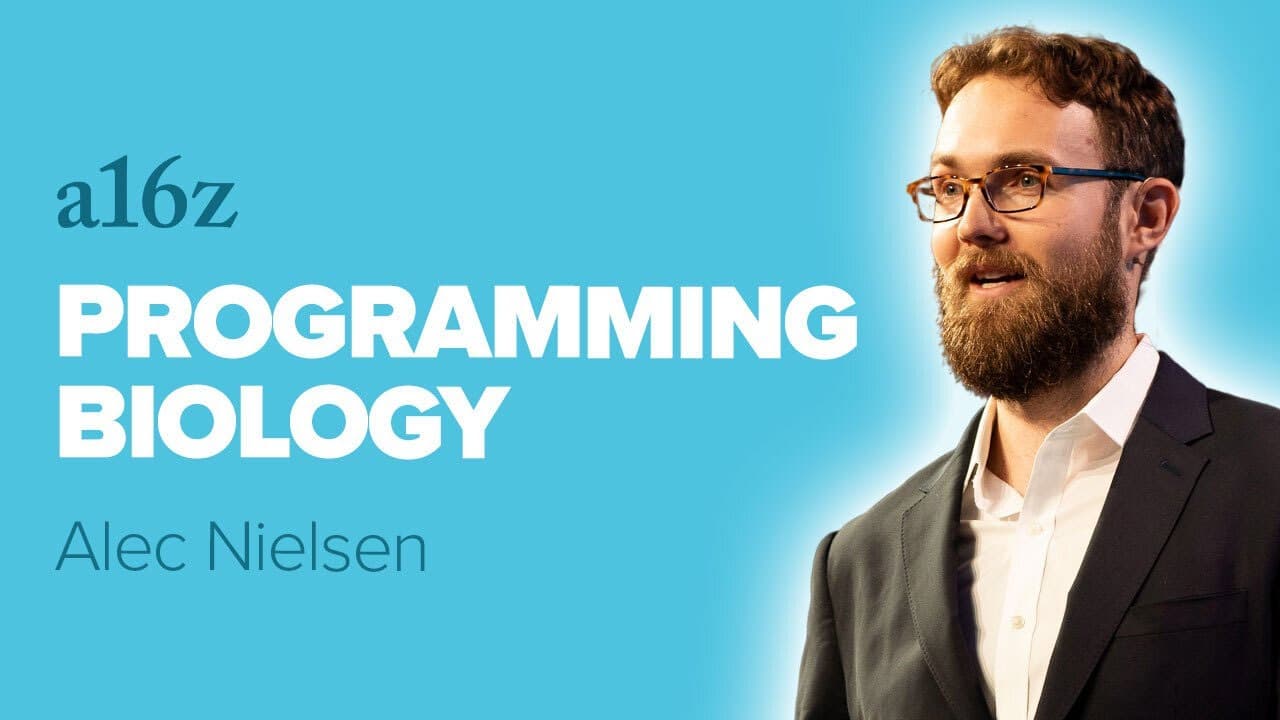
Everything in our world is going to be genetically engineered, and I mean everything. Our food, our therapeutics, our materials, our manufacturing infrastructure, our consumer goods. My name's Alec. I'm the co-founder and CEO of Asimov. We're a company in Cambridge, Massachusetts, that engineers living systems. Biology is a master architect at the ... Read More
Key Insights
- Biology is hyper-advanced molecular nanotechnology because cells construct gene-encoded proteins with atomic precision, organize those proteins into dynamic structures, sense their surroundings, process information, regulate genes, and contain the molecular machinery required to reproduce themselves.
- Selective breeding is an early form of biological engineering that humans used over millennia to transform wolves into dogs and develop larger, tastier, and more nutritious crops, long before scientists could manipulate DNA sequences directly.
- Modern genetic engineering grew from techniques developed during the 1970s and 1980s, including polymerase chain reaction for copying DNA, methods for cutting and recombining genes, cellular delivery of custom DNA, and chemical synthesis for writing DNA sequences directly.
- Genetically engineered insulin changed therapeutic manufacturing by enabling microbes to produce insulin in bioreactors. Before this development, insulin used to treat diabetes came from the pancreases of pigs and cows, making production more like farming than fermentation.
- Recombinant chymosin demonstrates how deeply genetic engineering has entered ordinary food production. The milk-coagulating enzyme once came from cow and goat stomach linings, while more than ninety percent of the world's cheese is produced using chymosin made through recombinant methods.
- Cell and gene therapies work by introducing DNA into human cells to address critical genomic defects. Approved therapies described in the talk treat cancers such as leukemia and lymphoma, along with inherited conditions including blindness and muscular atrophy.
- Future genetic circuits are intended to combine sensors, information processing, and actuators. Engineered cells could detect pH, chemicals, light, pressure, or oxygen, apply digital logic, analog computation, or feedback control, and then produce therapeutic, movement, or metabolic responses.
- Computer-aided biological design is expected to become necessary as genetic systems grow more complex. Asimov integrates laboratory synthetic biology with computational tools to build a compiler and debugger for programming mammalian cells, including human cells used in therapeutic applications.
Install to Summarize YouTube Videos and Get Transcripts
Explore YouTube Video Summarizer or Get YouTube Transcript Extractor
Questions & Answers
Q: Why can biology be described as molecular nanotechnology?
Biology can be described as molecular nanotechnology because cells build intricate structures from proteins encoded by genes. Cellular machinery constructs these molecules with atomic precision, after which they self-assemble and organize dynamically. Cells also perceive environmental signals, process information, regulate gene activity, and use molecular machines to create faithful copies of themselves.
Q: How did genetic engineering develop from selective breeding?
Humans initially altered biology through selective breeding over many generations, producing dogs from wolves and developing useful agricultural crops. A major change occurred in the 1970s when researchers gained the ability to engineer DNA sequences directly. Later techniques enabled DNA copying, cutting, recombination, cellular delivery, and chemical synthesis, making biological modification more precise.
Q: What technologies created the foundation of modern genetic engineering?
Modern genetic engineering relies on several complementary technologies. Polymerase chain reaction makes many copies of DNA for downstream work. Cutting and pasting methods allow genes from different organisms to be recombined. Scientists can introduce custom DNA into cells, where cellular machinery expresses it, and chemical synthesis provides a way to write DNA sequences directly.
Q: How has genetic engineering changed insulin production?
Genetically engineered cells made it possible to manufacture insulin using microbes grown in a bioreactor. Previously, insulin for people with diabetes was extracted from the pancreases of pigs and cows. The engineered approach changed production from an operation resembling animal farming into a controlled process compared in the talk to brewing beer.
Q: How is genetic engineering used in food production?
Genetic engineering supports food production in several ways described in the talk. Herbicide-resistant crops can survive field treatments that kill weeds. Recombinant microbes produce chymosin used to coagulate milk into cheese and hemoglobin that gives the Impossible Burger its meaty quality. AquAdvantage salmon was engineered to grow throughout the year.
Q: What are cell and gene therapies designed to do?
Cell and gene therapies are designed to introduce DNA into human cells and address critical defects in the genome. The talk compares this process to patching software, while acknowledging that the software analogy for DNA is imperfect. Approved therapies cited in the talk address leukemia, lymphoma, other cancers, blindness, and muscular atrophy.
Q: What functions could advanced genetic circuits perform?
Advanced genetic circuits could give cells layered capabilities that resemble embedded control systems. Sensor genes could detect pH, chemicals, light, pressure, or oxygen. The cell could then process those signals through digital logic, analog computation, or dynamic feedback control before actuator genes produce outputs such as therapeutic responses, movement, or altered metabolism.
Q: Why does synthetic biology need computer-aided design tools?
Synthetic biology needs computer-aided design because natural cells coordinate thousands of genes and contain complexity accumulated through four billion years of evolution. Manual methods become inadequate as engineers attempt more sophisticated systems. Drawing on electronics, Asimov is developing an integrated compiler and debugger that combines biological laboratory work with computational tools for programming mammalian and human cells.
Summary & Key Takeaways
-
Biology operates as molecular nanotechnology across multiple scales. Cells use gene-encoded proteins to construct dynamic structures with atomic precision, perceive environmental conditions, process signals, regulate genes, and reproduce. Synthetic biology seeks to harness these capabilities so engineered living systems can manufacture products and perform useful functions.
-
Humanity progressed from selective breeding to direct DNA engineering in the 1970s. Techniques for copying, cutting, recombining, and chemically synthesizing DNA enabled engineered insulin, transgenic crops, recombinant chymosin for cheese, insect-resistant cotton, fluorescent fish, faster-growing salmon, plant-based burger ingredients, and approved cell and gene therapies.
-
Future synthetic biology aims to create integrated genetic systems with sensors, information-processing circuits, feedback controls, and actuator genes. Inspired by the evolution of electronic design automation, Asimov is developing a compiler, debugger, and integrated biological software platform to help engineers program complex functions in mammalian and human cells.
Read in Other Languages (beta)
Share This Summary 📚
Summarize YouTube Videos and Get Video Transcripts with 1-Click
Try YouTube Summary with ChatGPT & Claude or YouTube Transcript Generator
Explore More Summaries from a16z 📚


Summarize YouTube Videos and Get Video Transcripts with 1-Click
Try YouTube Summary with ChatGPT & Claude or YouTube Transcript Generator