How Does Syntax Shape Human Language?
TL;DR
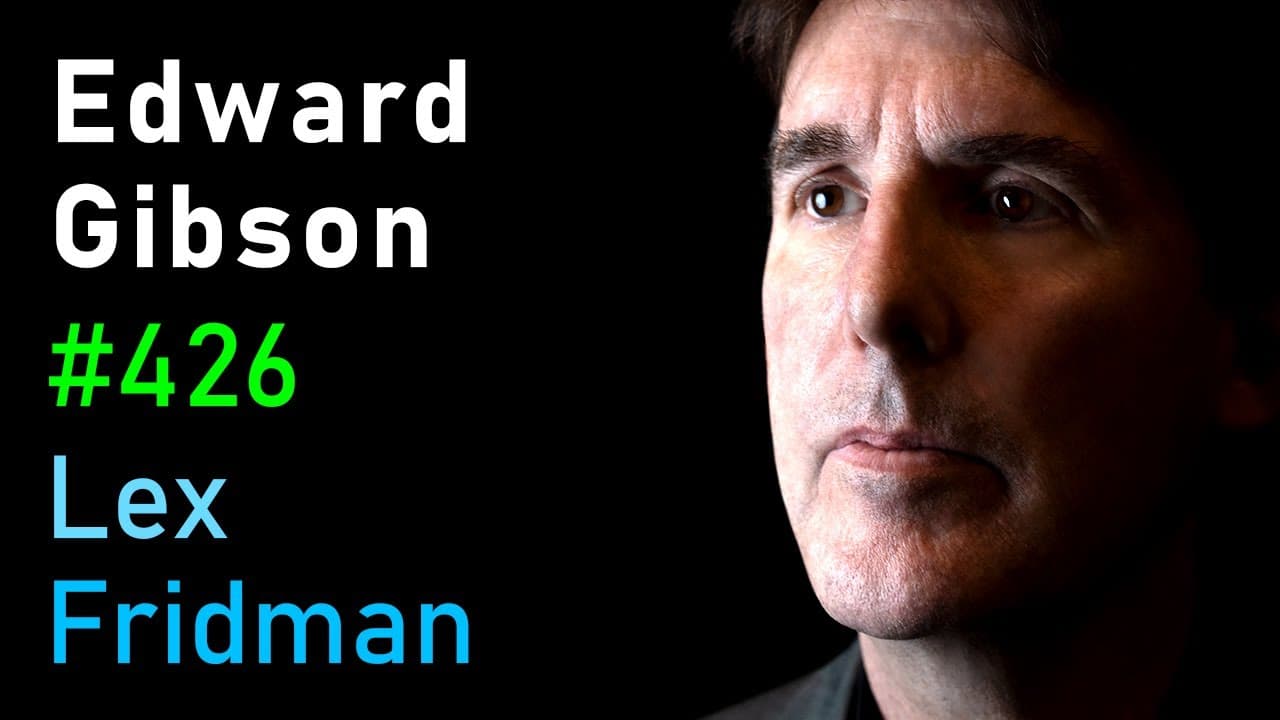
Human languages are shaped by syntax, which focuses on the arrangement of words and their dependencies. MIT's Edward Gibson emphasizes that understanding this structure aids in comprehending how we communicate, highlighting intriguing examples, such as the lack of exact counting words in the Pirahã language. This exploration reveals deeper connections between language form, meaning, and cognitive processing.
Transcript
- Naively, I certainly thought that all humans would have words for exact counting, and the Piraha don't, okay? So they don't have any words for even one. There's not a word for one in their language. And so there's certainly not a word for two, three, or four, and so that kind of blows people's minds off. - Yeah, that is blowing my mind. - [Edward... Read More
Key Insights
- 🔑 Dependency grammar focuses on the connections between words and the distance between them in a sentence.
- ❓ It provides a clear and efficient framework for analyzing language structure.
- 😄 Dependency grammar explains the ease of language production and comprehension based on the distance between words.
- 🪈 It can account for word order variations across different languages.
Install to Summarize YouTube Videos and Get Transcripts
Explore YouTube Video Summarizer or Get YouTube Transcript Extractor
Questions & Answers
Q: Does the Pirahã language have words for numbers?
No. Gibson explains that the Pirahã have no words for exact counting, not even a word for "one," and therefore none for two, three, or four either. As a result, you cannot ask for "two of those" in the language. This surprised researchers who naively assumed every human language would have words for exact counting.
Q: Why does Edward Gibson focus on the form of language rather than its meaning?
Gibson treats form, or syntax, as the more tractable problem and meaning as a very hard problem that is still not solved. He describes deciding to work on the easier, more handleable problems first, the forms of human language. He approaches this like a mathematician or engineer rather than starting from meaning.
Q: Why does Edward Gibson think large language models are so good at language?
He argues that what LLMs are good at is form, and that is exactly why they perform so well, because meaning is hard. In his view they can do form, but meaning remains difficult. How close form and meaning actually are is, he says, an open question.
Q: Who is Edward Gibson?
Edward Gibson, whom everyone calls Ted, is a psycholinguistics professor at MIT. He heads the MIT language lab, which investigates why human languages look the way they do and how people represent, process, and learn language. He has a book titled "Syntax: A Cognitive Approach" coming out from MIT Press.
Q: How did Edward Gibson get into studying language?
He started as a math and computer science person, earning an undergraduate degree in computer science and math at Queen's University in Canada. He then went to Cambridge for a one-year master's program in computational linguistics, despite not having taken a single language class before. He ended up spending his whole life on it after approaching language as an engineering puzzle.
Q: What is dependency grammar and how does it explain language?
Dependency grammar focuses on the connections between words and the distance between them in a sentence. It suggests that the closer words are to each other, the easier a sentence is to produce and understand, while the farther apart they are, the more challenging it becomes. It offers a transparent framework and can also account for word-order variations across different languages.
Q: What does Edward Gibson find beautiful about human language?
He points to the generalizations that hold within and across human languages. As an example, he highlights regularities in word order, such as languages in which verbs tend to come before their objects. These recurring patterns across different languages are what he finds remarkable about human language.
Summary & Key Takeaways
-
Dependency grammar focuses on the connections between words and the distance between them in a sentence.
-
It provides a clear representation of language structure and is more transparent than other frameworks.
-
The distance between words affects the ease of production and comprehension in language.
Read in Other Languages (beta)
Share This Summary 📚
Summarize YouTube Videos and Get Video Transcripts with 1-Click
Try YouTube Summary with ChatGPT & Claude or YouTube Transcript Generator
Explore More Summaries from Lex Fridman Podcast 📚
Summarize YouTube Videos and Get Video Transcripts with 1-Click
Try YouTube Summary with ChatGPT & Claude or YouTube Transcript Generator