How to Prepare for System Design Interviews
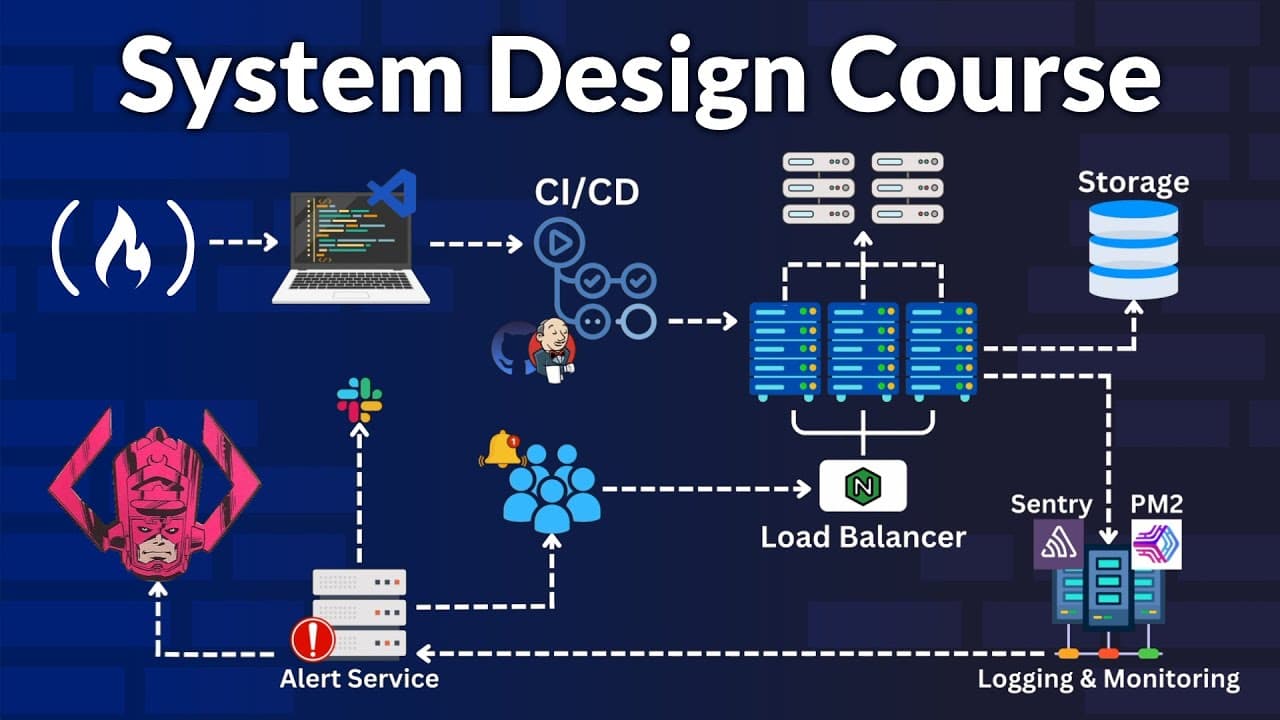
TL;DR
System design interviews focus on high-level architecture, scalability, and reliability rather than coding. Understanding computer architecture, caching, load balancing, and database management are crucial. Key concepts include the CAP theorem, API design, and network protocols. Mastering these areas can help candidates succeed in system design interviews.
Transcript
this complete system design tutorial covers scalability reliability data handling and high level architecture with clear explanations real world examples and practical strategies hike will teach you the Core Concepts you need to know for a system designs interview this is a complete crash course on system design interview Concepts that you need to ... Read More
Key Insights
- System design interviews emphasize high-level architecture and scalability over coding.
- Understanding computer architecture, including CPU, RAM, and storage, is essential.
- Caching and CDNs improve performance by reducing latency and server load.
- Load balancers distribute traffic to prevent server overload and improve reliability.
- The CAP theorem highlights trade-offs between consistency, availability, and partition tolerance in distributed systems.
- API design should consider REST, GraphQL, and gRPC paradigms for effective data exchange.
- Network protocols like TCP, UDP, and HTTP are foundational for system communication.
- Database sharding and replication enhance scalability and availability.
Install to Summarize YouTube Videos and Get Transcripts
Explore YouTube Video Summarizer or Get YouTube Transcript Extractor
Questions & Answers
Q: How to prepare for a system design interview?
To prepare for a system design interview, focus on understanding high-level architecture, scalability, and reliability. Study computer architecture basics, including CPU, RAM, and storage. Learn about caching, load balancing, and database management. Familiarize yourself with the CAP theorem, API design paradigms, and network protocols like TCP and HTTP. Practice designing systems that optimize these concepts.
Q: What is the CAP theorem in system design?
The CAP theorem, also known as Brewer's theorem, states that a distributed system can only achieve two out of three properties: consistency, availability, and partition tolerance. Consistency ensures all nodes see the same data at the same time, availability guarantees system responsiveness, and partition tolerance allows the system to continue functioning despite network partitions. System design requires prioritizing two properties based on specific needs.
Q: Why is caching important in system design?
Caching is crucial in system design as it improves performance and efficiency by storing copies of frequently accessed data in temporary storage. This reduces latency by enabling faster data retrieval from nearby caches rather than remote servers. It also decreases server load by minimizing requests to primary data sources. Effective caching strategies enhance user experience by speeding up load times and increasing system responsiveness.
Q: What role do load balancers play in system design?
Load balancers are vital in system design for distributing incoming network traffic across multiple servers. They prevent any single server from becoming overwhelmed, ensuring optimal service speed and reliability. Load balancers enhance system availability and scalability by managing traffic efficiently. They employ various algorithms like round robin, least connections, and IP hashing to balance loads and maintain consistent performance.
Q: How do APIs facilitate communication in system design?
APIs facilitate communication in system design by defining how software components interact. They specify inputs and outputs for operations like creating, reading, updating, and deleting data. RESTful APIs use standard HTTP methods, while GraphQL allows clients to request specific data. gRPC, built on HTTP/2, offers efficient data exchange. Well-designed APIs ensure seamless communication between clients and servers, supporting scalable and flexible systems.
Q: What is database sharding and why is it used?
Database sharding is a horizontal scaling technique that involves distributing data across multiple servers or shards. Each shard contains a subset of the data, allowing the system to handle more requests and larger datasets. Sharding enhances system scalability and performance by reducing the load on individual servers. It is particularly beneficial for applications with large volumes of data and high traffic, ensuring efficient data management and retrieval.
Q: How do network protocols impact system design?
Network protocols like TCP, UDP, and HTTP are fundamental to system design as they define how data is transmitted and received across networks. TCP ensures reliable communication with error-checking and flow control, while UDP offers faster, connectionless transmission for time-sensitive data. HTTP is used for web communication, supporting request-response interactions. Understanding these protocols is crucial for designing robust and efficient systems that communicate effectively.
Q: What are the benefits of using a CDN in system design?
A Content Delivery Network (CDN) enhances system design by reducing latency and improving load times for users. CDNs distribute content across geographically dispersed servers, allowing users to access data from the nearest server. This reduces the load on the origin server and enhances system scalability and availability. CDNs also offer improved security features, such as DDoS protection, and ensure high performance for global audiences.
Summary & Key Takeaways
-
System design interviews require understanding high-level architecture, focusing on scalability and reliability rather than coding specifics. Key areas include computer architecture, load balancing, and caching. Mastery of these concepts is crucial for successful interviews.
-
The CAP theorem is a fundamental concept in system design, guiding trade-offs between consistency, availability, and partition tolerance. Effective API design and network protocol knowledge are also crucial for building robust systems.
-
Load balancers and caching are essential for optimizing system performance and reliability. Understanding database sharding and replication can significantly enhance system scalability and availability.
Read in Other Languages (beta)
Share This Summary 📚
Summarize YouTube Videos and Get Video Transcripts with 1-Click
Try YouTube Summary with ChatGPT & Claude or YouTube Transcript Generator
Explore More Summaries from freeCodeCamp.org 📚






Summarize YouTube Videos and Get Video Transcripts with 1-Click
Try YouTube Summary with ChatGPT & Claude or YouTube Transcript Generator