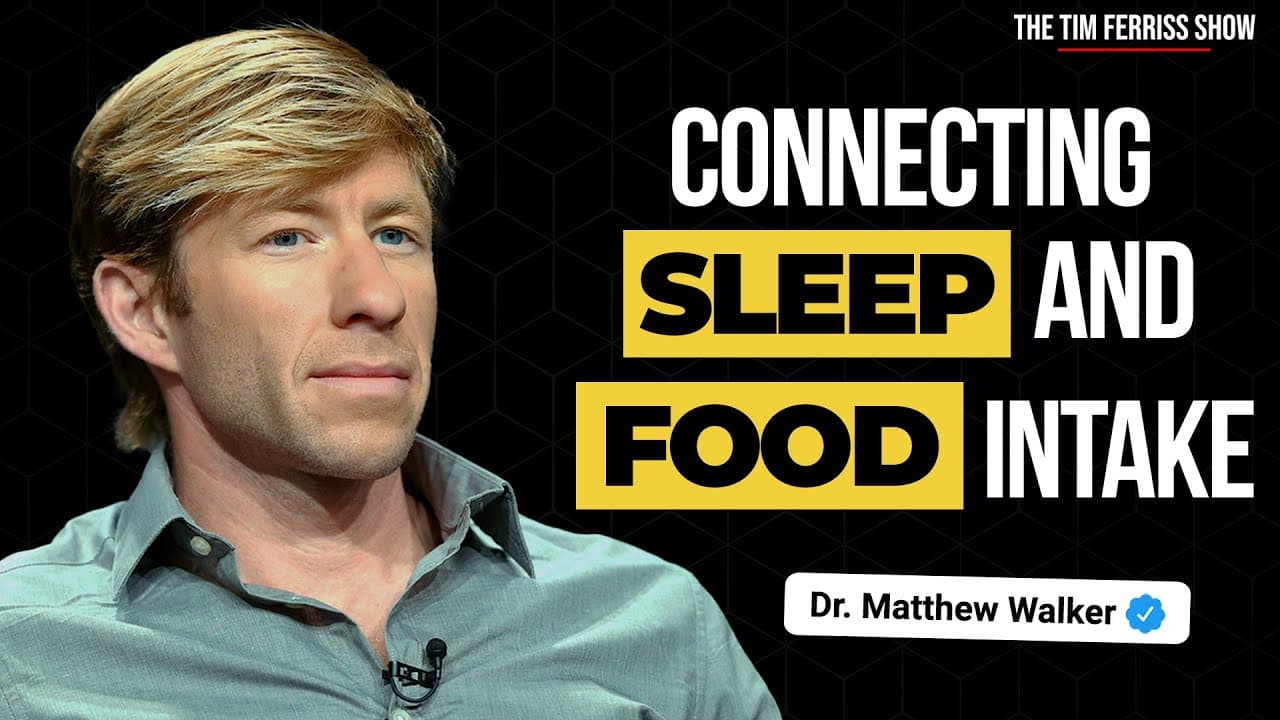
How Sleep Impacts Weight Gain and Appetite | Dr. Matthew Walker
TL;DR
Short sleep can increase appetite and promote weight gain by weakening satiety signals, strengthening hunger signals, and making obesogenic foods more desirable. After several nights of four to five hours of sleep, leptin dropped about 18%, ghrelin rose 28%, and hunger increased roughly 24% to 25%. Sleep deprivation also raised endocannabinoids and preferences for sugary, carbohydrate-rich, and salty foods. Read on to understand the hormonal and neurological effects.
Transcript
foreign let's talk for a second about sleep food intake weight gain all that kind of good stuff and part of the reason I want to ask about this is because it seems this is based on a comment that you had sent to me a few days ago about and maybe you can tell me how to pronounce this Endo cannabinoids am I saying that correctly cannabinoids how do y... Read More
Key Insights
- 😋 Sleep loss disrupts the balance of appetite-regulating hormones, leading to increased hunger and food intake.
- 😋 Sleep deprivation promotes a preference for unhealthy, obesogenic foods, such as carbohydrates and sugary snacks.
- 😋 Changes in the endocannabinoid system during sleep loss may contribute to increased hunger and food cravings.
- 😋 Sleep deprivation alters brain activity, making unhealthy foods more desirable and leading to a state of hedonic eating.
- 😪 Sleep-related weight gain may be driven by both physiological and neurological factors.
- 😋 Sleep-deprived individuals are more likely to choose unhealthy foods and may struggle with making healthy food choices.
- 😋 Understanding the relationship between sleep, appetite, and food choices is important for managing weight and promoting overall health.
Install to Summarize YouTube Videos and Get Transcripts
Explore YouTube Video Summarizer or Get YouTube Transcript Extractor
Questions & Answers
Q: Why does sleep loss increase appetite and lead to weight gain?
Sleep loss reduces leptin, which signals satiety, while increasing ghrelin, which stimulates appetite. It can also raise endocannabinoids and increase desire for obesogenic foods, creating several simultaneous pressures to eat more and gain weight.
Q: How much can short sleep change leptin and ghrelin levels?
When people were limited to four to five hours of sleep per night for several nights, leptin dropped by about 18%. Ghrelin increased by 28%, weakening the signal of fullness while strengthening the signal of hunger.
Q: How much does hunger increase after several nights of restricted sleep?
Hunger levels increased by around 24% to 25%, depending on the study discussed. This followed several nights in which sleep was restricted to approximately four to five hours per night.
Q: Does sleep deprivation change which foods people want?
Yes. Sleep-deprived people showed greater desire for carbohydrate-rich and simple sugary foods such as ice cream and sweets, rather than merely wanting more of every type of food.
Q: Why can salty-food cravings after sleep loss be concerning?
Sleep deprivation was associated with an increased preference for salty snacks. The discussion notes that this preference can put someone on a path toward greater hypertension.
Q: What role do endocannabinoids play in sleep-related hunger?
Endocannabinoids are naturally occurring cannabinoids released within the brain and body. Sleep deprivation increases their levels, which may help explain why insufficient sleep increases hunger and food intake, although the exact mechanism is not yet known.
Q: Are sleep-related endocannabinoid changes caused by THC or cannabis?
No. The increase described in sleep-deprived people has nothing to do with consuming THC, cannabis, or other external cannabinoids; these endocannabinoids arise naturally inside the body.
Q: How does sleep deprivation alter the brain's response to unhealthy food?
MRI findings showed that sleep-deprived individuals rated unhealthy, obesogenic foods as more desirable. The existing evidence links this response with reduced activity in the prefrontal cortex and increased activity in dopaminergic and amygdala regions associated with hedonic food desires.
Summary & Key Takeaways
-
Sleep loss causes a decrease in the hormone leptin, which signals satiety, and an increase in the hormone ghrelin, which increases appetite.
-
Sleep deprivation leads to an increase in the preference for carbohydrate-rich and sugary foods, as well as salty snacks, which can contribute to weight gain and hypertension.
-
Endocannabinoids, naturally occurring cannabinoids in the brain and body, are increased during sleep deprivation, potentially contributing to increased hunger.
Read in Other Languages (beta)
Share This Summary 📚
Summarize YouTube Videos and Get Video Transcripts with 1-Click
Try YouTube Summary with ChatGPT & Claude or YouTube Transcript Generator
Explore More Summaries from Tim Ferriss 📚






Summarize YouTube Videos and Get Video Transcripts with 1-Click
Try YouTube Summary with ChatGPT & Claude or YouTube Transcript Generator