How Does a Real-Time Deformation Simulation Work?
TL;DR
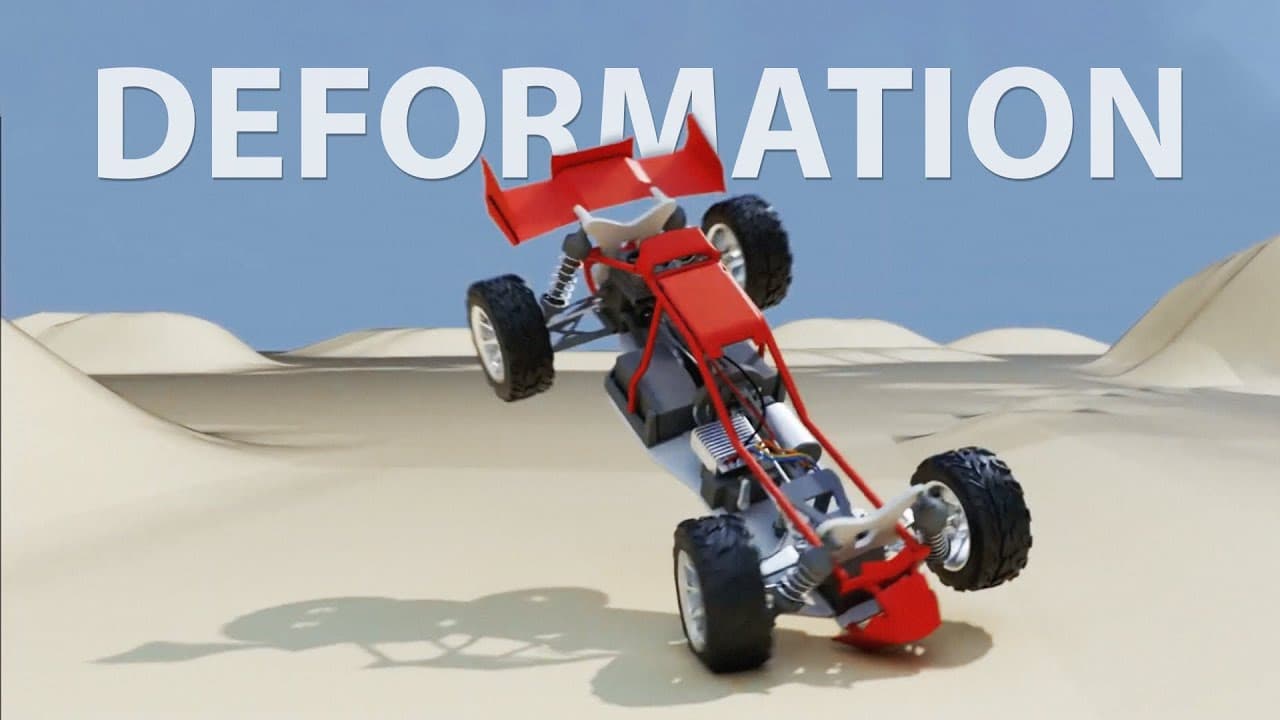
A groundbreaking real-time deformation simulation algorithm accurately handles complex physical interactions. It achieves fast computation times—such as 18 milliseconds per frame for a car simulation—while remaining robust and simple, making it suitable for high-frame-rate applications. The method can simulate a range of interactions, including tire deformations and marble collisions, without loss of accuracy.
Transcript
Dear Fellow Scholars, this is Two Minute Papers with Dr. Károly Zsolnai-Fehér. Today, with the power of computer graphics research, we can use our computers to run fluid simulations, simulate immersing a selection of objects into jelly, or tear meat in a way that much like in reality, it tears along the muscle fibers. If we look at the abst... Read More
Key Insights
- 💨 The simulation algorithm can accurately simulate physical interactions and is faster, simpler, and more robust compared to previous methods.
- 😚 The algorithm can handle complex and large-scale simulations without losing accuracy or speed.
- ⌛ The computation time for simulating various interactions, such as a steering mechanism or rolling marbles, is incredibly fast, allowing real-time or high frame-rate simulations.
- 🔊 The algorithm's ability to simulate high-frequency rolls and generate sound algorithmically opens up possibilities for realistic and immersive simulations.
- 👨🔬 The collaboration between NVIDIA and the University of Copenhagen showcases their commitment to advancing computer graphics research and freely sharing their algorithm's details with the community.
- ⌛ The algorithm's simplicity and robustness make it an excellent choice for industry applications, reducing the maintenance and complexity of codebases over time.
- 💨 The video emphasizes the revolutionary nature of the algorithm, as it surpasses previous techniques by being simpler, more robust, and faster.
Install to Summarize YouTube Videos and Get Transcripts
Explore YouTube Video Summarizer or Get YouTube Transcript Extractor
Questions & Answers
Q: How does the simulation algorithm simulate a steering mechanism?
The algorithm accurately simulates a steering mechanism by considering the mass ratio of the components, resulting in realistic movement and even tire deformations.
Q: How does the algorithm handle restitution and collisions between marbles?
The algorithm correctly computes the combined velocity of marbles when they collide, ensuring accurate physics simulation. This is in contrast to earlier techniques that often led to erroneous large velocities and unstable simulations.
Q: Can the simulation algorithm handle large-scale scenes with multiple interactions?
Yes, the algorithm excels in handling large-scale simulations with multiple interactions, as demonstrated by the stress test in the video where everything behaves correctly and realistically.
Q: What kind of interactions can the algorithm simulate with curved geometry?
The algorithm accurately simulates high-frequency rolls, such as a dropped coin on a table, by considering the curved geometry's interaction. It provides a realistic representation of these challenging interactions.
Summary & Key Takeaways
-
The video highlights three examples of the simulation algorithm in action, including simulating a steering mechanism, restitution of marbles, and high-frequency rolls.
-
The algorithm can handle large-scale simulations with numerous interactions without any issues.
-
The computation time for simulating these interactions is incredibly fast, with the car example taking only 18 milliseconds per frame.
Read in Other Languages (beta)
Share This Summary 📚
Summarize YouTube Videos and Get Video Transcripts with 1-Click
Try YouTube Summary with ChatGPT & Claude or YouTube Transcript Generator
Explore More Summaries from Two Minute Papers 📚




Summarize YouTube Videos and Get Video Transcripts with 1-Click
Try YouTube Summary with ChatGPT & Claude or YouTube Transcript Generator