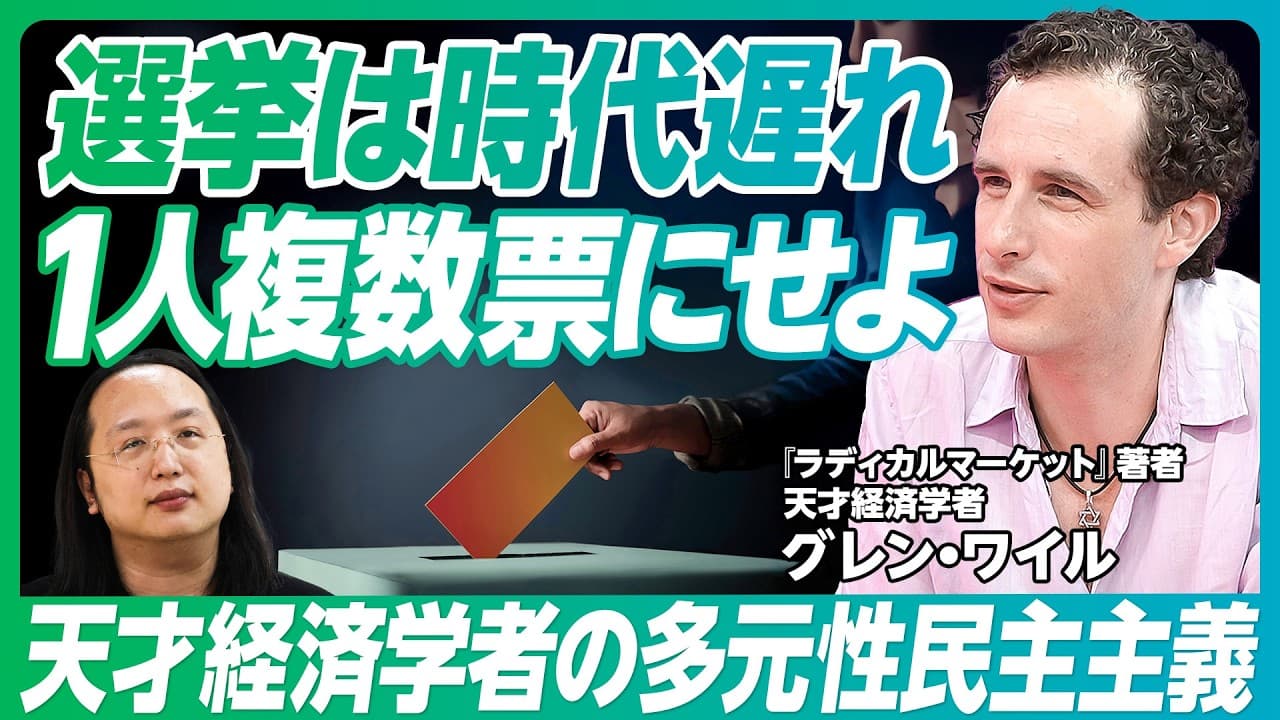
【次の民主主義の発信源は東アジアだ】『ラディカル・マーケット』著者 グレン・ワイル/日本文化の持つ民主主義における強み/民主主義と「多元性」の価値/【PIVOT GLOBAL】
TL;DR
East Asia's cultural strengths could redefine democracy globally.
Transcript
uh so much of the world is trying to sort of be like the United States in some way and things here are very very different but uh there's no sense of Envy what's the biggest difference the Democracy the system or technology what's the biggest difference you have realized so far the sense of respect for everything uh that I think comes out of the Sh... Read More
Key Insights
- Japanese culture, deeply rooted in Shinto traditions, emphasizes respect, care, and precision, which are unique cultural strengths that could influence democratic practices globally.
- The concept of plurality is about using technology to bridge social differences and create stronger connections across diverse groups, fostering cooperation and understanding.
- Japan's unique culture of politeness can sometimes be challenging for Westerners to interpret, highlighting the importance of understanding cultural context in communication.
- Plurality technology aims to transform social media into a cooperative platform, focusing on pro-social media to enhance democratic engagement and reduce misinformation.
- The game Civilization 6 incorporates concepts like quadratic voting, demonstrating how games can simulate and teach complex democratic ideas and future governance models.
- Synthetic technocracy and corporate libertarianism are criticized for being anti-democratic, while plurality offers a more democratic approach by promoting collaboration and diversity.
- Brain-to-brain communication could deepen human connection and creativity, complementing traditional communication methods like language and markets.
- Taiwan's diverse and democratic society serves as a model for other countries, showcasing how embracing diversity and plurality can lead to more effective governance.
Install to Summarize YouTube Videos and Get Transcripts
Explore YouTube Video Summarizer or Get YouTube Transcript Extractor
Questions & Answers
Q: What makes Japanese culture unique in the context of democracy?
Japanese culture is unique in its emphasis on respect, care, and precision, deeply rooted in Shinto traditions. This cultural foundation fosters a sense of honoring and valuing others, which can significantly influence democratic practices by promoting mutual respect and understanding, essential for a healthy democratic society.
Q: How does plurality technology aim to improve social media?
Plurality technology seeks to transform social media into a cooperative platform, focusing on pro-social interactions. By emphasizing plurality principles, it aims to enhance democratic engagement, reduce misinformation, and create a space where diverse voices can be heard and respected, ultimately fostering a more informed and connected society.
Q: What role does the game Civilization 6 play in teaching democratic concepts?
Civilization 6 incorporates democratic concepts like quadratic voting, allowing players to explore different governance models and the complexities of democracy. By simulating these ideas, the game provides a platform for players to engage with and understand the dynamics of democratic processes, encouraging critical thinking about future governance.
Q: Why are synthetic technocracy and corporate libertarianism criticized?
Synthetic technocracy and corporate libertarianism are criticized for being anti-democratic as they either centralize power in machines or markets, undermining democratic values. These approaches neglect the importance of human agency and collaboration, whereas plurality emphasizes diversity and cooperation, aligning more closely with democratic ideals.
Q: How could brain-to-brain communication impact human interaction?
Brain-to-brain communication could revolutionize human interaction by allowing deeper connections and creativity beyond traditional language barriers. It offers a new dimension of intimacy and understanding, complementing existing communication methods like language and markets, and expanding the ways in which humans can connect and collaborate.
Q: What can other countries learn from Taiwan's democratic model?
Taiwan's democratic model showcases the benefits of embracing diversity and plurality, leading to effective governance and high public approval. Other countries can learn from Taiwan's approach by fostering inclusive policies, encouraging diverse participation, and adapting democratic practices to reflect the unique cultural and social dynamics of their societies.
Q: How does plurality differ from traditional democratic practices?
Plurality differs from traditional democratic practices by emphasizing the use of technology to bridge social differences and enhance cooperation. It focuses on creating deeper connections across diverse groups, moving beyond conventional voting and governance models to include innovative approaches like quadratic voting and collaborative platforms.
Q: What is the potential of East Asia in shaping future democratic practices?
East Asia, with its rich cultural heritage and emphasis on respect and diversity, has the potential to redefine democratic practices. By integrating cultural strengths with innovative technologies, East Asia can offer new models of democracy that prioritize collaboration, mutual respect, and social harmony, setting an example for global democratic evolution.
Summary & Key Takeaways
-
Japanese culture, influenced by Shinto traditions, emphasizes respect and precision, offering unique insights into democratic practices. The concept of plurality focuses on using technology to bridge social differences and foster cooperation. Japan's cultural nuances, such as politeness, highlight the importance of understanding context in communication.
-
Plurality technology aims to transform social media into a cooperative platform, promoting pro-social media to enhance democratic engagement. Games like Civilization 6 incorporate democratic concepts like quadratic voting, demonstrating how gaming can simulate and teach future governance models and complex democratic ideas.
-
Synthetic technocracy and corporate libertarianism are seen as anti-democratic, whereas plurality offers a democratic approach by promoting collaboration and diversity. Brain-to-brain communication could deepen human connection, complementing traditional methods. Taiwan's diverse society serves as a model for effective governance through embracing diversity.
Read in Other Languages (beta)
Share This Summary 📚
Summarize YouTube Videos and Get Video Transcripts with 1-Click
Try YouTube Summary with ChatGPT & Claude or YouTube Transcript Generator
Explore More Summaries from PIVOT 公式チャンネル 📚




Summarize YouTube Videos and Get Video Transcripts with 1-Click
Try YouTube Summary with ChatGPT & Claude or YouTube Transcript Generator