What Opportunities Exist in Human-AI Collaboration?
TL;DR
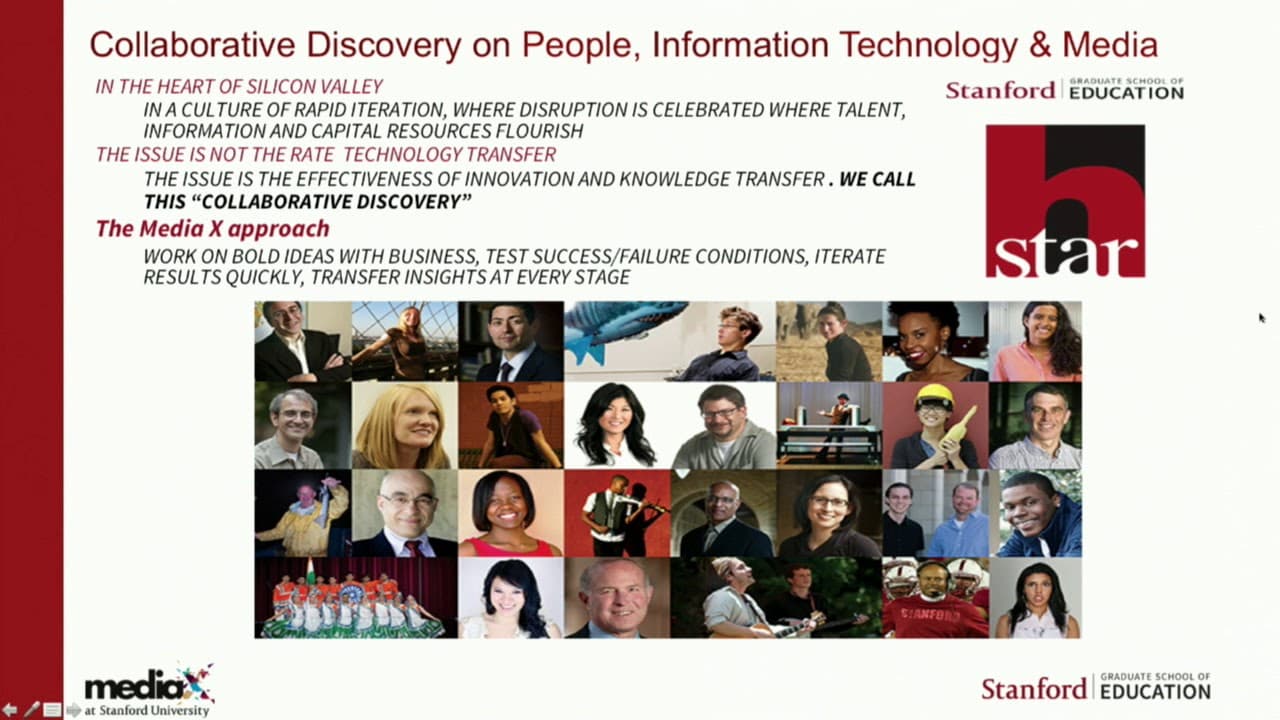
The conference explores the collaboration between humans and artificial intelligence, focusing on smart learning, personal assistant development, and deep-sea exploration using robots. It emphasizes identifying key questions that enhance technology's role in improving the human experience and fostering business-academic partnerships.
Transcript
[Applause] welcome I am so happy to welcome you here today I personally have been looking forward to this conference with so much excitement the speakers that we have today are fabulous they cover a great range of issues and opportunities that are related to the human artificial intelligence collaborations that we're looking at in the future and I'... Read More
Key Insights
- 🌱 Artificial intelligence has evolved from merely executing plans to planning itself, from being a servant to a collaborator for humans.
- ⚖️ Smart learning is a significant focus area, with efforts to scale it in classrooms and boost engagement and performance.
- 🤢 Robots like Ocean One offer opportunities for deep-sea exploration, allowing humans to retrieve valuable artifacts from sunken ships.
- 👨💼 The conference aims to connect business and academia, leveraging Stanford's expertise to drive innovation and enhance the human experience through technology.
Install to Summarize YouTube Videos and Get Transcripts
Explore YouTube Video Summarizer or Get YouTube Transcript Extractor
Questions & Answers
Q: What is the purpose of Nadia, the virtual character prototype?
Nadia was created as a prototype personal assistant to aid seniors with dementia. It demonstrates the potential for AI to assist in memory recall and offer smart expertise.
Q: How is smart learning being explored in classrooms?
Smart learning is a topic of interest in classrooms, and the conference aims to figure out how to scale it. This involves researching ways to leverage AI and technology to improve the learning experience for students.
Q: How are robots being utilized for deep-sea exploration?
Robots like Ocean One have been developed to access the deep ocean where humans can't go. These robots, controlled by people on the surface, are used for archaeological explorations and retrieving treasures from sunken ships.
Q: What is the purpose of the SMILE app developed by Stanford's Graduate School of Education?
The SMILE app is designed to shift education towards active learning. It motivates learners by allowing them to ask questions, solve problems, and share their findings, fostering independent thinking and engagement.
Summary & Key Takeaways
-
The conference features speakers discussing various issues and opportunities related to human-AI collaborations, including the development of personal assistants like Nadia, smart learning in classrooms, and the use of robots for deep-sea exploration.
-
Media X, an organization focused on human sciences and information technology, aims to identify the best questions and connect business with Stanford's strengths to enhance the human experience through technology.
-
The conference showcases a new app called SMILE, designed to promote active learning by encouraging students to ask questions and engage in independent problem-solving and evaluation.
Read in Other Languages (beta)
Share This Summary 📚
Summarize YouTube Videos and Get Video Transcripts with 1-Click
Try YouTube Summary with ChatGPT & Claude or YouTube Transcript Generator
Explore More Summaries from Stanford 📚



Summarize YouTube Videos and Get Video Transcripts with 1-Click
Try YouTube Summary with ChatGPT & Claude or YouTube Transcript Generator