What Are the Impacts of Building Borders in the Himalayas?
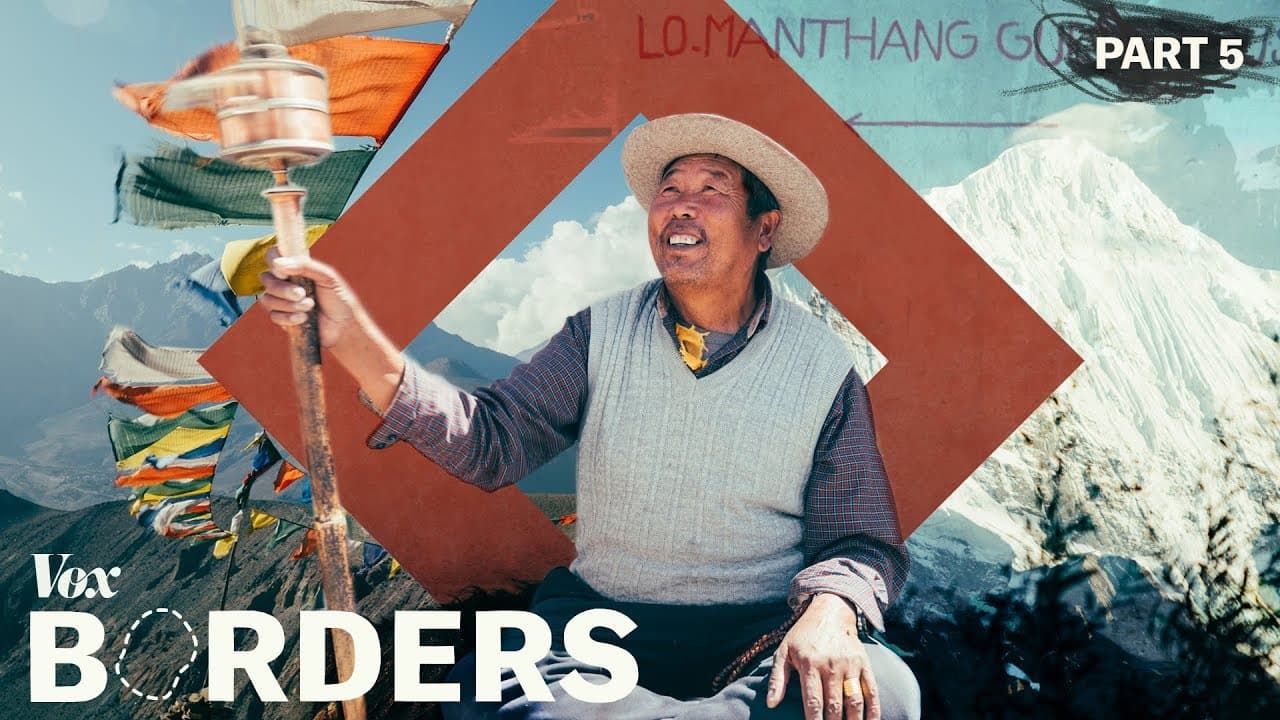
TL;DR
Building borders in the Himalayas threatens the autonomy of indigenous communities by introducing state control and altering traditional lifestyles. While infrastructure projects from China and Nepal offer economic opportunities, they also disrupt centuries-old cultures, shifting local economies from bartering to cash systems and pushing younger generations to seek education away from their communities.
Transcript
We're driving through a river right now in the Jeep. For thousands of years, humans have drawn lines on the Earth, dividing the planet into nations, but there are some parts of the world that no empire, nation, or state has been able to tame. Just the geography here is completely unruly. Land that is so high, so rugged, that states have found it im... Read More
Key Insights
- The Himalayas have historically been non-state spaces, where geography prevented centralized control, allowing communities to escape state powers.
- Many indigenous communities in the Himalayas have maintained unique identities and cultures by living in these remote regions, away from governmental influence.
- The Tibetan Empire's expansion led some groups to flee to the Himalayas to preserve their cultural and religious practices.
- The concept of Zomia describes a region of the Himalayas where diverse communities have lived autonomously for centuries, but this autonomy is now threatened.
- China's annexation of Tibet and subsequent border demarcations have disrupted traditional nomadic lifestyles, impacting the movement of communities and their animals.
- Infrastructure projects by China, Nepal, and India aim to connect the region through roads, altering local economies and cultural practices.
- The introduction of roads and trade routes is shifting local economies from bartering to cash-based systems, posing challenges for traditional lifestyles.
- Educational opportunities outside the region are causing cultural shifts, as younger generations leave for education, potentially eroding traditional practices.
Install to Summarize YouTube Videos and Get Transcripts
Explore YouTube Video Summarizer or Get YouTube Transcript Extractor
Questions & Answers
Q: What are non-state spaces, and why are they significant?
Non-state spaces are regions where geographical challenges have historically prevented centralized governments from exerting control. These areas are significant because they have allowed communities to maintain autonomy, preserve cultural identities, and avoid the influence of state powers. The Himalayas are a prime example, where rugged terrain has protected indigenous lifestyles.
Q: How has China's annexation of Tibet affected local communities in the Himalayas?
China's annexation of Tibet has disrupted traditional lifestyles by imposing new borders, restricting the movement of nomadic communities, and introducing military infrastructure. These changes have forced local populations to adapt to new geopolitical realities, impacting their ability to maintain autonomous cultural practices and traditional economic activities.
Q: What is the concept of Zomia, and why is it relevant?
Zomia refers to a region encompassing the Himalayas and other highland areas where diverse communities have lived independently of state control. It is relevant because it highlights the historical autonomy of these communities and the current threats they face from modern state interventions, such as infrastructure development and geopolitical interests.
Q: How are infrastructure projects impacting the Himalayas?
Infrastructure projects, such as road construction, are transforming the Himalayas by connecting remote areas to national economies. While these projects offer potential trade opportunities, they also disrupt traditional lifestyles, shift local economies from bartering to cash-based systems, and challenge the preservation of cultural practices as modern influences increase.
Q: What challenges do local communities face with the shift to cash-based economies?
Local communities accustomed to bartering and self-sufficient lifestyles face challenges integrating into cash-based economies. These challenges include adapting to new market dynamics, competing with cheap imported goods, and finding economic niches that align with their traditional skills and resources, potentially leading to cultural and economic displacement.
Q: How are educational opportunities affecting cultural preservation in the Himalayas?
Educational opportunities outside the Himalayas are leading to cultural shifts as younger generations leave their communities for schooling. This migration can result in a loss of cultural transmission and traditional practices, as children spend formative years away from their heritage, potentially leading to a gradual erosion of cultural identity.
Q: What role do geopolitical interests play in the development of the Himalayas?
Geopolitical interests, particularly from China, Nepal, and India, drive the development of infrastructure in the Himalayas. These interests aim to establish trade routes and assert control over strategic regions, impacting local communities by introducing new borders, altering traditional movement patterns, and reshaping the socio-economic landscape.
Q: Why do some communities view the Himalayas as a trap rather than a refuge?
As modern influences encroach on the Himalayas, some communities view the region as a trap due to limited economic opportunities, cultural erosion, and the challenges of integrating into a globalized economy. The isolation that once protected their autonomy now poses barriers to accessing education, healthcare, and economic growth, leading to a reevaluation of their place in the modern world.
Summary & Key Takeaways
-
The Himalayas have long been a refuge for communities seeking to escape state control, preserving unique cultures and traditions. However, modern state forces, particularly China and Nepal, are encroaching on this autonomy through infrastructure projects, threatening these traditional ways of life.
-
The concept of Zomia represents a vast, mountainous region where diverse communities have lived independently of state influence for centuries. This independence is now at risk as geopolitical interests and infrastructure development bring new challenges to these communities.
-
The construction of roads and borders in the Himalayas is transforming local economies and cultures. While some welcome the opportunities for trade and education, others fear the loss of traditional lifestyles and cultural heritage as modern influences take hold.
-
(Content reviewed on 2026-08-27.)
Read in Other Languages (beta)
Share This Summary 📚
Summarize YouTube Videos and Get Video Transcripts with 1-Click
Try YouTube Summary with ChatGPT & Claude or YouTube Transcript Generator
Explore More Summaries from Vox 📚



Summarize YouTube Videos and Get Video Transcripts with 1-Click
Try YouTube Summary with ChatGPT & Claude or YouTube Transcript Generator