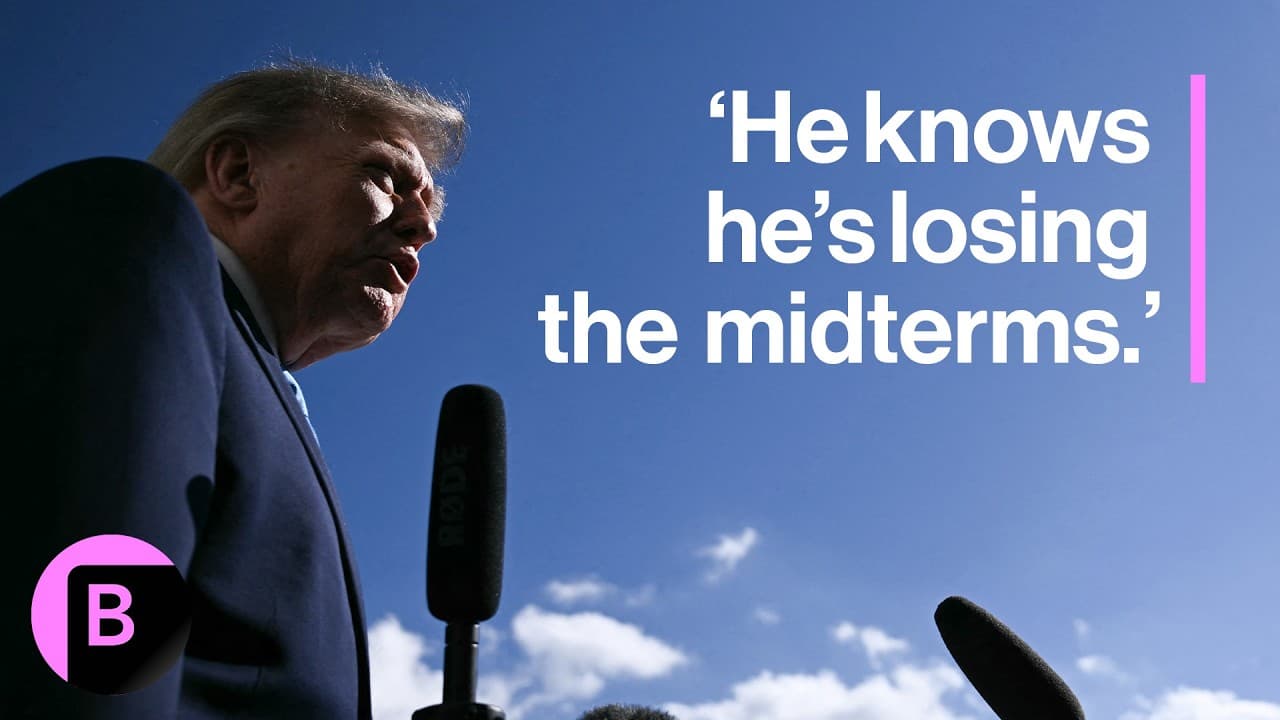
What happens if Trump loses the midterm elections?
TL;DR
The midterms are likely to push Republicans out of control in both chambers, with Trump’s influence waning as lawmakers distance themselves from him after the elections. The political dynamics mix concerns about policy, investigations, and leadership, shaping how parties compete and how the administration handles foreign issues. Public sentiment and accountability remain central.
Transcript
So so so good to have you in London, Ian. Here in person. In person. I know. In in real life. Yeah. What happens actually in the midterms? I mean, is everything that we're seeing with Iran, Russia, AI linked to the midterms, or is is president Trump just thinking about... Not even thinking that much about the midterms? Oh, I I... He knows he's losi... Read More
Key Insights
- Trump’s leverage within the Republican Party is waning as he becomes a central but divisive figure.
- Many senior Republicans are unhappy with Trump and prefer candidates who do not align solely with his brand.
- Midterm losses could prompt Republicans to pivot away from Trump and reframe their strategy for the next election cycle.
- There is expectation that the midterms will trigger a distancing effect, reducing Trump’s immediate political dominance.
- The likelihood of investigations and subpoenas is discussed as a factor that may influence public opinion and party dynamics.
- There is skepticism about the feasibility of a broad, sustained military or diplomatic escalation in the Middle East under current constraints.
- Public perception of accountability and corruption investigations could affect turnout and party loyalty.
- The long-term governance challenge is described as a drift toward dysfunctional politics if rhetoric continues without concrete policy outcomes.
Install to Summarize YouTube Videos and Get Transcripts
Explore YouTube Video Summarizer or Get YouTube Transcript Extractor
Questions & Answers
Q: What is the expected impact of the midterms on party control in Congress
The midterms are described as likely to result in Republicans losing control of the House by a substantial margin and possibly losing the Senate as well. The analysis emphasizes that Trump’s leadership would be a drag on candidates, causing many senior Republicans to move away from him after the elections. This shift would redefine the strategic landscape for the party and alter the balance of power in Congress.
Q: How might Trump’s relationship with Republicans change after the midterms
The discussion suggests that after the midterms, Republicans will start distancing themselves from Trump because he is viewed as a political anchor hindering their broader appeal and legislative goals. With his era potentially limited by age and controversial leadership, party members anticipate a pivot toward independent branding and policy-focused campaigns rather than a single figure’s influence.
Q: Why do some Republicans fear challenging Trump publicly
The conversation notes that fear of Trump among Republican lawmakers shapes their behavior, explaining why more members don’t speak up against him. This fear is tied to his enduring political presence and the perception that opposing him could jeopardize reelection prospects, resulting in a cautious, status-quo approach within the party.
Q: What are the consequences for policy if the midterms go against Trump’s base
If the midterms diminish Trump’s hold, policy could shift away from his priorities as lawmakers seek broader support. There would be pressure to focus on issues that appeal to a wider voter base, and the party might emphasize Democrats’ perceived incompetence as a counterpoint, altering messaging and legislative goals.
Q: Could impeachment investigations affect the national political climate
Impeachment-related investigations are discussed as politically costly and potentially divisive, with both legal and public opinion implications. The text notes that even if investigations proceed, convictions are unlikely, but the ongoing inquiries could energize supporters and complicate governance by fueling partisan narratives and scrutiny.
Q: How might Middle East events influence the midterm narrative
The Middle East scenario is described as constrained by American willingness and strategic calculations. Escalations or de-escalations could shape public perception of leadership, impact energy markets, and influence voter concern about national security, thereby affecting the political narrative in the run-up to elections.
Q: What signal does the analysis give about American political stability
The analysis warns of a potential drift toward more dysfunctional governance if partisan divisions deepen and election outcomes become a source of ongoing dispute. It foresees a landscape where blame games, investigations, and strategic posturing could overshadow substantive policy progress and governance.
Q: What role do public views on accountability play in the midterms
Public demand for accountability and perceived corruption issues are identified as factors that drive voter engagement and party positioning. The discussion suggests that citizens want tangible change, which could influence which candidates gain traction and how parties frame their agendas in response to concerns about governance and integrity.
Summary & Key Takeaways
-
The video analyzes how midterm outcomes could shift party control and Trump’s influence, highlighting potential consequences for policy and leadership. It discusses internal Republican dynamics and the likelihood of post-election realignment among candidates and officeholders.
-
The discussion covers domestic issues, the Iran situation, and how these factors influence voter perception and party strategy. It also touches on how investigations and governance challenges could impact the political landscape after the midterms.
-
Overall, the piece foresees a difficult period for Republicans in the wake of the midterms, with possible strategic shifts and long-term implications for how leaders approach policy, governance, and international affairs.
Read in Other Languages (beta)
Share This Summary 📚
Summarize YouTube Videos and Get Video Transcripts with 1-Click
Try YouTube Summary with ChatGPT & Claude or YouTube Transcript Generator
Explore More Summaries from Bloomberg Television 📚





Summarize YouTube Videos and Get Video Transcripts with 1-Click
Try YouTube Summary with ChatGPT & Claude or YouTube Transcript Generator