How to Grow on Social Media From Scratch in 2025
TL;DR
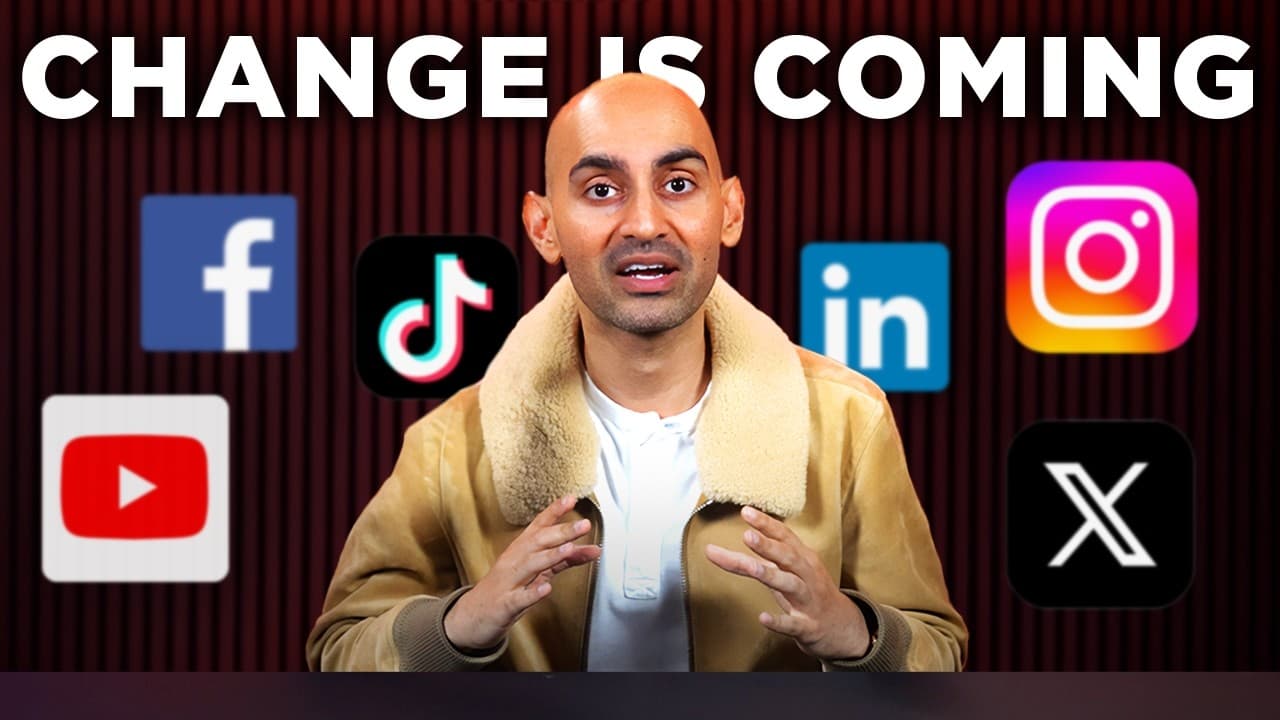
Prioritize retention, strong opening hooks, and recurring sub-hooks because platforms expand distribution when viewers keep watching and engaging. Research platform-specific demand, test many ideas on X, republish only the strongest performers elsewhere, and optimize titles, spoken words, and descriptions for social search. Choose platforms according to your audience and content goals instead of posting identical material everywhere.
Transcript
social media is the biggest opportunity of the decade but most people fail at it because they follow outdated strategies I've built an audience of millions of followers across multiple different platforms And today I'm giving you the exact blueprint I'd use if I had to start growing from scratch in 2025 Let's dive in Most people think social media ... Read More
Key Insights
- Modern social distribution is driven heavily by viewer response rather than follower count. A platform may show a post to a small initial group, then expand its reach to thousands or more when those viewers watch most or all of it and engage with it.
- Viewing duration is the central performance signal emphasized in the guide. Content becomes more likely to spread when people remain for most of the video, so creators should design every section around maintaining interest instead of relying on an established audience to supply views.
- Topic research is most useful when it is specific to the target platform. AnswerThePublic can show which queries and subjects are popular on YouTube, Instagram, or TikTok, helping creators invest in content that already has demonstrated audience interest on the network they plan to use.
- A strong hook is essential at the beginning of a social video. It must gain attention and give viewers a reason to continue, while additional sub-hooks throughout the content should introduce upcoming sections and renew curiosity before audience attention declines.
- Recommendation systems work by identifying patterns among people who consume the same content. Platforms can recommend unwatched videos that similar users have already viewed, and AI-supported analysis makes it easier to predict what an individual is likely to watch next.
- Each social platform is suited to different goals and audiences. LinkedIn is positioned for B2B, YouTube for evergreen educational material, Instagram and TikTok for current topics, and Facebook for an older audience, so creators should adapt both platform selection and content execution.
- X is presented as a practical testing bed for content ideas. Creators can publish frequently, measure which posts receive the strongest engagement, and move only the top 10% or 20% of performers to Instagram, Facebook, YouTube, LinkedIn, and TikTok.
- Social search optimization can produce traffic beyond a post's initial release. Creators should research popular keywords, place them in titles or descriptions, and say them within videos because platforms can transcribe speech and understand the subject without a separately uploaded transcript.
Install to Summarize YouTube Videos and Get Transcripts
Explore YouTube Video Summarizer or Get YouTube Transcript Extractor
Questions & Answers
Q: How can a new creator grow on social media from zero followers?
A new creator can grow by making content that keeps an initial test audience watching and engaging. Platforms may first show a post to only a small group, but strong completion and engagement signals can trigger wider distribution to people who do not follow the creator. Topic selection, a compelling opening hook, and sustained retention are therefore more important than beginning with a large follower base.
Q: Why does watch time matter for social media growth?
Watch time tells a platform whether viewers find a piece of content worth continuing. When people watch most or all of a video, the platform receives a signal that a broader audience may also value it. The guide therefore treats viewing duration as a central distribution factor and recommends structuring videos to hold attention throughout, not merely attracting clicks at the beginning.
Q: How should creators find social media content ideas?
Creators should research topics that are already popular on the specific platform they want to target. The recommended process is to enter industry-related queries into AnswerThePublic and examine demand across networks such as YouTube, Instagram, and TikTok. Producing content around popular platform-specific topics is more likely to generate views than investing in subjects with little demonstrated interest there.
Q: How do hooks and sub-hooks improve video retention?
An opening hook captures attention and gives viewers an immediate reason to keep watching. Sub-hooks perform the same function later by introducing upcoming sections, creating anticipation, and refreshing interest as the video moves between topics. The guide compares them with chapter titles or section subheadings because they tell viewers what is coming while encouraging them to remain for the next point.
Q: Which social media platform should a creator choose?
Platform choice should match the creator's audience and objective. LinkedIn is described as useful for B2B, YouTube for evergreen advice and educational content, Instagram and TikTok for subjects that are happening now, and Facebook for reaching an older audience. The creator specifically favors X, Instagram, and YouTube Shorts because they prioritize discovery and can provide reach without an existing follower base.
Q: How can X be used to test content before republishing it?
Creators can publish many text-based or video-based ideas on X and compare the engagement each one receives. According to the guide, weak posts on X do not meaningfully penalize the reach of a later strong post, making it suitable for experimentation. The top 10% or 20% of results can then be republished on Instagram, Facebook, YouTube, LinkedIn, and TikTok.
Q: Why can random posting reduce future social media reach?
Repeatedly publishing low-engagement content can teach some platforms that a creator usually posts material audiences do not value. When that creator later publishes a stronger piece, it may outperform the usual posts without receiving its full potential reach. The recommended response is to test ideas on X first and send only proven winners to platforms where previous posting performance can influence future distribution.
Q: How do creators optimize videos for search on social platforms?
Creators should use AnswerThePublic to identify popular keywords for the social network and subject they are targeting. Relevant phrases can be placed in the video title and description, and they should also be spoken naturally within the recording. Platforms can transcribe and interpret video speech, allowing optimized content to rank when users search on Instagram, TikTok, YouTube, and other social networks.
Summary & Key Takeaways
-
Social platforms can distribute a strong post far beyond its creator's existing audience. Initial performance among a small group helps determine whether distribution expands, making viewing duration and engagement more important than follower count. New creators can therefore reach large audiences when their content holds attention from beginning to end.
-
Content selection should reflect both audience demand and platform strengths. AnswerThePublic can reveal popular topics and search terms for specific networks. LinkedIn suits B2B, YouTube supports evergreen advice, Instagram and TikTok emphasize current interests, and Facebook reaches an older audience. Content should be adapted rather than published randomly across every platform.
-
X can serve as a testing environment because each post is treated more independently, according to the creator's testing. Publish multiple ideas there, identify the top 10% or 20% by engagement, and repurpose those winners on other networks. Keywords in titles, speech, and descriptions can also generate continuing traffic through social search.
Read in Other Languages (beta)
Share This Summary 📚
Summarize YouTube Videos and Get Video Transcripts with 1-Click
Try YouTube Summary with ChatGPT & Claude or YouTube Transcript Generator
Explore More Summaries from Neil Patel 📚
Summarize YouTube Videos and Get Video Transcripts with 1-Click
Try YouTube Summary with ChatGPT & Claude or YouTube Transcript Generator