How to Boost Motivation and Focus with Dopamine
TL;DR
To enhance motivation and focus, it's essential to understand dopamine's role in pleasure and reward. Modern life often leads to overconsumption of quick pleasures, disrupting the brain's balance. By reducing reliance on instant gratifications and embracing discomfort, you can reset your dopamine levels, improve self-control, and experience greater joy and satisfaction in life.
Transcript
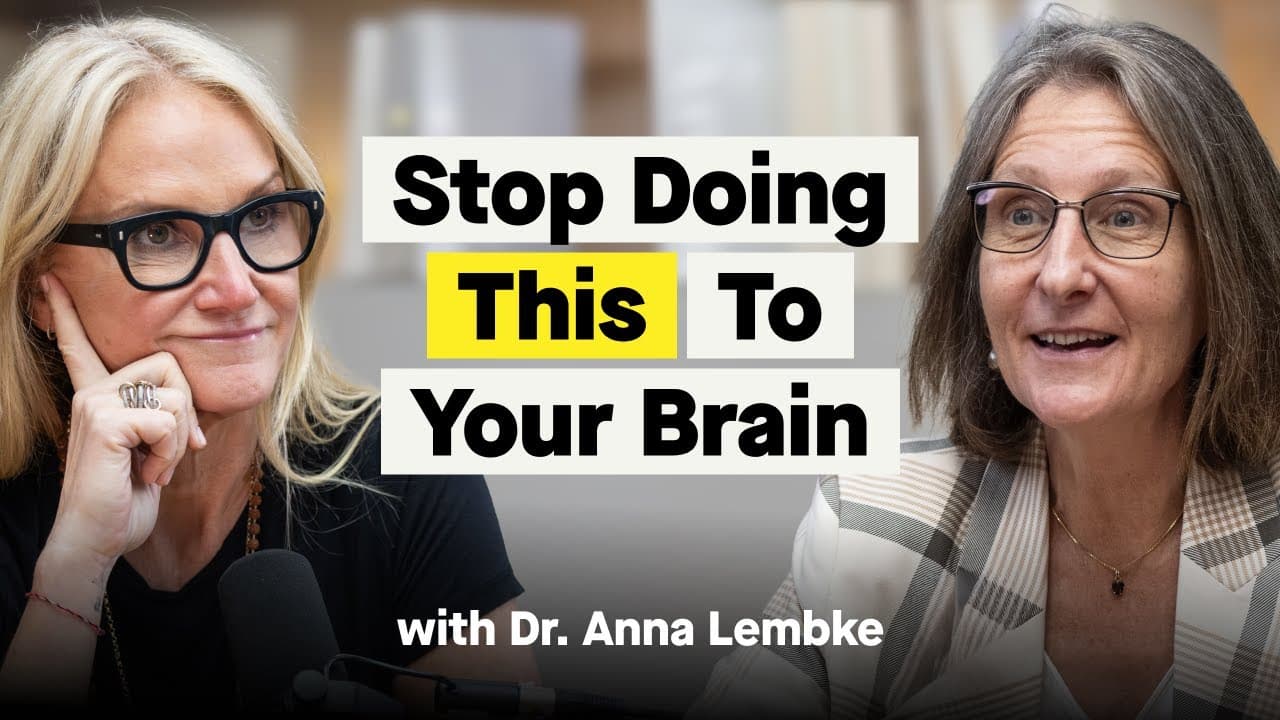
Today we're talking about how to get motivated even when you don't feel like it with the world's number one expert on dopamine. Dr. Anna Lumpky is a professor and the medical director of addiction medicine at Stanford University School of Medicine. What is dopamine and why is it important? >> Dopamine is a chemical that we make in our brain. Dopami... Read More
Key Insights
- Dopamine is a neurotransmitter that plays a crucial role in pleasure, reward, and motivation.
- Modern life offers easy access to dopamine hits, making us vulnerable to addictions, even to behaviors like social media use.
- The pleasure-pain balance in the brain regulates how we experience rewards and discomfort.
- Repeated exposure to pleasurable stimuli can lead to a dopamine deficit state, where more is needed to achieve the same satisfaction.
- To reset dopamine levels, a 'dopamine detox' can be effective, requiring abstinence from addictive behaviors for several weeks.
- Intentional exposure to discomfort can help regulate dopamine and improve motivation and happiness.
- Boredom and discomfort are essential for creativity and problem-solving, as they force the brain to seek new solutions.
- Mindfulness and intentional living can help manage cravings and reduce reliance on instant gratifications.
Install to Summarize YouTube Videos and Get Transcripts
Explore YouTube Video Summarizer or Get YouTube Transcript Extractor
Questions & Answers
Q: How does dopamine affect motivation and focus?
Dopamine is a neurotransmitter that plays a crucial role in motivation and focus by regulating pleasure and reward pathways in the brain. It encourages seeking behavior and reinforces activities that are perceived as beneficial for survival. However, overconsumption of dopamine-inducing activities can lead to a deficit state, requiring more to achieve the same level of satisfaction, thus impacting motivation and focus negatively.
Q: What is the pleasure-pain balance in the brain?
The pleasure-pain balance is a concept that explains how the brain processes pleasure and pain using a seesaw-like mechanism. When we experience pleasure, the balance tips towards pleasure, and when we experience pain, it tips the other way. The brain strives for homeostasis, or balance, and repeated exposure to pleasure can lead to a dopamine deficit state, making it harder to experience joy from everyday activities.
Q: Why is it so hard to break bad habits?
Breaking bad habits is challenging because they often involve activities that release dopamine, creating a reinforcing cycle in the brain. Over time, the brain adapts, requiring more of the activity to achieve the same pleasure, leading to a dopamine deficit state. This makes it difficult to stop the behavior, as the brain craves the dopamine hit to return to baseline levels of satisfaction.
Q: What is a dopamine detox and how does it work?
A dopamine detox involves abstaining from addictive behaviors or stimuli that provide quick dopamine hits for a period of time, typically 3 to 4 weeks. This allows the brain to reset its dopamine levels, reducing cravings and improving the ability to experience pleasure from more modest rewards. The detox helps restore the pleasure-pain balance, enhancing motivation and focus.
Q: How can intentional discomfort improve happiness?
Intentional discomfort, such as engaging in challenging activities or enduring boredom, can improve happiness by encouraging the brain to produce its own dopamine and other feel-good neurotransmitters. This process helps reset the pleasure-pain balance, making everyday activities more rewarding and increasing overall satisfaction and motivation.
Q: What role does mindfulness play in managing dopamine levels?
Mindfulness helps manage dopamine levels by promoting awareness of cravings and encouraging a deliberate response to them. By practicing mindfulness, individuals can better resist the urge to seek instant gratification, allowing the brain to reset its dopamine balance and reducing reliance on addictive behaviors. This can lead to improved focus, energy, and self-control.
Q: How does modern life contribute to dopamine imbalance?
Modern life contributes to dopamine imbalance by providing easy access to high-dopamine activities, such as social media, processed foods, and instant entertainment. These activities can lead to overconsumption and a dopamine deficit state, where more stimulation is needed to achieve satisfaction. This imbalance affects motivation, focus, and overall happiness.
Q: Why is boredom important for creativity?
Boredom is important for creativity because it provides the mental space needed for new ideas and problem-solving. When the brain is not constantly stimulated, it is forced to engage in deeper thinking and exploration, leading to innovative solutions and insights. Boredom encourages the brain to seek out novel experiences and challenges, fostering creativity and personal growth.
Summary & Key Takeaways
-
Dopamine is essential for motivation, but modern life often leads to overconsumption of quick pleasures, disrupting our brain's balance. To reset dopamine levels, it's crucial to reduce reliance on instant gratifications and embrace discomfort.
-
Intentional discomfort, such as exercise or mindfulness, can help regulate dopamine and improve motivation and happiness. Boredom is vital for creativity, forcing the brain to seek new solutions.
-
A dopamine detox, involving abstinence from addictive behaviors for several weeks, can help reset dopamine levels and improve focus, energy, and self-control. Mindfulness can manage cravings and reduce reliance on instant gratifications.
Read in Other Languages (beta)
Share This Summary 📚
Summarize YouTube Videos and Get Video Transcripts with 1-Click
Try YouTube Summary with ChatGPT & Claude or YouTube Transcript Generator
Explore More Summaries from Mel Robbins 📚




Summarize YouTube Videos and Get Video Transcripts with 1-Click
Try YouTube Summary with ChatGPT & Claude or YouTube Transcript Generator