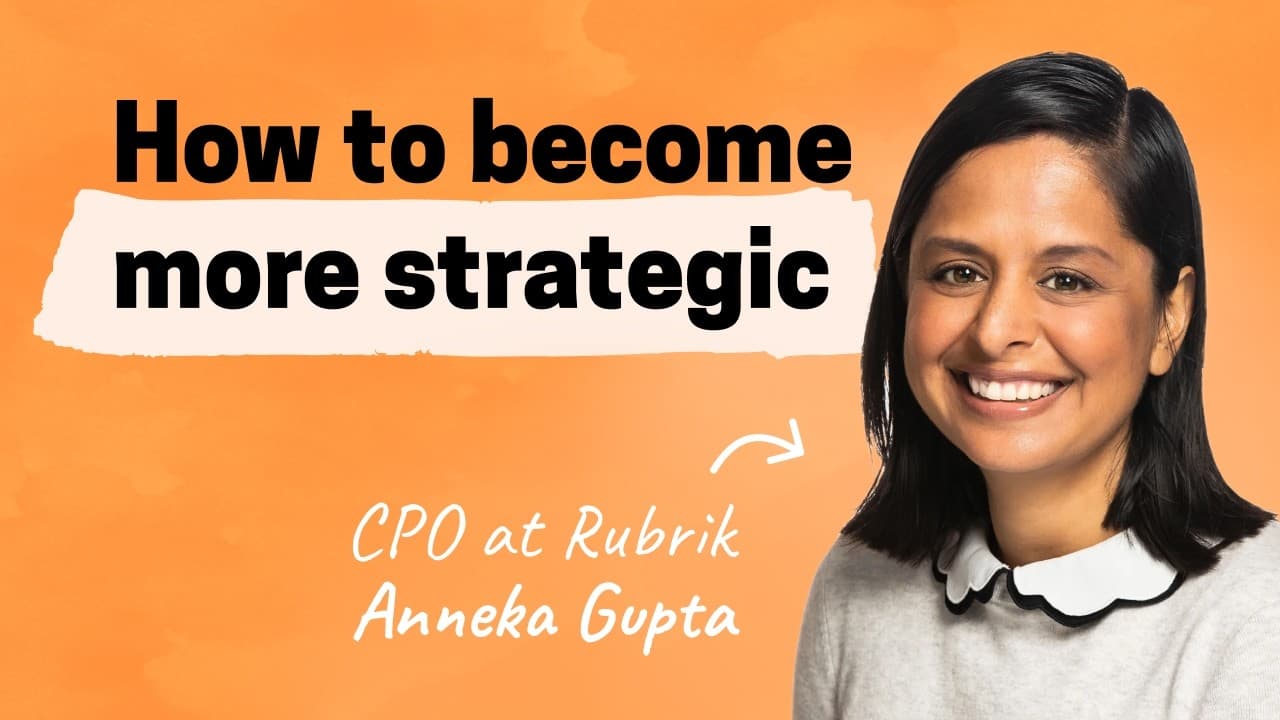
Who Is Anneka Gupta, and What Is Her Advice on Strategic Leadership, Difficult Colleagues, and Founder Mode?
TL;DR
Anneka Gupta is Rubrik’s Chief Product Officer, a Stanford Graduate School of Business lecturer, and a Tinuiti board member who explains how product leaders can become more strategic. She says they must articulate a compelling, simple reason for company or product decisions and champion difficult changes that serve long-term interests. Read on for her practical guidance on strategy, challenging situations, humor, energy management, and founder mode.
Transcript
When people say, "I want someone that's strategic," what they're really saying is, "I want someone that can come up with and articulate a compelling and simple why behind the decisions and the direction of the company and product." So that's number one. And the second piece is, "I want someone that's going to champion and be a change agent to d... Read More
Key Insights
- Strategic leadership is the ability to articulate a compelling, simple reason behind company and product decisions while also championing difficult changes that benefit the organization over the long term.
- Clear strategic thinking is insufficient without action because colleagues also expect a strategic leader to serve as a change agent and pursue necessary decisions even when execution will be difficult.
- A positive mindset is a practical response to challenging work because reframing a daunting situation around learning, opportunity, and enjoyment can reduce scarcity thinking and reveal more possible ways forward.
- Humor is a leadership tool that can introduce levity into difficult meetings, improve the leader's own mood, and influence how the wider team approaches a shared challenge.
- Energy management is the practice of arranging work around the periods when a person can bring the strongest emotional and mental capacity, rather than treating every open hour as equally useful.
- Basic physical needs affect professional performance because skipping lunch for a protein bar can reduce energy and make it harder to bring an abundant mindset to demanding situations.
- Self-awareness improves scheduling because identifying a personally weak period, such as 5:00 to 6:00 PM, allows demanding meetings and strategy work to be placed at more productive times.
- Founder mode is a recognizable organizational pattern that benefits from having a shared name because founders, executives, and employees can discuss examples of the approach being practiced well or poorly.
Install to Summarize YouTube Videos and Get Transcripts
Explore YouTube Video Summarizer or Get YouTube Transcript Extractor
Questions & Answers
Q: Who is Anneka Gupta, and what advice does she share?
Anneka Gupta is Chief Product Officer at Rubrik, a product management lecturer at Stanford University’s Graduate School of Business, and a Tinuiti board member. She shares advice on strategic leadership, difficult personalities, hard feedback, decision-making, energy management, and breaking into product management.
Q: How does Anneka Gupta define a strategic product leader?
A strategic product leader can articulate a compelling, simple reason behind the decisions and direction of a company or product. The leader also champions difficult changes that support the product’s or company’s long-term interests, even when those changes are hard to execute.
Q: Why are clear strategic thinking and action both necessary?
Explaining the reason behind a direction is only one part of strategic leadership. Gupta says people will not see someone as strategic unless that person also acts as a change agent and champions difficult work that serves long-term interests.
Q: How does Anneka Gupta approach extremely difficult situations at work?
Gupta tries to find a way to have fun even during the most difficult periods. She asks what she can learn from the situation and what positive outcome she can gain, which helps her move beyond a mindset of scarcity and see more opportunities.
Q: What workplace challenge led Anneka Gupta to reframe her mindset?
Gupta faced a situation in which she had to change all of her direct reports in very short order. She initially felt scared by the amount of change ahead, but reframing the experience helped her get through it and opened her mind to more opportunities.
Q: How can humor help during a difficult meeting?
Gupta recommends bringing humor into meetings where people must collectively solve a major challenge. Starting on a light note can elevate the leader’s mood, add levity for others, and help transfer a more constructive mindset to colleagues and direct reports.
Q: How should leaders manage their energy instead of only managing time?
Leaders should arrange demanding work around periods when they can bring strong emotional and mental energy. Gupta protects lunch and avoids difficult meetings or strategy writing between 5:00 and 6:00 PM, which she identifies as her weakest period.
Q: Why is founder mode useful to discuss?
Founder mode gives founders, executives, employees, and product leaders a shared name for a recognizable organizational pattern. Gupta notes that people can discuss examples of founders and chief executives practicing the approach well or poorly.
Summary & Key Takeaways
-
Anneka Gupta defines strategic leadership as a combination of clear reasoning and committed action. A strategic person can explain the compelling, simple why behind a company or product direction, then champion difficult changes that support long-term interests. Either capability alone is insufficient for earning a reputation as a strategic leader.
-
A positive mindset can change how leaders approach daunting professional situations. Gupta recommends asking what can be learned and what positive outcome might emerge. She also uses humor to lighten difficult meetings, elevate her own mood, and help colleagues approach collective problem-solving with greater openness rather than a sense of scarcity.
-
Managing energy is more useful than scheduling every task solely by available time. Gupta protects basic needs such as lunch and avoids placing demanding meetings or strategy writing between 5:00 and 6:00 PM, which she identifies as her weakest period. This helps her bring stronger emotional and mental energy to difficult work.
Read in Other Languages (beta)
Share This Summary 📚
Summarize YouTube Videos and Get Video Transcripts with 1-Click
Try YouTube Summary with ChatGPT & Claude or YouTube Transcript Generator
Explore More Summaries from Lenny's Podcast 📚

Summarize YouTube Videos and Get Video Transcripts with 1-Click
Try YouTube Summary with ChatGPT & Claude or YouTube Transcript Generator