Making patterned mirrors and ITO glass with a thermal evaporator
TL;DR
The video discusses the progress made in building a thermal evaporator and the challenges faced in coating glass with patterned aluminum and ITO.
Transcript
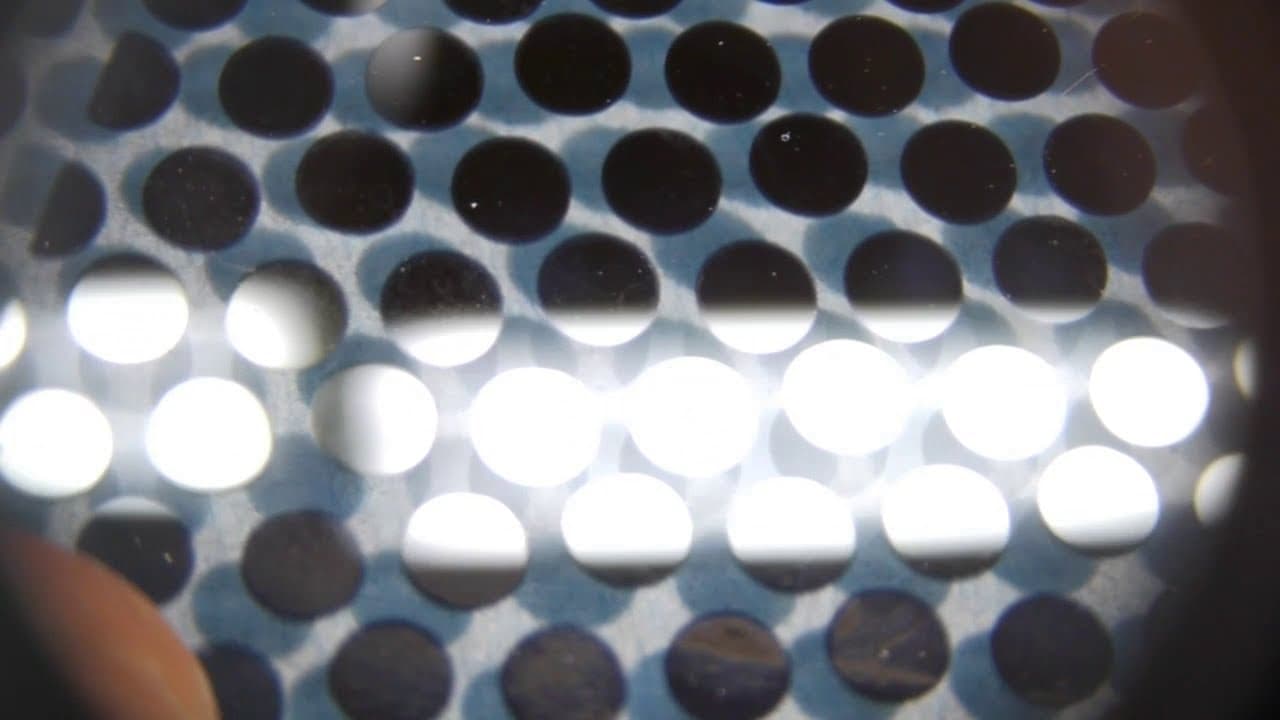
hi everyone I made a lot of progress of my thermal evaporator this weekend and made some interesting mirrors these are just patterned aluminum sort of a dot pattern there and then I also made IT o glass so these two are coated in IT o and unfortunately they aren't conductive so I have some more work to do there but at least the evaporator is mostly... Read More
Key Insights
- 😘 Building a thermal evaporator requires the addition of low voltage and rotary shaft feed-throughs for powering and moving items within the vacuum chamber.
- 🥵 Thermal evaporation is a process where a material is heated to vaporize it and then condenses onto a substrate to create a coating.
- 🥹 Metal boats are commonly used to hold the material to be evaporated during the thermal evaporation process.
- 🥼 To achieve even coating thickness, it is necessary to implement substrate rotation during the evaporation process.
- 🪡 The conductivity of the ITO coating needs improvement, possibly by increasing the substrate temperature.
- 😨 Care must be taken when choosing and installing shaft collars to prevent damage to the shaft and Teflon seals.
- 🤗 Open bearings are preferred over sealed bearings to allow for proper venting in the vacuum chamber.
Install to Summarize YouTube Videos and Get Transcripts
Explore YouTube Video Summarizer or Get YouTube Transcript Extractor
Questions & Answers
Q: How does thermal evaporation work to create coatings on glass?
Thermal evaporation involves heating a material, such as aluminum, until it vaporizes. The vapor then condenses onto a surface, like glass, creating a coating.
Q: Why is a vacuum chamber necessary for thermal evaporation?
A vacuum chamber is essential because the aluminum molecules would oxidize if exposed to air. Additionally, the presence of air molecules would impede the transfer of aluminum from the evaporator dish to the glass.
Q: What are metal boats, and how are they used in thermal evaporation?
Metal boats, such as tungsten, molybdenum, or tantalum, are used to hold the material to be evaporated. Current is passed through the boat, causing it to heat up and vaporize the material.
Q: How can the issue of uneven coating thickness be addressed during thermal evaporation?
The issue of uneven coating thickness can be mitigated by implementing two-axis rotation for the substrate. This allows for an orbit around the center and an orbit around the center of the piece, resulting in more even coverage.
Summary & Key Takeaways
-
The video showcases the progress made in building a thermal evaporator, including the addition of low voltage and rotary shaft feed-throughs.
-
The process of thermal evaporation involves heating up a material, such as aluminum, to vaporize it and then condensing the vapor onto a surface, like glass, to create a coating.
-
The experiment shows that while the aluminum-coated glass has low resistance, the ITO coating is not conductive, indicating a need for further work.
Read in Other Languages (beta)
Share This Summary 📚
Summarize YouTube Videos and Get Video Transcripts with 1-Click
Try YouTube Summary with ChatGPT & Claude or YouTube Transcript Generator
Explore More Summaries from Applied Science 📚

Summarize YouTube Videos and Get Video Transcripts with 1-Click
Try YouTube Summary with ChatGPT & Claude or YouTube Transcript Generator