How Did '90s Porn Lead to Section 230, the Internet's Foundational Law?
TL;DR
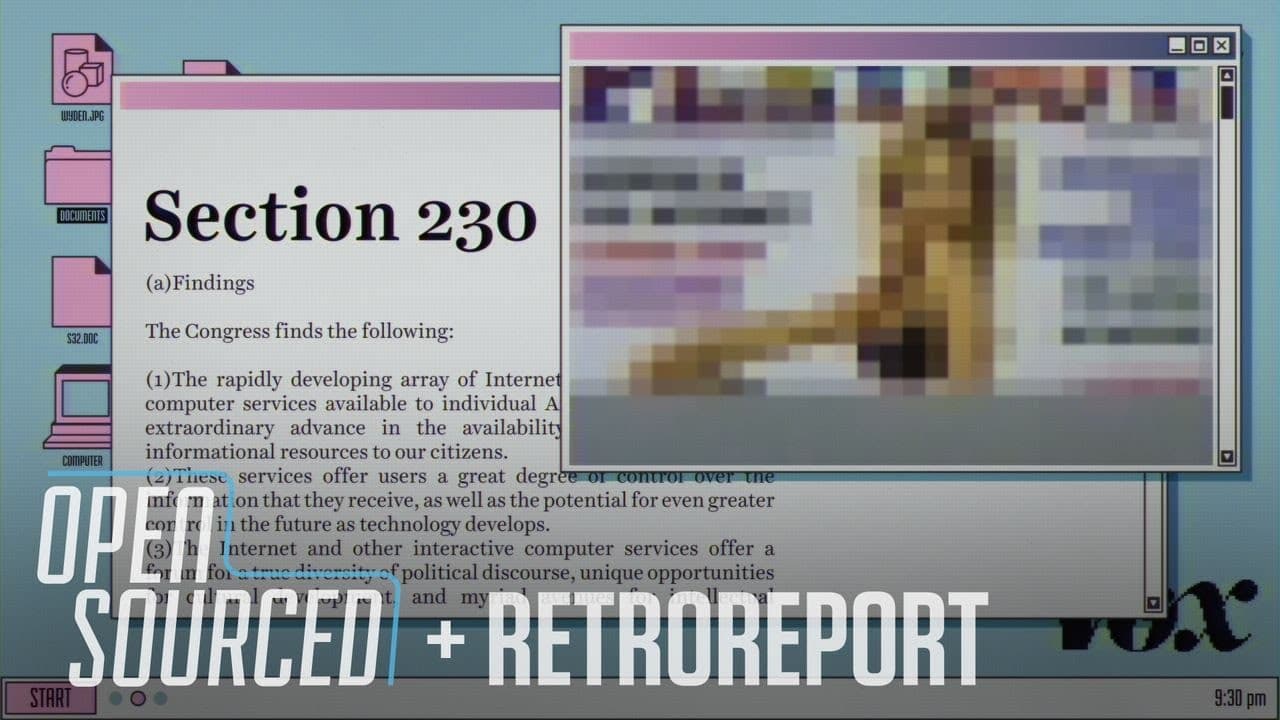
Section 230 lets internet companies moderate user content without becoming legally responsible for everything users post. Congress passed it in 1996 after Senator James Exon's effort to outlaw indecent online material prompted a competing proposal from Christopher Cox and Ron Wyden. Courts later interpreted its liability shield broadly, protecting AOL and Grindr even after alleged victims repeatedly reported dangerous abuse. Read on to understand the law's origins, protections, consequences and disputed future.
Transcript
In 1995, Senator James Exon brought a blue binder to the floor of the Senate. It was full of, well… -The most hardcore, perverse types of pornography. The images came from the Internet. Exon wanted his fellow senators to realize what kids could see… -Come by my desk and take a look at this disgusting material. …with just the click of a button. -It’... Read More
Key Insights
- A binder shaped internet law: Exon's display connected an abstract policy dispute to graphic material that senators could inspect directly. His concern centered on children's easy access to online pornography, but the broader debate also covered hate speech and defamation. That effort to restrict objectionable material ultimately produced legislation containing the very liability protection that survived when his ban did not.
- Early courts discouraged moderation: Providers faced greater potential exposure when they tried to exercise editorial judgment over user submissions. Prodigy's moderation therefore risked liability for everything users posted, while a completely hands-off service could escape consequences. This legal structure rewarded inaction, even though lawmakers such as Cox and Wyden wanted providers to remove smut and help families control incoming content.
- Section 230 reversed incentives: Cox and Wyden designed the provision to let companies clean up their services without automatically assuming responsibility for all remaining user content. The protection was meant to encourage good-faith policing of objectionable material. By separating moderation from publisher-style liability, the law offered companies a reason to intervene instead of leaving every submission untouched.
- The sword enables removal: The sword side of Section 230 is the freedom to take down horrible online material. Companies can make editorial choices about user content without that act alone placing them on the legal hook for everything else. This power addressed the earlier problem in which moderation itself could create additional legal risk for an internet provider.
- The shield limits litigation: The shield protects platforms from lawsuits based on material supplied by users. That protection allowed websites to host enormous volumes of speech without verifying the truth of every individual post in court. The transcript links this protection directly to the current forms of Facebook, Twitter, YouTube and Wikipedia, whose models depend heavily on user participation.
- One statute had two fates: Congress passed Section 230 as part of the Communications Decency Act in 1996. The First Amendment prevented enforcement of Exon's indecency ban, yet courts allowed Section 230 to remain. The provision associated with private moderation survived, while the government's direct attempt to prohibit indecent online speech was struck down.
- Scale depended on legal insulation: Section 230 helped create a massive internet industry by reducing the litigation exposure attached to user-generated content. Platforms could permit more people to post what they wanted without defending each post's accuracy. The law therefore influenced not only moderation decisions but also whether services built around mass participation could operate in their current forms.
- Zeran revealed asymmetric protection: AOL could invoke the shield even though Kenneth Zeran said the service stopped responding to his attempts to remove impersonating advertisements. The court held that AOL could leave the posts up after notification. The case showed that a platform could receive Section 230's protection without using its removal power to address reported harm.
- Online impersonation caused offline threats: The anonymous AOL user published Kenneth Zeran's name and telephone number in advertisements for shirts glorifying the Oklahoma City bombing. Zeran then received a tsunami of threatening calls. His experience demonstrated that user-generated content could damage a person beyond the platform, even while the platform remained protected from liability.
- Herrick reported repeated danger: Matthew Herrick said his former boyfriend created Grindr profiles using Herrick's picture and name, then directed unsuspecting people to his home and workplace for sex. Some profiles allegedly described rape fantasies, placing Herrick at risk of sexual assault. Herrick said he sometimes received 23 people in person at his home.
- Fifty reports produced no remedy: Herrick said he submitted 50 reports to Grindr, but the company never acted. His lawyers framed the lawsuit as a claim about releasing a dangerous product into the marketplace. The court nevertheless treated it like the Zeran case and concluded that Grindr did not have to help, an outcome Carrie Goldberg called exceptionally expansive.
- Both parties seek change: Republicans and Democrats both want Section 230 changed, but the existing fields describe different concerns. Democrats seek more moderation to combat disinformation, while Republicans argue that moderation can censor conservative views. Any alteration therefore sits between competing demands for platform accountability, freedom to post and protection against politically disputed content decisions.
Install to Summarize YouTube Videos and Get Transcripts
Explore YouTube Video Summarizer or Get YouTube Transcript Extractor
Questions & Answers
Q: What is Section 230, and what does it do?
Section 230 is a provision written by Christopher Cox and Ron Wyden and passed in 1996 as part of the Communications Decency Act. It lets internet companies moderate user content without becoming legally responsible for everything users publish. Its removal authority is described as the sword, while protection from litigation is the shield. The structure was intended to encourage companies to police objectionable content in good faith without making moderation itself a source of liability.
Q: How did '90s internet pornography lead to Section 230?
In 1995, Senator James Exon displayed a binder of hardcore internet pornography to show what children could find online. He proposed the Communications Decency Act to make indecent material such as pornography illegal on the internet. Cox and Wyden responded to the same concern with a different approach, giving companies legal room to moderate their own services. Their Section 230 provision was added to Exon's legislation and passed with it in 1996.
Q: Why did Cox and Wyden believe the existing law was backwards?
Courts could treat a provider that moderated user content as potentially liable for everything its users posted. A service that remained completely hands off faced no comparable legal consequences. Cox and Wyden believed this arrangement discouraged providers from removing smut or helping customers control what they and their children saw. Section 230 sought to reverse that incentive by protecting companies when they exercised editorial discretion.
Q: What happened to the Communications Decency Act's pornography ban?
Exon's restriction on indecent online material ran into the First Amendment. A court concluded that the government could not enforce the Communications Decency Act without violating the constitutional right to free speech. Section 230 was allowed to stand even though the indecency ban failed. As a result, the government's direct prohibition disappeared while the legal protection for private platform moderation survived.
Q: Why was the Zeran v. AOL case important?
An anonymous AOL user impersonated Kenneth Zeran and published his name and phone number in advertisements for shirts glorifying the Oklahoma City bombing. Zeran received threatening calls and asked AOL to remove the ads, but the service eventually stopped responding. When he sued in 1996, the court held that Section 230 protected AOL even after it had received his reports. The decision made broad platform immunity effectively the governing rule described in the transcript.
Q: How did Section 230 affect Matthew Herrick's case against Grindr?
Herrick said a vengeful ex-boyfriend created Grindr profiles using his name and photograph and directed strangers to his home and job. Some profiles allegedly invoked rape fantasies, and Herrick said as many as 23 people sometimes appeared at his home. Although he filed 50 reports, he said Grindr did nothing. The court applied Section 230 and ruled that Grindr did not have to help him, paralleling AOL's protection in Zeran's case.
Q: How did Section 230 help major internet platforms grow?
The law protected websites from being sued over every piece of content their users supplied. That shield reduced the need to defend the truth of each individual post in court. The transcript identifies Facebook, Twitter, YouTube and Wikipedia as services whose current business models could not exist under that burden. Section 230 therefore supported the expansion of platforms built around large-scale user participation.
Q: Why do Republicans and Democrats want Section 230 changed?
The existing fields describe both parties as dissatisfied, though for different reasons. Democrats advocate increased moderation to curb disinformation and protect public safety. Republicans argue that moderation can censor conservative views and seek less restriction on online speech. The dispute persists because changing the shield could increase platform accountability while also affecting free posting, moderation choices and the business models built around user content.
Summary & Key Takeaways
-
Pornography prompts a national debate: In 1995, Senator James Exon brought a blue binder containing hardcore internet pornography to the Senate floor. He wanted lawmakers to confront what children could access with a click. Americans were also debating online hate speech and defamation while the internet remained young and poorly understood. Exon responded by proposing the Communications Decency Act, an amendment to the Telecommunications Act that would effectively make indecent online material, including pornography, illegal.
-
Moderation creates a legal trap: Courts had treated providers differently depending on whether they exercised editorial control. A service such as Prodigy, which moderated user submissions, could potentially become liable for anything its users posted. A provider that remained completely hands off could avoid those legal consequences. Representatives Christopher Cox and Ron Wyden considered that result backwards because it discouraged companies from removing objectionable material or helping customers control what they and their children encountered online.
-
Section 230 offers two protections: Cox and Wyden wrote Section 230 so companies could moderate content without becoming legally responsible for user posts. Its approach became known as the sword and the shield. The sword represented a platform's ability to remove horrible material, while the shield protected it from litigation over user-generated content. Section 230 joined Exon's Communications Decency Act, and the combined legislation passed in 1996 with the expectation that internet companies would police objectionable content in good faith.
-
The ban falls, protection survives: Exon's prohibition on indecent online material collided with the First Amendment. A court ruled that the government could not enforce the Communications Decency Act without violating the constitutional right to free speech, but Section 230 remained in force. Its protection helped services such as Facebook, Twitter, YouTube and Wikipedia develop business models based on large amounts of user content. Without the shield, platforms could have faced the burden of defending every user's claim in court.
-
Victims expose the shield's cost: Kenneth Zeran sued AOL after an anonymous user impersonated him in advertisements for shirts glorifying the Oklahoma City bombing. Although Zeran reported the posts after receiving threatening calls, the court held that Section 230 protected AOL. Years later, Matthew Herrick said an ex-boyfriend used Grindr profiles to direct strangers to his home and workplace. Despite Herrick filing 50 reports, the court likewise found that Grindr did not have to help him, intensifying criticism of broad platform immunity.
Read in Other Languages (beta)
Share This Summary 📚
Summarize YouTube Videos and Get Video Transcripts with 1-Click
Try YouTube Summary with ChatGPT & Claude or YouTube Transcript Generator
Explore More Summaries from Vox 📚


Summarize YouTube Videos and Get Video Transcripts with 1-Click
Try YouTube Summary with ChatGPT & Claude or YouTube Transcript Generator