How Should Hindi Websites Optimize for Google Search? | English/Hindi Google Webmaster Central Office-Hours Hangout

TL;DR
Hindi websites should optimize for Google Search by publishing relevant Hindi content for Hindi readers, without adding English keywords merely to rank. Multilingual sites can connect Hindi and English pages with hreflang, while responsive design supports mobile-friendly presentation. Google accepts both JSON-LD and microdata, although valid markup does not guarantee rich snippets. Read on for answers about language choice, structured data, mobile design, backlinks, user intent, and Search Console’s 90-day limit.
Transcript
AASEESH MARINA: Hello, guys. Welcome to this month's Hangout Office Hours for Hindi and English language. Can you hear us? SD and Irwin? Can you hear us? SYED MALIK MAIRAJ: I don't think we are able to hear you. Let me see if it muted. AASEESH MARINA: Yeah, can you type something in the chat or something? If you can hear us? Yeah, he says he can. S... Read More
Key Insights
- Hindi websites do not need English keywords to rank well on Google.
- JSON-LD and microdata are both supported for structured data, but implementation must be correct.
- Mobile-friendly design is crucial for ranking, with responsive design being recommended.
- Hreflang tags help Google understand multilingual sites, linking Hindi and English versions.
- User intent is complex with Hindi due to transliteration and multiple dialects.
- Internal linking should consider mobile versus desktop content for user experience.
- Links are not the sole ranking factor; content relevance and user engagement are vital.
- Search Console data is limited to 90 days, with no premium version offering extended data.
Install to Summarize YouTube Videos and Get Transcripts
Explore YouTube Video Summarizer or Get YouTube Transcript Extractor
Questions & Answers
Q: How should Hindi websites optimize for Google Search?
Create content in Hindi for people who read and write Hindi, and make the site accessible for search engines to crawl, index, and understand. Do not insert English keywords merely because you believe Hindi pages need them to rank. For multilingual pages, use hreflang, and ensure the site is mobile-friendly.
Q: Do Hindi pages need English keywords to rank in Google Search?
No. The speakers explicitly reject the idea that Hindi webmasters must add English keywords to Hindi content to rank. They recommend focusing on Hindi users and avoiding mixed-language text when it would create a poor reading experience.
Q: Why might Google show results mixing Hindi and English?
Some users type Hindi words with the English alphabet, producing transliterated Hindi or Hinglish searches. Google may also show mixed-language content when it lacks an appropriate result written purely in Hindi. This makes the user’s intended language and script difficult to determine.
Q: Does Google prefer JSON-LD or microdata for structured data?
Google supports both JSON-LD and microdata. Webmasters can continue using whichever format works best for their site and does not break its implementation. The transcript does not identify either format as universally preferred.
Q: Why might valid JSON-LD fail to produce rich snippets?
Passing the rich snippets tool indicates that the markup has no technical issue, but appearance in search results is not guaranteed. The structured data must also follow policy guidelines, including not being hidden or misleading. Google may decide that a rich snippet is not appropriate for a particular result.
Q: How should multilingual Hindi and English pages be connected?
Use hreflang tags to link the Hindi and English versions of a page. This helps Google understand their relationship and serve the language version suited to the user. The tags are especially relevant when a site maintains equivalent content in both languages.
Q: What mobile design approach is recommended for Hindi websites?
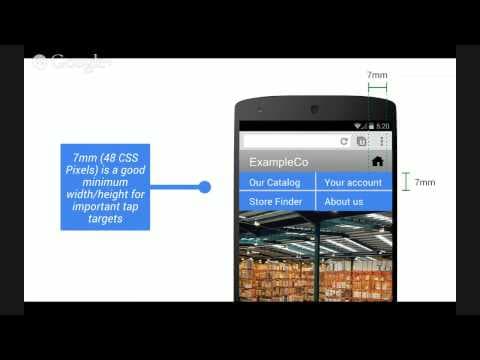
The existing guidance recommends responsive design because it adapts to different screen sizes and is easier to maintain. Mobile-friendly design is important for ranking and should also provide a good user experience. Internal linking should account for differences between mobile and desktop content.
Q: How long does Google Search Console retain the performance data discussed here?
The page states that Search Console provides 90 days of data. It also says there is no premium version offering a longer tracking period. Webmasters who need historical records can export the data regularly.
Summary & Key Takeaways
-
Hindi websites can rank effectively on Google without needing English keywords. It's important to create content in Hindi for a better user experience, especially for Hindi-speaking users. Google supports both JSON-LD and microdata for structured data, but proper implementation is crucial for visibility in search results.
-
For multilingual sites, using hreflang tags is beneficial to link Hindi and English versions, helping Google serve the correct page to users based on their language preference. Mobile-friendly design is essential for ranking, with responsive design being the recommended approach for ease of maintenance.
-
Understanding user intent is challenging with Hindi due to transliteration and dialects. Internal linking should be optimized for user experience, considering mobile versus desktop content. Links are not the only ranking factor; content relevance and user engagement are also important. Search Console offers 90 days of data, with no premium version available for extended tracking.
Read in Other Languages (beta)
Share This Summary 📚
Summarize YouTube Videos and Get Video Transcripts with 1-Click
Try YouTube Summary with ChatGPT & Claude or YouTube Transcript Generator
Explore More Summaries from Google Search Central 📚




Summarize YouTube Videos and Get Video Transcripts with 1-Click
Try YouTube Summary with ChatGPT & Claude or YouTube Transcript Generator