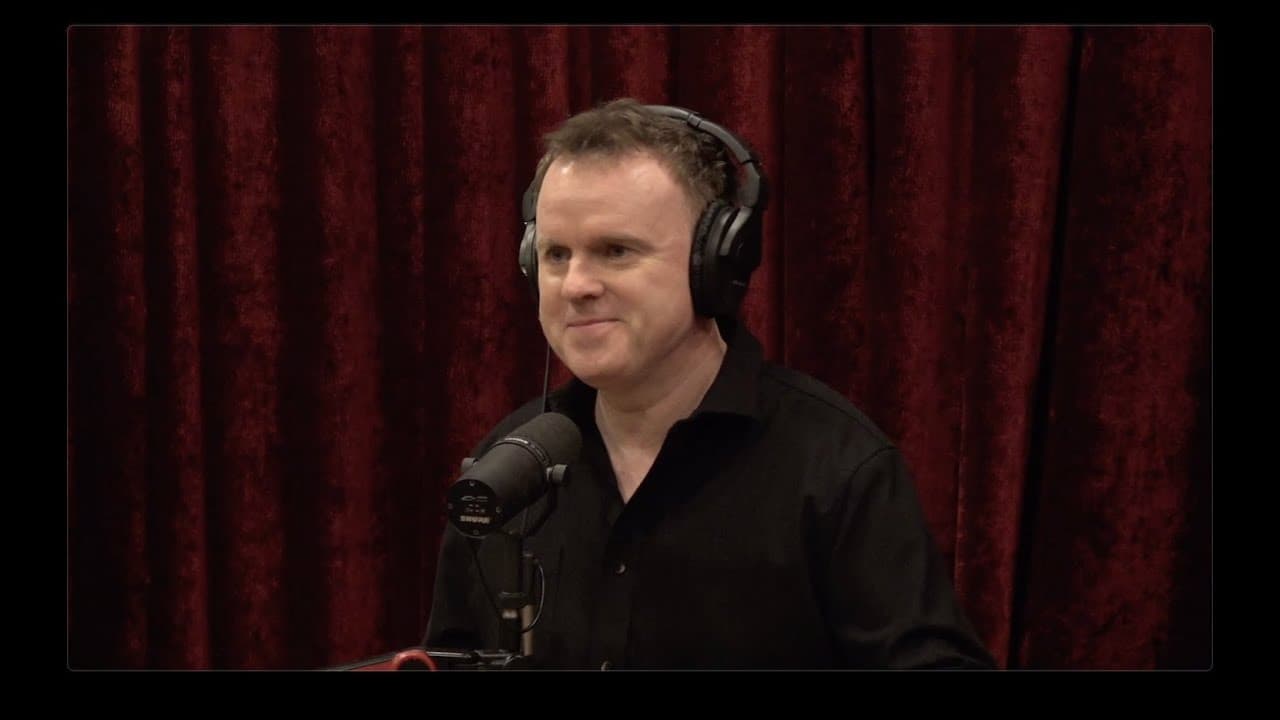
Andrew Doyle on the End of Woke and UK Free Speech
TL;DR
More than 12,000 people were arrested in the UK in the past year for social media posts, roughly 30 a day, up from about 3,000 arrests a year in 2020. Andrew Doyle argues woke was the latest form of an innate human authoritarian impulse, enforced by redefining kind-sounding words like 'equity' to mean their opposite.
Transcript
Joe Rogan podcast. Check it out. The Joe Rogan Experience. Train by day. Joe Rogan podcast by night. All day. Yes. Andrew. Hello. Good to see you, brother. Good to see you, too. Um, it has been, you said, 6 years almost to the day. The last time. So, lots changed. Right before everything went crazy. That's it. Right before. Yeah. The whole world so... Read More
Key Insights
- Woke is described as the latest manifestation of an innate authoritarian impulse in human beings, who by default lean toward silencing people they dislike; the same authoritarianism once tied to the left could now emerge from the right or anywhere, requiring constant vigilance.
- The movement gained traction by using sweet, fluffy language to mean its opposite: 'equity' sounds like equality but means treating people unequally to force equal outcomes by group identity, and 'inclusive' can mean excluding anyone who disagrees.
- More than 12,000 people were arrested in the UK in the past year for social media posts, a figure Doyle attributes to a Times of London freedom of information request to police, averaging about 30 arrests a day.
- The UK arrest figure has climbed sharply over time: it was around 3,000 a year back in 2020 when Doyle last appeared, and lower still further back, showing the speech-policing problem was already large before recent years.
- The least defensible ideas tend to get the most violent enforcement, because ideas that cannot be defended with logic are instead defended with fear, force, and shouting people down.
- UK hate speech law is spread across multiple statutes including the Public Order Act, the Malicious Communications Act of 1988, and the Communications Act of 2003, criminalizing posts judged 'grossly offensive,' a phrase Doyle calls dangerously subjective.
- 'Anarcho-tyranny' describes a state that punishes people who aren't breaking the law while protecting those who are, a dynamic Doyle sees in how UK authorities treat speech and migration-related unrest.
- Army veteran Darren Brady was handcuffed and arrested after reposting a meme of four Progress Pride flags arranged into a swastika, with the arresting officer citing that he had 'caused someone anxiety.'
Install to Summarize YouTube Videos and Get Transcripts
Explore YouTube Video Summarizer or Get YouTube Transcript Extractor
Questions & Answers
Q: What is Andrew Doyle's book The End of Woke about?
The End of Woke: How the Culture War Went Too Far and What to Expect from the Counter-Revolution argues that woke was the latest manifestation of an innate authoritarian impulse in human beings. Doyle stresses he is not saying it is entirely over, but that things are changing so rapidly that a new phase is emerging, and the authoritarianism once associated with the left could now come from the right or anywhere, so people must stay vigilant.
Q: How many people have been arrested in the UK for social media posts?
According to Doyle, more than 12,000 people were arrested in the UK in the past year for social media posts, a figure he attributes to a Times of London freedom of information request to the police. That averages roughly 30 arrests a day, and it represents people actually being arrested, not merely investigated. He notes the number was about 3,000 a year back in 2020 and lower still further back.
Q: Why does Doyle say woke used misleading language?
Doyle argues the movement worked by using sweet, kittenish language that meant the opposite of what it appeared to. 'Equity' sounds like equality but actually means treating people unequally to ensure equal outcomes according to group identity. Saying 'inclusive' could really mean excluding anyone who disagrees, and 'gender affirming care' could mean affirming a pseudoscientific belief among vulnerable people. Because most people want to be kind and fair, this language gulled them into acceptance.
Q: What UK laws criminalize offensive speech?
Doyle points to several statutes: the Public Order Act, the Malicious Communications Act of 1988, and the Communications Act of 2003. These laws criminalize posts that are judged 'grossly offensive,' a phrase written directly into the statute books that Doyle finds deeply subjective. He notes one act references causing 'needless anxiety' as grounds for arrest, arguing that almost anything can be found offensive under such vague wording.
Q: What happened in the Darren Brady arrest case?
Darren Brady, an army veteran, was handcuffed and arrested by police after reposting a meme showing four Progress Pride flags arranged so they formed a swastika. In a video of the arrest, the policeman told him he had 'caused someone anxiety,' using the actual language from the law. Doyle points out Brady did not even create the meme, was only retweeting it, and that the image was making a satirical point rather than an offensive one.
Q: Why does Doyle believe weak ideas get enforced most violently?
Doyle argues that the more preposterous an idea is and the less capable it is of standing up to scrutiny, the more violent the enforcement of it will be. Because such an idea cannot be defended with logic, its supporters instead defend it with fear, force, and shouting people down. He calls this a natural human impulse, comparing it to a child who, unable to win an argument, resorts to scaring the other person into silence.
Q: What does anarcho-tyranny mean according to the podcast?
Anarcho-tyranny is described as a situation where a state punishes people who are not breaking the law while protecting those who are. Doyle applies this to the UK, where authorities arrest people over social media posts yet appear lenient toward genuine lawbreaking. The discussion links this to a broader concern that UK leaders seem to cater to migrants over British people while creating conditions for chaos on the streets.
Q: How does Doyle compare free speech in the UK and the US?
Doyle feels the UK is failing on freedom and free speech where the US is succeeding to a degree, though not in all ways. He attributes the difference partly to the fact that the UK lacks free speech protections comparable to the American First Amendment, allowing hate speech laws embedded across multiple statutes to flourish. He worries Americans now think the UK has lost it, and Rogan confirms that many Americans do think exactly that.
Summary & Key Takeaways
-
Andrew Doyle returns after roughly six years, last appearing in February 2020 just before COVID, BLM, and the 2020 upheaval. His book 'The End of Woke' frames woke not as finished but as the current form of a recurring authoritarian impulse that could resurface from any political direction.
-
The core mechanism, Doyle argues, was linguistic: activists used gentle words like 'equity,' 'inclusive,' and 'gender affirming care' to mean the opposite of what they appeared to say. Because most people want to be kind and fair, this language gulled them into accepting authoritarian aims.
-
The UK illustrates the danger, with over 12,000 arrests in a year for social media posts, up from about 3,000 in 2020. Laws criminalizing 'grossly offensive' content and 'needless anxiety' produced cases like veteran Darren Brady, arrested over a satirical Pride-flag swastika meme.
Read in Other Languages (beta)
Share This Summary 📚
Summarize YouTube Videos and Get Video Transcripts with 1-Click
Try YouTube Summary with ChatGPT & Claude or YouTube Transcript Generator
Explore More Summaries from PowerfulJRE 📚
Summarize YouTube Videos and Get Video Transcripts with 1-Click
Try YouTube Summary with ChatGPT & Claude or YouTube Transcript Generator