Will AI Really Replace White-Collar Jobs Soon?
TL;DR
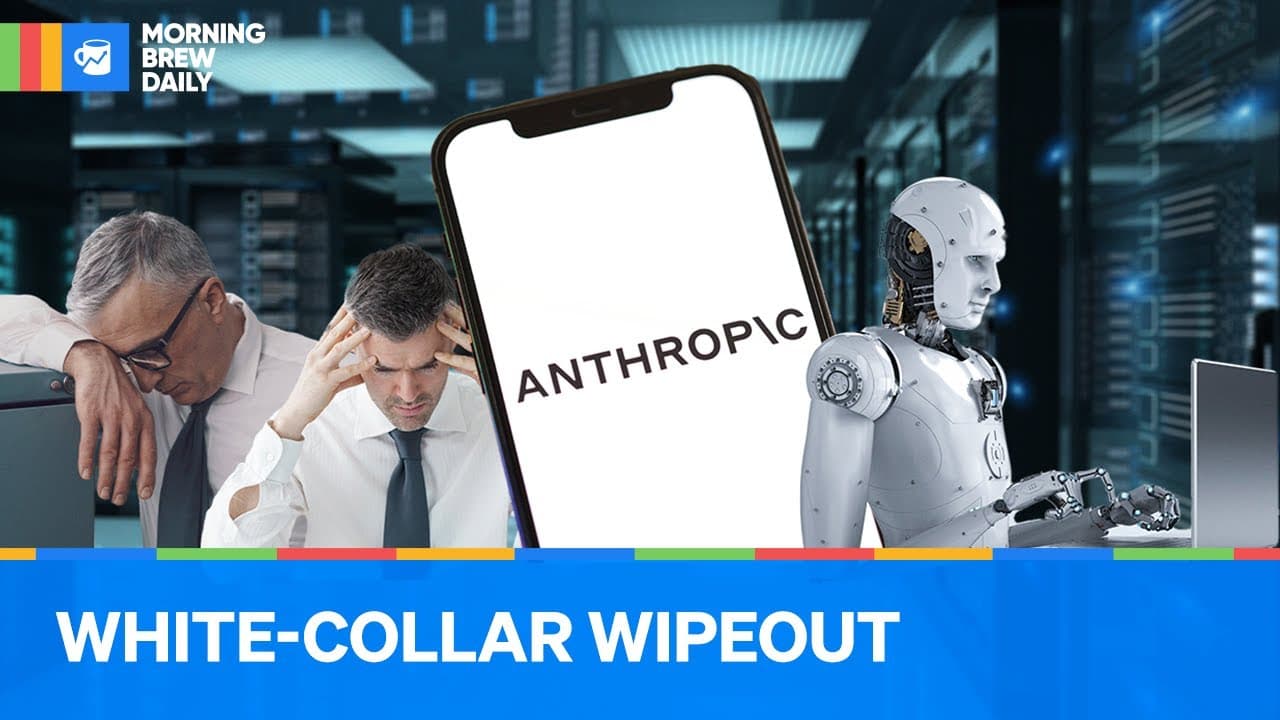
A recent warning from Anthropic CEO Dario Amadei suggests AI could eliminate up to half of entry-level white-collar jobs in the next five years, potentially raising unemployment to 20%. This rapid change is attributed to advancements in AI technology, which many experts believe the public and government are underestimating.
Transcript
Good Morning Brew Daily Show. I'm Neal Freyman. and I'm Toby Howell. Today, airlines got exposed for charging solo travelers more than groups for the same exact ticket. Then is I really going to take your job? One major CEO certainly thinks so. It's Monday, June 2nd. Let's ride. Good morning and welcome back to the week. Apparently the 1% are not f... Read More
Key Insights
- A major CEO warns that AI could eliminate up to half of all entry-level white-collar jobs within five years, potentially pushing unemployment rates to 20%.
- The Hamptons rental market is experiencing a significant downturn, with high-end rentals dropping by 50-75%, possibly indicating economic uncertainty.
- Airlines have been charging solo travelers more than groups, but media attention has led some airlines to adjust their pricing strategies.
- Taylor Swift has successfully reacquired ownership of her first six albums, marking a significant victory in her long-standing battle for her music rights.
- States with no income tax, like Florida, are becoming attractive destinations for NHL players, influencing team dynamics and free agency decisions.
- President Trump plans to double tariffs on steel and aluminum imports to 50%, which could lead to economic tensions with trading partners like Canada and the EU.
- There is concern that the rapid advancement of AI is not being adequately addressed by government and tech leaders, potentially leading to significant job disruption.
- The NHL's tax dynamics highlight the broader economic implications of tax policies on professional sports and player decisions.
Install to Summarize YouTube Videos and Get Transcripts
Explore YouTube Video Summarizer or Get YouTube Transcript Extractor
Questions & Answers
Q: What are the concerns about AI replacing white-collar jobs?
There is a growing concern that AI could replace up to half of entry-level white-collar jobs, particularly in fields like law, finance, and tech. This could lead to unemployment rates as high as 20%, with significant economic and social implications. The rapid pace of AI development is seen as a critical factor, with government and industry leaders potentially underestimating its impact.
Q: How is the rental market in the Hamptons performing?
The Hamptons rental market is experiencing a downturn, with rentals down by nearly a third compared to previous years. The high-end market is particularly affected, with drops of 50-75%. This trend might indicate broader economic uncertainty, as the wealthy are holding onto their cash, possibly due to recession fears or unfavorable weather conditions.
Q: How have airlines been adjusting their pricing strategies for solo travelers?
Airlines like Delta, United, and American have been found to charge solo travelers more than groups on certain routes. This strategy aims to extract more value from business travelers, who often fly solo. However, media attention has led some airlines to adjust their pricing, although in some cases, this has resulted in higher prices for all travelers.
Q: What is the significance of Taylor Swift reacquiring her music catalog?
Taylor Swift's reacquisition of her first six albums marks a major victory in her fight for artists' rights. Initially sold without her consent, the catalog's ownership has been a contentious issue. Swift's efforts to regain control highlight the challenges artists face in owning their work and the financial implications of such ownership.
Q: How do tax policies affect NHL players and teams?
Tax policies significantly impact NHL players' decisions, with states like Florida offering no income tax, making them attractive destinations. This advantage influences team dynamics and free agency decisions, as players can earn more net income compared to high-tax regions, affecting the competitive balance within the league.
Q: What are the potential effects of doubling steel and aluminum tariffs?
Doubling tariffs on steel and aluminum imports to 50% could lead to economic tensions with trading partners like Canada and the EU. The move aims to boost U.S. production but may result in higher consumer prices and supply chain disruptions, affecting industries reliant on these materials and potentially leading to job losses.
Q: What are the broader implications of AI's rapid development?
The rapid development of AI poses significant challenges, with potential job displacement and economic inequality. There's a call for government and industry leaders to address these issues proactively, possibly through policies like AI usage taxes, to mitigate the impact on the workforce and ensure a balanced economic transition.
Q: How does the NHL's tax situation compare to other sports?
The NHL's tax dynamics are unique due to the league's composition, with a significant number of Canadian teams and varying tax laws. This situation highlights broader economic implications, as tax policies influence player decisions and team competitiveness, a factor not as prominently discussed in other sports leagues.
Summary & Key Takeaways
-
The episode discusses the potential impact of AI on entry-level white-collar jobs, with warnings from a CEO about significant job losses in the near future. This concern is juxtaposed with the current high unemployment rate for recent college graduates.
-
President Trump's announcement to double steel and aluminum tariffs could exacerbate trade tensions with key partners like Canada and the EU, raising concerns about economic repercussions and job losses in related industries.
-
Taylor Swift's reacquisition of her music catalog is celebrated as a major personal and symbolic victory, highlighting the broader issue of artists' rights and the financial dynamics of the music industry.
Read in Other Languages (beta)
Share This Summary 📚
Summarize YouTube Videos and Get Video Transcripts with 1-Click
Try YouTube Summary with ChatGPT & Claude or YouTube Transcript Generator
Explore More Summaries from Morning Brew Daily 📚


Summarize YouTube Videos and Get Video Transcripts with 1-Click
Try YouTube Summary with ChatGPT & Claude or YouTube Transcript Generator