Shein Influencer Trip Goes Terribly Wrong
TL;DR
Shein's influencer trip backfires, worsening its image issues.
Transcript
Shein is in hot water again. Sheehan is huge. It did 100 billion in sales in 2022, up from 10 billion in 2020. But it has a bit of an image problem. A lot of people think that Shein exemplifies the worst of the world of fast fashion. It's cheap clothing, bad environmental impact and an exploited labor force. But Shein is eyeing an IPO. So in an eff... Read More
Key Insights
- Shein's sales skyrocketed from $10 billion in 2020 to $100 billion in 2022, but it struggles with an image problem tied to fast fashion criticisms.
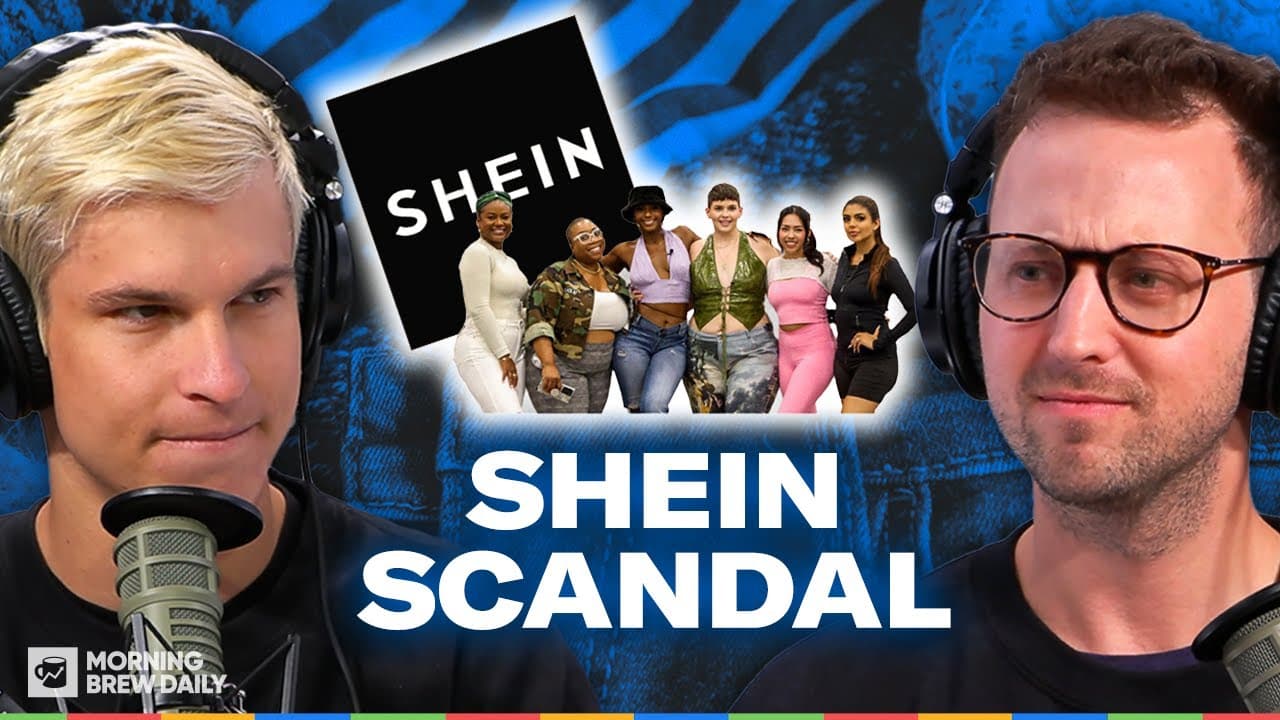
- The company attempted to improve its image by inviting influencers to tour one of its factories in China, aiming to demonstrate ethical labor practices.
- The influencer trip backfired as audiences perceived it as a staged event to mask ongoing unethical practices, prompting backlash and deleted posts.
- Critics argue that Shein exploits diverse influencers to craft a misleading narrative about its practices, which many see through.
- Shein faces sustainability criticisms, with much of its clothing contributing to landfill waste, a common issue in the fast fashion industry.
- U.S. Congress is investigating Shein's use of cotton from China's Xinjiang province, associated with forced labor, circumventing import bans through pricing loopholes.
- Bloomberg's investigation found Shein's products contain cotton from Xinjiang, raising ethical and legal concerns about its supply chain.
- Shein's impending IPO, valued at $100 billion, may be impacted by these controversies, with U.S. lawmakers urging regulatory scrutiny.
Install to Summarize YouTube Videos and Get Transcripts
Explore YouTube Video Summarizer or Get YouTube Transcript Extractor
Questions & Answers
Q: What was the purpose of Shein's influencer trip?
Shein organized the influencer trip to improve its public image by showcasing ethical labor practices at one of its factories in China. The goal was to counteract criticisms of unethical practices and environmental impact associated with fast fashion, hoping to present a more positive narrative through influencer endorsements.
Q: How did the public react to the influencer trip?
The public reaction was overwhelmingly negative, with many perceiving the trip as a staged event to mask ongoing unethical practices. Influencers faced backlash for participating, with accusations of compromising integrity for monetary gain. The negative response led some influencers to delete their promotional posts.
Q: What are the main criticisms against Shein?
Shein faces several criticisms, including environmental concerns about its products contributing to landfill waste and ethical issues related to labor practices. Specifically, the use of cotton from China's Xinjiang province, associated with forced labor, has drawn significant scrutiny and legal challenges, particularly from U.S. lawmakers.
Q: Why is the U.S. Congress investigating Shein?
The U.S. Congress is investigating Shein due to its use of Xinjiang cotton, linked to forced labor practices. This investigation is part of broader efforts to enforce import bans on products from the region. Shein's ability to circumvent these bans through pricing loopholes has raised ethical and legal concerns among lawmakers.
Q: What impact could the controversy have on Shein's IPO?
The controversy could negatively affect Shein's impending IPO, valued at $100 billion, by attracting regulatory scrutiny and damaging investor confidence. Ethical and legal issues, particularly those related to labor practices and supply chain transparency, may influence regulatory bodies and potential investors' perceptions.
Q: How does Shein's strategy reflect broader fast fashion industry trends?
Shein's strategy highlights common fast fashion industry challenges, such as balancing rapid growth with sustainability and ethical sourcing. The backlash against its influencer trip illustrates the increasing demand for transparency and accountability in fashion supply chains, as consumers and regulators scrutinize environmental and labor practices.
Q: What loophole allows Shein to circumvent U.S. import bans?
Shein exploits a loophole allowing products priced below $800 to bypass U.S. Customs and Border Protection checks. This enables the company to import goods potentially containing banned materials, such as Xinjiang cotton, without detection, raising ethical and legal issues regarding compliance with U.S. import regulations.
Q: What role do influencers play in Shein's marketing strategy?
Influencers play a crucial role in Shein's marketing strategy by promoting its products and shaping public perception. However, the recent backlash highlights the risks of relying on influencers to address complex ethical issues, as audiences increasingly demand genuine transparency and accountability from brands and their endorsers.
Summary & Key Takeaways
-
Shein's influencer trip intended to showcase ethical labor practices backfired, drawing significant public backlash and highlighting the company's ongoing image challenges. Critics viewed the trip as a superficial attempt to address deeper issues, including environmental impact and labor exploitation.
-
The controversy underscores broader criticisms of the fast fashion industry, particularly regarding sustainability and ethical sourcing. Shein's use of Xinjiang cotton, linked to forced labor, has attracted scrutiny from U.S. lawmakers and poses potential legal risks.
-
As Shein eyes a $100 billion IPO, the fallout from the influencer trip and ongoing ethical concerns may influence regulatory actions and investor perceptions. The situation illustrates the complex interplay between corporate image management and substantive ethical practices.
Read in Other Languages (beta)
Share This Summary 📚
Summarize YouTube Videos and Get Video Transcripts with 1-Click
Try YouTube Summary with ChatGPT & Claude or YouTube Transcript Generator
Explore More Summaries from Morning Brew Daily 📚

Summarize YouTube Videos and Get Video Transcripts with 1-Click
Try YouTube Summary with ChatGPT & Claude or YouTube Transcript Generator