What Lessons Do History's Innovators Teach Us?
TL;DR
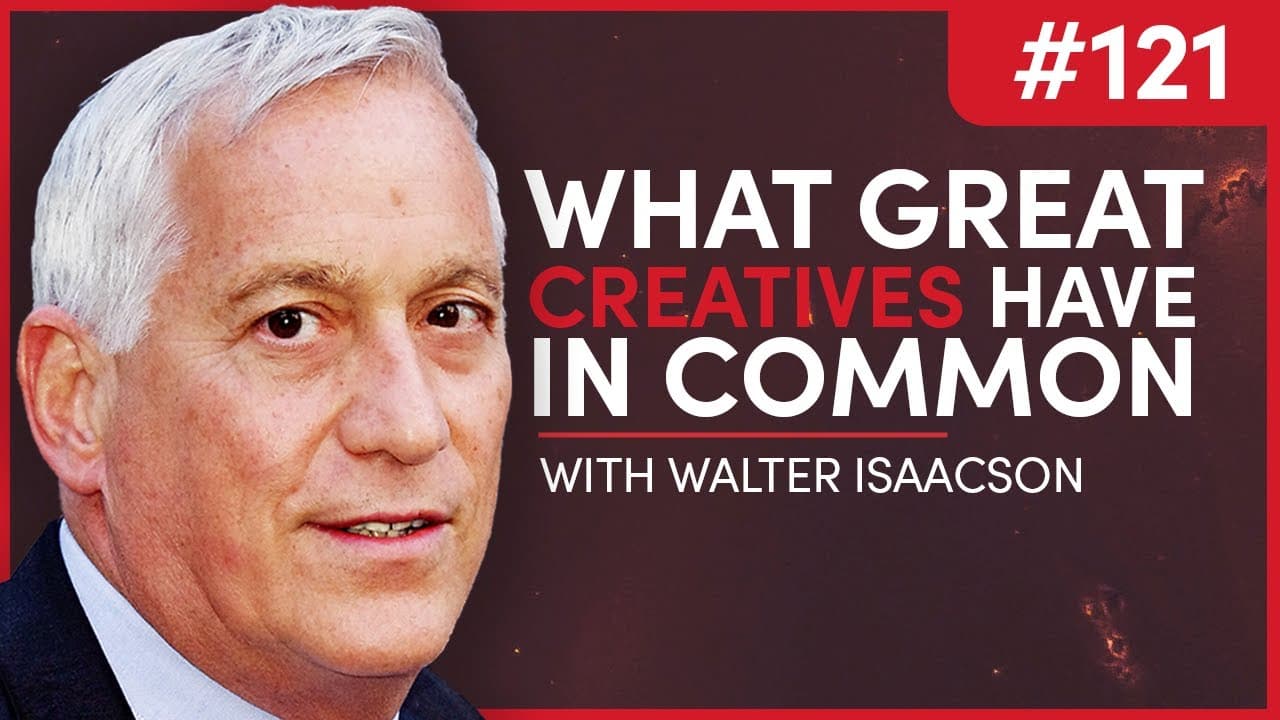
History's greatest innovators, including Leonardo da Vinci, Steve Jobs, and Ada Lovelace, exemplify the power of curiosity, creativity, and the integration of art and science. Their experiences underscore the importance of embracing diverse perspectives, the role of ethical considerations in technology, and the balance between perfectionism and progress.
Transcript
my first day as a journalist in the times picayune of new orleans when i was about 17 and we had a summer job i went and somebody had a young woman a young girl had been killed and i went out and i was supposed to find out about it and when i called the story back in as the days before email i had to go to a pay phone if you remember what that was ... Read More
Key Insights
- 📺 Curiosity and a broad vision are vital for creativity and innovation.
- 🥰 The intersection of art and science can lead to groundbreaking advancements.
- 🖐️ Design and user experience play a crucial role in the success of products.
- 🛰️ Ethical considerations are necessary in technological advancements, such as gene editing and artificial intelligence.
- ❓ Embracing diverse perspectives and disciplines can foster creativity and innovation.
- 🪛 Perfectionism can both drive excellence and hinder progress.
- 👤 User involvement and feedback are crucial in the creation of successful products.
- 🎙️ More videos with Walter Isaacson:
Install to Summarize YouTube Videos and Get Transcripts
Explore YouTube Video Summarizer or Get YouTube Transcript Extractor
Questions & Answers
Q: What were some of the key characteristics shared by Leonardo da Vinci, Steve Jobs, and Ada Lovelace?
Curiosity was a driving force in their lives, as they all had a broad vision and were passionate about exploring multiple fields. They embraced the intersection of art and science and recognized the importance of design and user experience.
Q: How did Leonardo da Vinci's background influence his work?
As a misfit, da Vinci's unique perspective fueled his curiosity about the world. His upbringing and exposure to diverse influences in Florence allowed him to bridge the gap between art and science, leading to his extraordinary contributions.
Q: What lessons can we learn from Steve Jobs?
Jobs believed in the power of thinking differently and being innovative. His emphasis on design and user experience, as well as his focus on making insanely great products, transformed Apple. He showed the importance of passion and attention to detail.
Q: What impact did Ada Lovelace have on computer programming?
Lovelace's realization that punch cards could be used to program Charles Babbage's Analytical Engine laid the foundation for modern computers. She understood that machines could manipulate information in any symbol notation, contributing to the development of programming languages.
Summary & Key Takeaways
-
Leonardo da Vinci: A misfit in his time, da Vinci's insatiable curiosity drove him to explore the intersection of art, science, and spirituality. His notebooks and attention to detail in paintings like the Mona Lisa exemplify his pursuit of perfection.
-
Steve Jobs: Jobs believed in the power of creativity and innovation, emphasizing the importance of thinking differently and embracing patterns across nature. He recognized the significance of design and user experience in products.
-
Ada Lovelace: As the first computer programmer, Lovelace combined her love for both the humanities and sciences. Her pioneering work with Charles Babbage's Analytical Engine laid the foundation for modern computers and artificial intelligence.
Read in Other Languages (beta)
Share This Summary 📚
Summarize YouTube Videos and Get Video Transcripts with 1-Click
Try YouTube Summary with ChatGPT & Claude or YouTube Transcript Generator
Explore More Summaries from The Knowledge Project | Full Episodes 📚





Summarize YouTube Videos and Get Video Transcripts with 1-Click
Try YouTube Summary with ChatGPT & Claude or YouTube Transcript Generator