How Can AI Revolutionize 3D Modeling in Two Minutes?
TL;DR
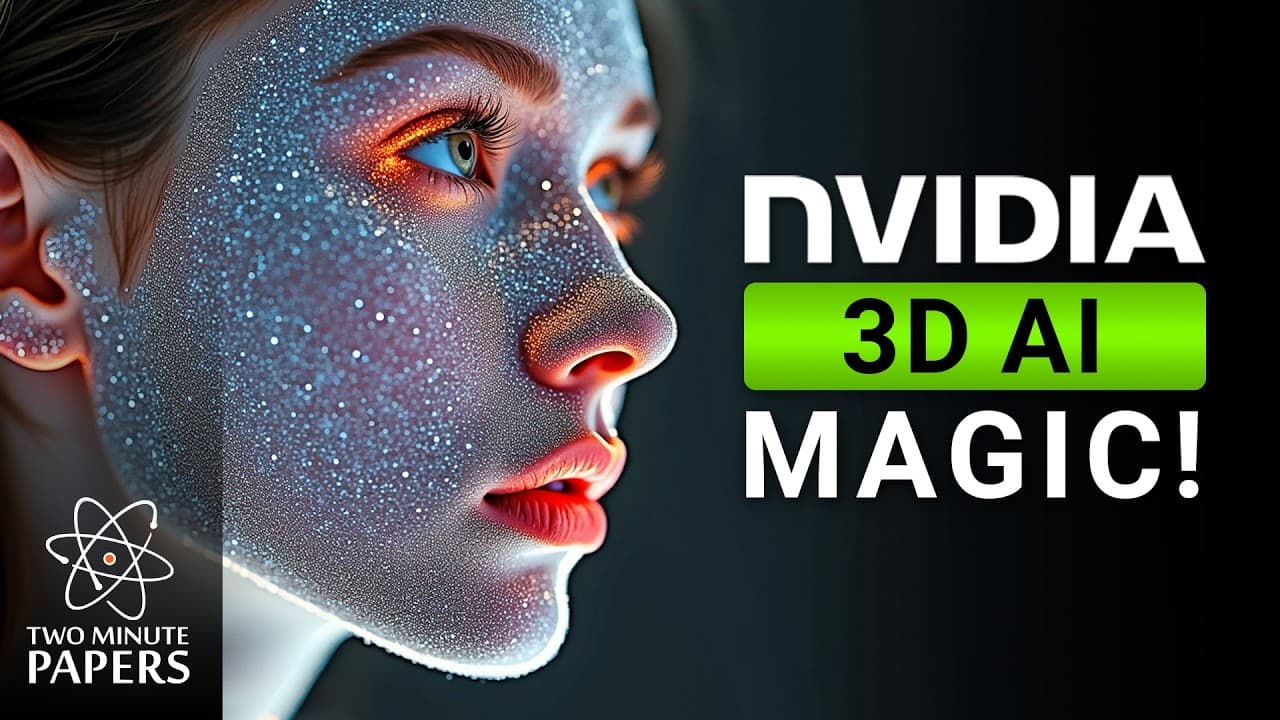
AI can generate high-quality 3D models from text prompts and images in just two minutes, making 3D modeling accessible to those without artistic skills. Utilizing a 2.7 billion parameter neural network, the AI can create detailed geometries and textures efficiently, with potential future improvements focusing on more sophisticated material models.
Transcript
I was really looking forward to this paper. So let’s use an AI to create a 3D virtual world. But let’s do it in a way that we don’t need to be a skilled 3D artist. How about just using a text prompt as an input. Nice, it is giving us a list of objects that we need, okay, that’s all well and good, but that is text. We don’t need text, we n... Read More
Key Insights
- ♿ The AI model improves the accessibility of 3D modeling by enabling creation through natural language prompts and image uploads.
- ❓ With a network size of 2.7 billion parameters, the AI achieves significant results using relatively modest computational resources, demonstrating its efficiency.
- 🫵 Training the AI on varied views enhances its ability to understand and render 3D geometry accurately.
- 🌸 Upscaling techniques applied by the AI improve the quality of generated textures, addressing potential detail loss in 3D rendering.
- 💪 The collaboration with NVIDIA highlights the strong tech industry's commitment to advancing AI capabilities in the area of 3D modeling.
- 👾 This AI tool could revolutionize digital content creation, supporting industries ranging from gaming to virtual reality.
- 🤑 Future research aims to integrate sophisticated material models, promising richer textural depth in forthcoming releases.
Install to Summarize YouTube Videos and Get Transcripts
Explore YouTube Video Summarizer or Get YouTube Transcript Extractor
Questions & Answers
Q: How does the AI generate 3D models from text prompts?
The AI utilizes a diffusion-based model that begins with random noise and generates multiple images. It then infers the 3D geometry that corresponds to those images while applying textures to create a coherent 3D model, all in a significantly reduced time frame.
Q: What are the limitations of the current AI model?
While the AI can produce textures up to 4K resolution, it currently lacks sophisticated material models, meaning it primarily generates color information without advanced shading techniques. This limitation indicates that while it is powerful, further enhancements, particularly in material quality, are anticipated in future developments.
Q: How does the AI’s processing time compare with traditional 3D modeling?
Traditional 3D modeling can take hours or even days to create detailed scenes, whereas this AI completes the same tasks in mere minutes. This drastic reduction in time not only saves artists labor but also enhances productivity, enabling rapid prototyping and creative exploration.
Q: What kind of inputs can users provide to the AI for model generation?
Users can input simple text prompts to describe the desired scene or take photographs of real-world objects, which the AI processes to create corresponding 3D models. The flexibility in input means that even those without technical 3D modeling skills can engage with the technology successfully.
Summary & Key Takeaways
-
The content discusses a new AI tool that allows users to create 3D environments without needing advanced artistic skills, using simple text prompts and images as inputs.
-
It highlights the efficiency of this AI, producing complex 3D models in about two minutes, compared to the hours required by traditional methods, while maintaining high-quality geometry and textures.
-
Future improvements are anticipated, with ongoing research focusing on enhancing material models and providing more sophisticated rendering techniques for 3D objects.
Read in Other Languages (beta)
Share This Summary 📚
Summarize YouTube Videos and Get Video Transcripts with 1-Click
Try YouTube Summary with ChatGPT & Claude or YouTube Transcript Generator
Explore More Summaries from Two Minute Papers 📚

Summarize YouTube Videos and Get Video Transcripts with 1-Click
Try YouTube Summary with ChatGPT & Claude or YouTube Transcript Generator