How to set up a Bullet Journal in 10 minutes

TL;DR
The video explains a quick, 10 minute process to set up a usable notebook using the Bullet Journal method. It distinguishes intentions from resolutions, emphasizes writing with a why, and shows essential spreads like index, future log, monthly log, and daily log to start and maintain a practical system.
Transcript
10 minutes. That's [music] all you need. Not to plan your entire year or create the perfect productivity system, just to set up a notebook that you'll actually use. Hi, I'm Ryder Carol, creator of the Bullet Journal Method. I've helped over a million people write a better life. And [music] in this video, we'll take 10 minutes to set up your noteboo... Read More
Key Insights
- The notebook is treated as a personal life chapter, and formatting is used to foster ongoing embodiment of intentions rather than chasing fixed outcomes.
- Intentions are defined with a who, what, and why formula to anchor actions in meaningful context and to guide ongoing practice rather than static goals.
- The bullet journal acts as a laboratory for experimentation, allowing you to test how to be the person you want to become through daily use and reflection.
- Indexing is essential to prevent losing ideas, courses, or notes by mapping topics to page numbers for easy retrieval.
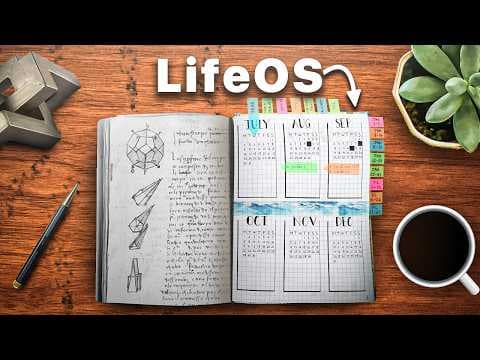
- A six month future log creates a compact, forward looking scaffold that accommodates dated tasks and events beyond the current month.
- The monthly log is kept minimal to ensure setup takes about three minutes, focusing on a timeline and a simple personal/professional split.
- The daily log links back to the monthly and uses the current date to structure what needs to be done that day, keeping the system practical.
- Practice is highlighted as the real magic, with emphasis on daily use to move from basic setup to a functioning personal operating system.
Install to Summarize YouTube Videos and Get Transcripts
Explore YouTube Video Summarizer or Get YouTube Transcript Extractor
Questions & Answers
Q: How to start bullet journaling with a quick 10 minute setup
To begin bullet journaling quickly, set a topic on the first page, create an index to track topics with page numbers, and establish a future log that spans six months. Then assemble a minimal monthly log and a daily log that ties to the monthly plan. This creates a usable, repeatable workflow from day one.
Q: What is the difference between intentions and resolutions in this method
Intentions describe ongoing practices or ways of being rather than fixed outcomes, making them more forgiving and adaptable as you grow. Resolutions focus on achieving a specific result, which can lead to overthinking and abandoning the notebook when progress stalls. Emphasizing intention supports consistent use.
Q: Why include a six month future log in the setup
A six month future log stores dated tasks and events that fall outside the current month, helping you plan ahead without crowding the current page. It provides a forward looking scaffold so you can schedule actions, events, and reminders across multiple months.
Q: How should the monthly log be organized for minimal setup
Keep the monthly log simple: use a left page as a timeline with dates and events after they happen, and reserve the right page for a concise monthly action plan. A personal and professional split helps prioritize what matters most while keeping setup time under minutes.
Q: What role does the index play in the notebook
The index acts as an address book for topics you pay attention to in this life chapter. You record a topic and its starting page, then add page numbers as you write. This prevents losing ideas and supports quick retrieval when you need to review or expand topics.
Q: How is the daily log connected to the rest of the system
The daily log records today’s date, pulls in tasks from the monthly plan, and lists additional tasks needed for the day. By linking daily actions to the monthly and future plans, the notebook stays coherent, focused, and actionable day after day.
Q: What benefits come from treating the notebook as a laboratory
Seeing the notebook as a laboratory invites ongoing experimentation to discover effective ways to be the person you want to be. You test different intentions, formats, and rhythms, learning what works best for your life, which increases consistency, reduces overthinking, and builds lasting habits.
Q: What should a beginner do if they aren’t clear about their intentions yet
If intentions aren’t clear, you should start with simple prompts and a flexible mindset. Write a few possible intentions, use the who, what, why framework, and allow for change over time. This reduces pressure and keeps you moving forward while you refine your purpose.
Summary & Key Takeaways
-
Setting up a notebook becomes a practical, repeatable process rather than a one-off project, enabling ongoing growth.
-
The speaker contrasts intentions with resolutions, highlighting a process oriented mindset that supports consistent progress over time.
-
The core setup includes an index, a six month future log, a minimal monthly log, and a daily log to keep tasks visible and actionable.
Read in Other Languages (beta)
Share This Summary 📚
Summarize YouTube Videos and Get Video Transcripts with 1-Click
Try YouTube Summary with ChatGPT & Claude or YouTube Transcript Generator
Explore More Summaries from Bullet Journal 📚



Summarize YouTube Videos and Get Video Transcripts with 1-Click
Try YouTube Summary with ChatGPT & Claude or YouTube Transcript Generator