How to Build Healthy Love Through Self-Respect
TL;DR
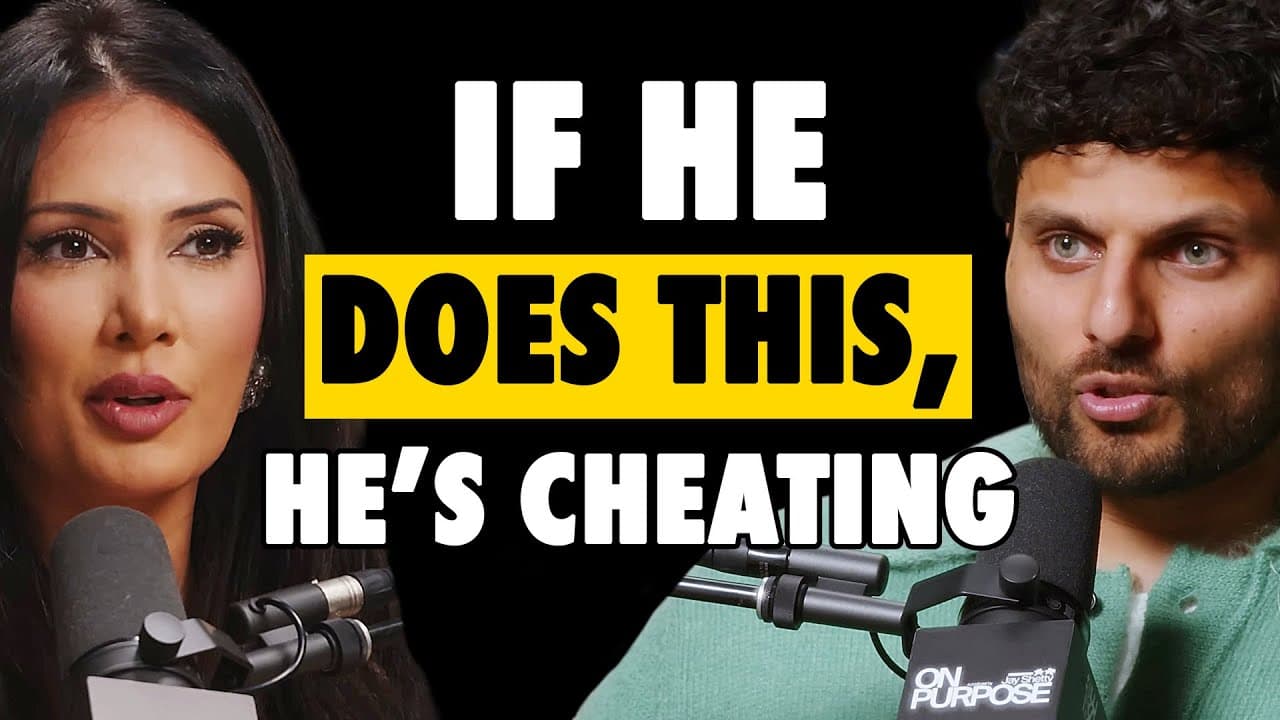
Healthy relationships begin with the self-esteem to reject disrespect, emotional unavailability, and poor communication. Instead of worrying about whom you attract, examine whom you continue to entertain, prioritize people who show reciprocal interest, and judge potential partners by their values, maturity, communication, and consistent patterns rather than mystery or an idealized image.
Transcript
The moment you heal your self-esteem, you'll have a natural distaste towards things that are bad for you. People who don't love you, people who don't treat you right. How you know your self-esteem is improving is that the moment those people start treating you badly, you lose attraction to them. The psychologist, teacher, and relationship expert, w... Read More
Key Insights
- Self-esteem is reflected in losing attraction to people who treat you badly. When disrespect, heartbreak, or dehumanizing behavior creates distance rather than a stronger attachment, a person becomes better able to reject damaging relationships and choose partners who support healthier patterns.
- Relationship outcomes depend less on whom people attract than on whom they entertain. A person may attract many types of partners, but repeatedly investing in unavailable or anxiety-producing people can delay commitment, marriage, family plans, or any other relationship goal they are trying to pursue.
- Emotional unavailability can appear desirable because mystery suggests options, importance, or an unusually busy life. Sadia Khan argues that dismissiveness and inconsistent communication may instead reveal emotional immaturity, an inability to commit, or an unwillingness to focus on one person.
- Healthy communication includes providing simple reassurance when circumstances prevent a timely response. Being busy or stressed can be understandable, but refusing to send a brief update may indicate insufficient empathy or an incomplete understanding of what a secure relationship requires.
- Dating app disappointment may come from disliking available matches rather than receiving no matches. Social media algorithms can create an imagined ideal that makes compatible, interested people seem inadequate, even when those people share relevant values, maturity, circumstances, and future goals.
- Reciprocal interest is a practical starting point for dating. People with stronger self-esteem may be more open to those who already like them, while people with lower self-esteem can become preoccupied with inaccessible partners and compare genuine opportunities with alternatives that are not real.
- Compatibility is not necessarily settling when two people have similar values, maturity, circumstances, and future plans. If a person considers someone similar to themselves inadequate, their standards may be inflated or designed to make a partner compensate for gaps in their own self-worth.
- Past relationship patterns can help predict future relationship behavior. Ghosting, regardless of its immediate reason, demonstrates poor communication, and hidden information or another alternative may be involved. Evaluating recurring conduct is therefore more useful than inventing flattering explanations for inconsistent behavior.
Install to Summarize YouTube Videos and Get Transcripts
Explore YouTube Video Summarizer or Get YouTube Transcript Extractor
Questions & Answers
Q: How does self-esteem improve relationship choices?
Improved self-esteem changes which treatment feels attractive or acceptable. A person begins to lose interest when someone is disrespectful, unavailable, heartbreaking, or dehumanizing instead of working harder to win that person over. This natural distaste for harmful behavior supports stronger boundaries, better partner selection, and healthier relationship maintenance because kindness is no longer offered without a willingness to leave.
Q: Why are emotionally unavailable people so attractive?
Emotionally unavailable people can seem desirable because their mystery implies that they have options, important responsibilities, or an unusually interesting life. For someone with low self-esteem, inconsistent attention may also feel normal and therefore compelling. Sadia Khan suggests reframing that behavior as possible emotional immaturity, poor communication, or an inability to commit, rather than treating distance as proof of exceptional value.
Q: What does it mean to entertain the wrong partners?
Entertaining the wrong partners means continuing to invest attention, hope, or attachment in people whose behavior conflicts with the relationship you want. The issue is not necessarily that only unavailable people are attracted to you. It may be that you form stronger attachments to people who create anxiety, avoid commitment, or fail to support goals such as marriage, family, or a stable partnership.
Q: How should someone respond to being ghosted?
Someone who has been ghosted should maintain reasonable expectations about digital dating, where limited investment can make people treat one another as disposable. The other person may have found an alternative or may be hiding information, but the exact reason does not change the central evidence. Ghosting demonstrates poor communication, so it should be evaluated as part of that person's behavioral pattern rather than romanticized.
Q: What communication should a healthy partner provide?
A healthy partner should communicate with enough consistency and empathy to prevent avoidable uncertainty. Work and stress can delay a response, but sending a short message can reassure the other person for the day. If someone repeatedly cannot provide even that basic update, the behavior may show emotional immaturity or a limited understanding of the communication required for a healthy relationship.
Q: How can people evaluate their dating app matches?
People should first distinguish between receiving no matches and rejecting the people who do match with them. They can then assess interested partners through shared values, maturity, demographics, and future plans instead of comparing them with an idealized person produced by social media algorithms. Starting with reciprocal interest creates a realistic opportunity to discover compatibility without glorifying inaccessible alternatives.
Q: When do high dating standards become unrealistic?
Dating standards may be unrealistic when a person expects a partner to provide qualities, status, or circumstances that are far removed from what they bring to the relationship. A useful question is whether similarity feels like settling. If it does, the person may be seeking someone who fills gaps in their self-worth rather than someone compatible in values, maturity, circumstances, and long-term direction.
Q: How can someone reduce the risk of being cheated on?
A woman can reduce her vulnerability to ongoing betrayal by maintaining a genuine willingness to leave when she is disrespected. This does not offer control over another person's choices, but it prevents kindness and attachment from becoming permission for mistreatment. Clear boundaries communicate that heartbreak, dehumanization, and disrespect have consequences, while stronger self-esteem helps sustain those boundaries when they are tested.
Summary & Key Takeaways
-
Self-esteem shapes relationship choices by determining which behaviors a person considers acceptable. Healing becomes visible when disrespect and emotional unavailability reduce attraction instead of intensifying it. A willingness to leave harmful treatment discourages exploitation, supports healthier boundaries, and makes it easier to select partners who can sustain the relationship one actually wants.
-
Anxious attraction can make emotionally unavailable people appear mysterious, desirable, or unusually busy. Sadia Khan reframes inconsistent texting, avoidance, and failure to focus on one partner as possible signs of emotional immaturity. Clear communication and basic empathy, including sending a brief update when busy, are presented as reasonable expectations in healthy relationships.
-
Dating apps and social media can encourage people to compare real matches with idealized partners promoted by their algorithms. Rather than glorifying inaccessible people, daters should consider those who already show interest and assess compatibility through shared values, maturity, demographics, and future plans. If similarity feels like settling, expectations may require honest examination.
Read in Other Languages (beta)
Share This Summary 📚
Summarize YouTube Videos and Get Video Transcripts with 1-Click
Try YouTube Summary with ChatGPT & Claude or YouTube Transcript Generator
Explore More Summaries from Jay Shetty Podcast 📚




Summarize YouTube Videos and Get Video Transcripts with 1-Click
Try YouTube Summary with ChatGPT & Claude or YouTube Transcript Generator