How to Write Web Copy That Builds Rapport
TL;DR
High-converting copy begins by shifting attention from the business to the prospective customer and establishing rapport. Instead of piling up grand claims, guide people toward conclusions through relevant observations, honest language, and a sequence of small agreements that reduces resistance and makes the final choice feel more natural.
Transcript
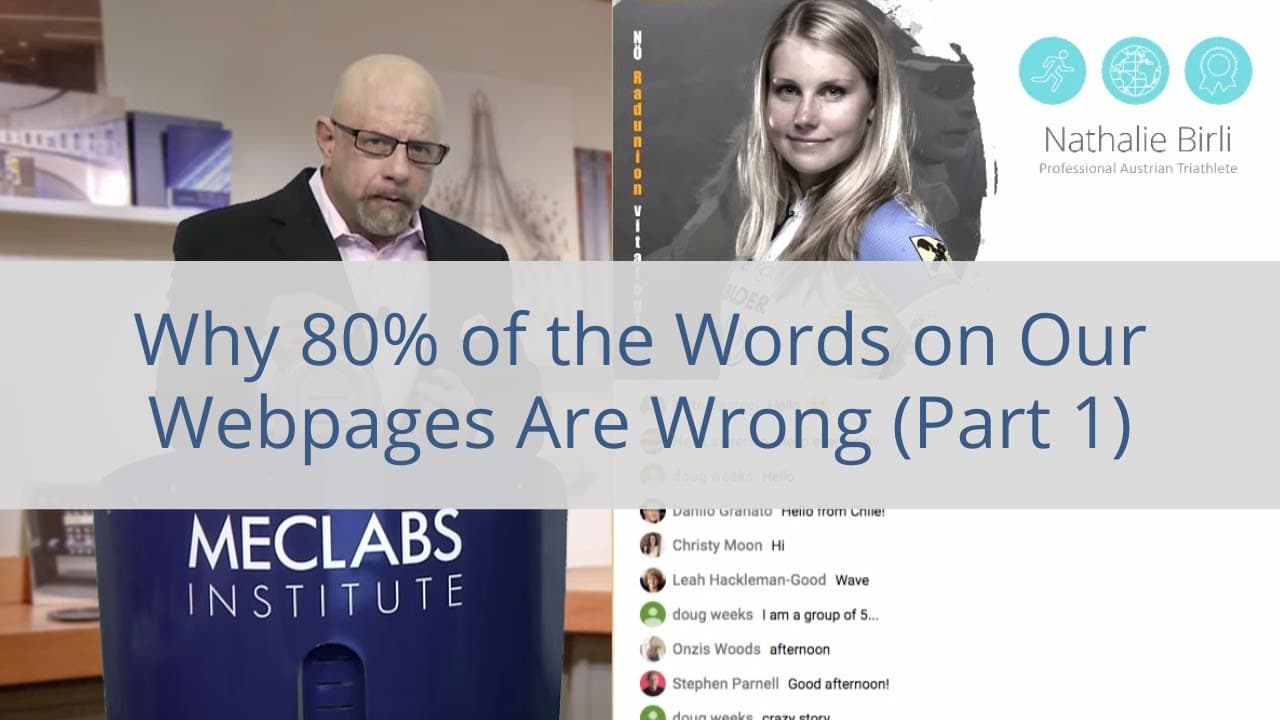
I think I'm gonna start with a page that had the video honey yeah good morning or good afternoon depending on where you're tuning in I see familiar faces already joining us and I'm willing to get immediately into the content but it's good to see Nate and Doug and Ilan and Brian and others that I see on here regularly please notice the topic why 80%... Read More
Key Insights
- Marketing is the process of taking another person on a journey through conclusions that motivate behavior. This definition extends beyond promotional tactics because people continually make choices and depend on choices made by others within social relationships.
- Business is founded on relationships with prospective customers. Website copy therefore functions as communication inside a relationship, and its effectiveness depends on how successfully it influences perception, conclusions, and choice rather than on how impressive its vocabulary sounds.
- Rapport is established by changing what another person observes. Natalie drew her attacker’s attention toward his orchids and work, which altered the focus of their interaction and created an opening for him to perceive her differently.
- An honest compliment can create connection without relying on fabricated praise. Natalie’s admiration of the orchids prompted her attacker to respond through identity, saying that he was a gardener, and the reported attitude of the interaction subsequently changed.
- Identity can be activated indirectly through observations about a person’s work. By complimenting the orchids rather than making a direct claim about their owner, Natalie prompted him to connect the quality of his work with his sense of self.
- Company-centered copy concentrates on statements such as who the business is, where it is based, and what expertise it possesses. The reviewed Honeyweb page used this pattern, creating an opportunity to redirect more of the communication toward the prospective customer.
- Grand claims can produce instinctive resistance when customers feel that a business is trying to convince or manipulate them. Copy can reduce that resistance by using implication and helping readers reach conclusions instead of insisting that they accept promotional assertions.
- Conversion develops through a sequence of small agreements. Effective copy eases the transition from one micro-yes to the next, addresses natural friction in the process, and gradually supports the larger decision that turns a prospective customer into a customer.
Install to Summarize YouTube Videos and Get Transcripts
Explore YouTube Video Summarizer or Get YouTube Transcript Extractor
Questions & Answers
Q: How do you write web copy that builds rapport?
Web copy builds rapport by directing attention toward the prospective customer’s situation and changing what the person observes about the offer. Begin with relevant, honest communication that helps the reader recognize a connection between a need and the proposed solution. Then guide the reader through a sequence of conclusions and small agreements instead of opening with a long list of company-centered claims.
Q: Why is company-centered website copy less effective?
Company-centered copy focuses on statements about who the business is, where it operates, and what expertise it claims. The Honeyweb example begins with a customer question but quickly moves into statements about the company and its specialists. This approach can be improved by focusing more closely on the prospective customer’s observations, needs, conclusions, and progression toward a decision.
Q: What is the role of rapport in conversion copy?
Rapport creates an opening for a prospective customer to perceive the communicator and the proposed solution differently. In the story used for instruction, Natalie first changed her attacker’s observation set and then began establishing a connection. Applied to business, the principle means that copy should create relational understanding before expecting a reader to accept claims or make a larger commitment.
Q: How can an honest compliment influence perception?
An honest compliment can redirect attention and connect a person’s work with that person’s identity. Natalie noticed and admired the orchids, which prompted her attacker to say that he was a gardener. That response marked a shift from the initial situation toward a more personal connection. The teaching emphasizes genuine observation, not a false compliment designed merely to manipulate someone.
Q: Why should copy guide conclusions instead of forcing claims?
Guiding conclusions can reduce the pushback people feel when a business uses grand words to convince them. The description presents implication as a way to win positions in the customer’s mind and contrasts aiming at conclusions with forcing claims. Effective copy supplies relevant observations and lets readers connect those observations to the value of the proposed solution for themselves.
Q: What does changing the observation set mean in marketing?
Changing the observation set means directing a person’s attention toward information that can support a different perception, attitude, or choice. Natalie shifted attention to the attacker’s orchids and his work as a gardener. For website copy, the same principle means selecting and ordering words so prospective customers notice the details that help them understand the solution and reach useful conclusions.
Q: What are micro-yeses in a conversion process?
Micro-yeses are the smaller agreements or transitions that lead toward the final yes of becoming a customer. The description says effective marketing should ease movement from one micro-yes to the next while addressing the organic friction in the process. Copy should therefore support a gradual decision journey instead of expecting one promotional claim to produce an immediate commitment.
Q: How does marketing influence customer choice?
Marketing influences choice by taking a prospective customer through a series of conclusions that motivate behavior. The teaching frames this as a pattern found in human relationships, where people are continually choosing and being chosen. In business communication, word choice and word order should help readers perceive value, establish rapport, move through small agreements, and arrive at a larger decision.
Summary & Key Takeaways
-
Effective marketing influences choice by guiding a person through a series of conclusions that motivate behavior. Because businesses depend on relationships with prospective customers, webpage copy should be treated as part of a real social interaction, not merely as promotional text filled with impressive descriptions of the company and its services.
-
Natalie’s escape story illustrates how changing another person’s observations can change an attitude. Her honest compliment about the attacker’s orchids shifted attention to his work, prompted him to identify himself as a gardener, and opened a form of connection. The lesson extracted from the story is that rapport begins with perception.
-
Business webpages often lead with company-centered statements such as who the business is, where it operates, and what expertise it claims. More effective copy should consider the customer’s observation set, use implication instead of forcing claims, and guide the reader from one small agreement to another until a larger decision becomes possible.
Read in Other Languages (beta)
Share This Summary 📚
Summarize YouTube Videos and Get Video Transcripts with 1-Click
Try YouTube Summary with ChatGPT & Claude or YouTube Transcript Generator
Explore More Summaries from Flint McGlaughlin 📚

Summarize YouTube Videos and Get Video Transcripts with 1-Click
Try YouTube Summary with ChatGPT & Claude or YouTube Transcript Generator