What Was the World’s First Car Like? Karl Benz’s 1886 Patent Motorcar
TL;DR
The world’s first car was Karl Benz’s Patent Motorcar, patented in 1886 and capable of 16 kilometers per hour. Its single-cylinder engine, electric-spark ignition, leather drive belt and brake were followed decades later by crash testing, crumple zones, standard seatbelts, and airbags. Read on to see how rising speeds transformed automotive safety.
Transcript
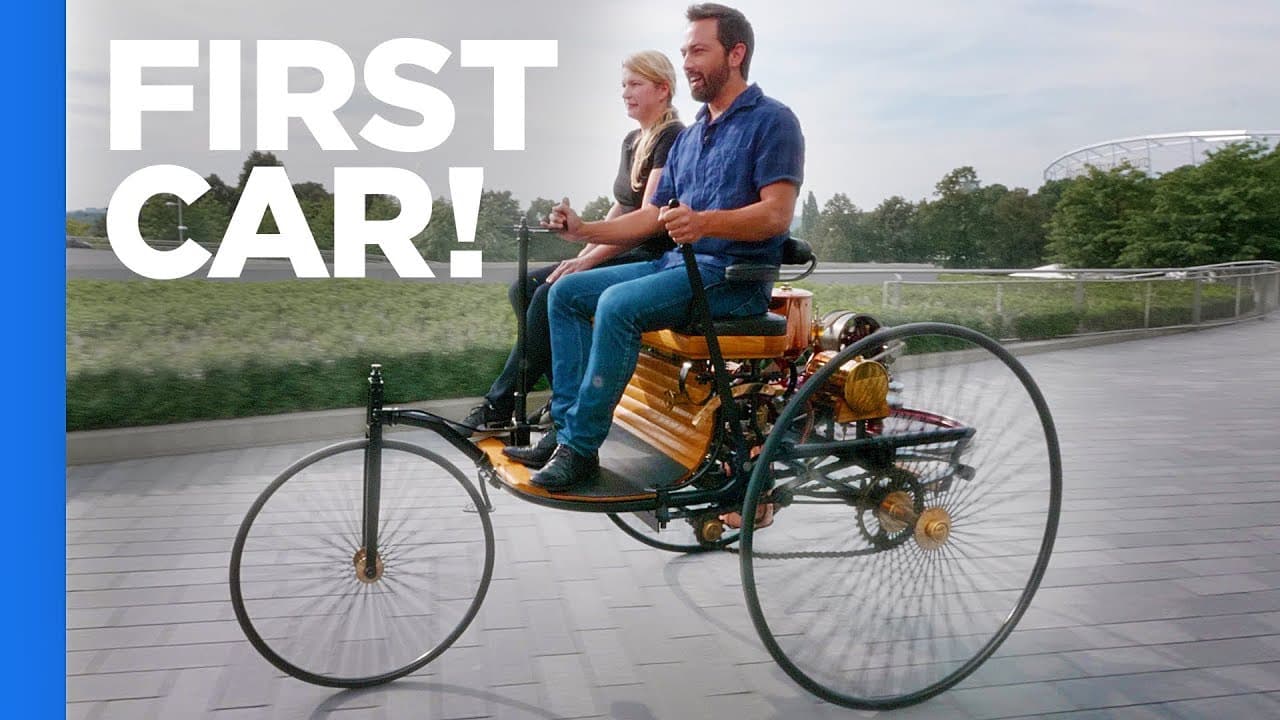
- I am about to drive the world's first car. This was invented by Karl Benz, patented in 1886. Of course, this is not the real thing, this is a replica. But I've partnered with Mercedes to make a video about car safety. - Yeah. (laughs) - Right? There's not a lot of safety here. Safety would come later. You ready? - Yeah! I trust you. (engine sputt... Read More
Key Insights
- 🚙 From the start, car safety was a concern, and early inventions like the world's first motor vehicle by Karl Benz had safety features such as an advanced ignition system.
- 🥺 The evolution of car speeds led to the realization that faster travel required improved safety measures to address the challenge of rapid deceleration during accidents.
- 😨 Major safety innovations like crumple zones, seatbelts, and airbags have significantly reduced injuries and fatalities in car accidents.
- 👻 The introduction of crash testing and the development of crash test dummies allowed for more accurate evaluation of safety measures and minimized risks to human testers.
- 👻 Active safety systems like ABS have revolutionized braking by allowing wheels to rotate instead of locking up, providing more control and maneuverability to avoid accidents.
- 🦺 Mercedes-Benz's Intelligent Drive technology continues to push boundaries in safety, performance, and convenience, showcasing the commitment of automakers to further improving road safety.
- 😨 Continued research and development in car safety are essential to address new challenges and ensure the well-being of passengers and other road users.
Install to Summarize YouTube Videos and Get Transcripts
Explore YouTube Video Summarizer or Get YouTube Transcript Extractor
Questions & Answers
Q: What was the world’s first car?
The world’s first motor vehicle shown here was Karl Benz’s Patent Motorcar, patented in 1886. The vehicle being driven is a replica rather than the original.
Q: How fast was Karl Benz’s first car?
The Patent Motorcar had a top speed of 16 kilometers per hour, or about 10 miles per hour. Just 16 years later, another car could reach 80 kilometers per hour.
Q: How did the first Patent Motorcar work?
It used a single-cylinder engine with a piston, a cooling-water tank, an oil reservoir, and a drive belt. The leather drive belt also served as the brake, while a flywheel helped start the ignition.
Q: What fuel did Karl Benz’s first car use?
The Patent Motorcar used ligroin, or gasoline. At the time, it could be purchased in German pharmacies, where it was sold as a stain remover and washing agent.
Q: Did Karl Benz’s first car have any safety features?
Its battery-powered ignition produced an electric spark to ignite the gasoline and oxygen fumes. This was safer than attempting to ignite the mixture with a lighter, although the vehicle otherwise had little safety equipment.
Q: Why did increasing car speeds create a safety problem?
Cars reached 192 kilometers per hour by 1928, while a later car set a public-road record of 432.7 kilometers per hour. At higher speeds, a sudden stop or collision produces rapid deceleration and large forces on occupants, increasing the risk of injury or death.
Q: How do crumple zones protect passengers?
Crumple zones, introduced in a car like the one shown in 1959, are front and rear regions designed to collapse during a crash. By increasing the distance over which deceleration occurs, they reduce acceleration forces on passengers while the passenger compartment remains stiffer.
Q: Why are seatbelts and airbags important for car safety?
Seatbelts keep occupants inside the vehicle so they decelerate with it instead of continuing forward when the car stops. They progressed from paid options to standard and mandatory equipment, while Mercedes-Benz first made airbags available in a serious production car in 1981.
Summary & Key Takeaways
-
The video explores the world's first motor vehicle invented by Karl Benz in 1886, emphasizing the importance of safety features that were present even in the early stages of car development.
-
It discusses key components of the first motor vehicle, including the gasoline tank, ignition system, single cylinder engine, cooling water tank, and oil reservoir.
-
The video highlights the evolution of car speeds, technological advancements, and the need for improved safety measures to address the physics of rapid deceleration during accidents.
Read in Other Languages (beta)
Share This Summary 📚
Summarize YouTube Videos and Get Video Transcripts with 1-Click
Try YouTube Summary with ChatGPT & Claude or YouTube Transcript Generator
Explore More Summaries from Veritasium 📚





Summarize YouTube Videos and Get Video Transcripts with 1-Click
Try YouTube Summary with ChatGPT & Claude or YouTube Transcript Generator