How to Optimize Small Business Websites for Google

TL;DR
To optimize small business websites for Google, ensure your site is mobile-friendly, uses proper meta tags, and has quality content. Utilize tools like Google's PageSpeed Insights and Webmaster Tools to identify and fix issues. Engage with users through social media and ensure your site is accessible to search engines for better rankings.
Transcript
MALE SPEAKER 1: Hey there. Welcome to this Hangout specifically for small and medium businesses. If you have any questions on Google search, on your website, Webmaster Tools, et cetera, we will be happy to answer your questions. Right now, we're waiting for people to join. We have a couple of questions in the Q&A app in this Hangout. We will take t... Read More
Key Insights
- Google offers tools like PageSpeed Insights and Webmaster Tools to help optimize websites.
- Mobile-friendliness is crucial for ranking well in Google search results.
- Using proper meta tags and schema markup can improve visibility in search results.
- Quality content and user engagement are key factors in improving search rankings.
- Googlebot should be treated like a user; serve the same content to both.
- Local businesses can benefit from Google My Business and local SEO strategies.
- Page speed and user experience are critical components of website optimization.
- Responsive design and viewport configuration are essential for mobile optimization.
Install to Summarize YouTube Videos and Get Transcripts
Explore YouTube Video Summarizer or Get YouTube Transcript Extractor
Questions & Answers
Q: How to make a website mobile-friendly?
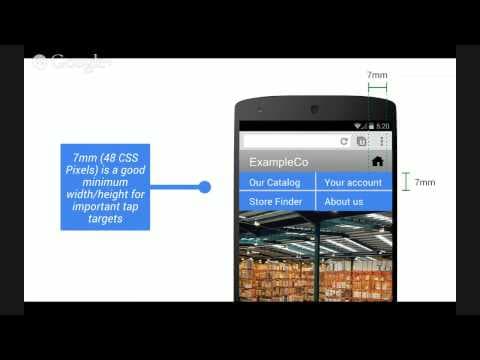
To make a website mobile-friendly, use responsive design techniques that adapt your site's layout to different screen sizes. Ensure text is readable without zooming, tap targets are appropriately sized, and content is accessible without horizontal scrolling. Use Google's mobile-friendly test tool to identify and fix any issues.
Q: What tools does Google offer for website optimization?
Google offers several tools for website optimization, including PageSpeed Insights, which analyzes page speed and user experience, and Webmaster Tools, which provides insights into search traffic and site performance. These tools help identify issues and offer suggestions for improving site visibility and user experience.
Q: How can small businesses improve local search rankings?
Small businesses can improve local search rankings by claiming and optimizing their Google My Business listing, ensuring consistent NAP (Name, Address, Phone number) information across online directories, and using local keywords in content. Additionally, gathering positive reviews and engaging with the local community online can enhance local SEO.
Q: Why is page speed important for SEO?
Page speed is important for SEO because it affects user experience and search engine rankings. Faster-loading websites provide a better user experience, leading to lower bounce rates and higher engagement. Google considers page speed as a ranking factor, so optimizing images, minimizing scripts, and leveraging browser caching can improve rankings.
Q: What is schema markup and how does it help SEO?
Schema markup is a type of structured data that helps search engines understand the content on your website. It can enhance search results with rich snippets, like star ratings and event details, making your site more attractive and informative in search results. Implementing schema can improve visibility and click-through rates.
Q: How can I ensure Googlebot can crawl my website?
To ensure Googlebot can crawl your website, check your robots.txt file to avoid blocking important resources like CSS and JavaScript. Use the 'Fetch as Google' tool in Webmaster Tools to see how Googlebot views your site. Ensure all important content is accessible and not hidden behind login forms or scripts.
Q: What are best practices for mobile site navigation?
Best practices for mobile site navigation include using a simple, intuitive menu structure, ensuring tap targets are large enough to be easily clickable, and minimizing the number of clicks required to reach important content. Consider using a hamburger menu icon to save space and maintain a clean, uncluttered design.
Q: How does responsive design benefit SEO?
Responsive design benefits SEO by providing a consistent user experience across all devices, which can lead to increased engagement and lower bounce rates. It simplifies URL management by using a single URL for all devices, making it easier for Google to index and rank your content, thus improving search visibility.
Summary & Key Takeaways
-
Google provides various tools to help small businesses optimize their websites for better search rankings. Key tools include PageSpeed Insights and Webmaster Tools, which offer insights into mobile-friendliness and page speed. Ensuring a mobile-friendly design and using proper metadata are vital for improving visibility.
-
Local businesses should utilize Google My Business and focus on local SEO strategies to enhance their presence in local search results. Additionally, engaging with users through social media and ensuring the website's technical accessibility are important for overall SEO success.
-
Quality content and a good user experience are essential for maintaining and improving search rankings. Websites should focus on providing valuable information to users and ensuring that Googlebot can access all necessary resources, such as JavaScript and CSS files, to render pages correctly.
Read in Other Languages (beta)
Share This Summary 📚
Summarize YouTube Videos and Get Video Transcripts with 1-Click
Try YouTube Summary with ChatGPT & Claude or YouTube Transcript Generator
Explore More Summaries from Google Search Central 📚




Summarize YouTube Videos and Get Video Transcripts with 1-Click
Try YouTube Summary with ChatGPT & Claude or YouTube Transcript Generator