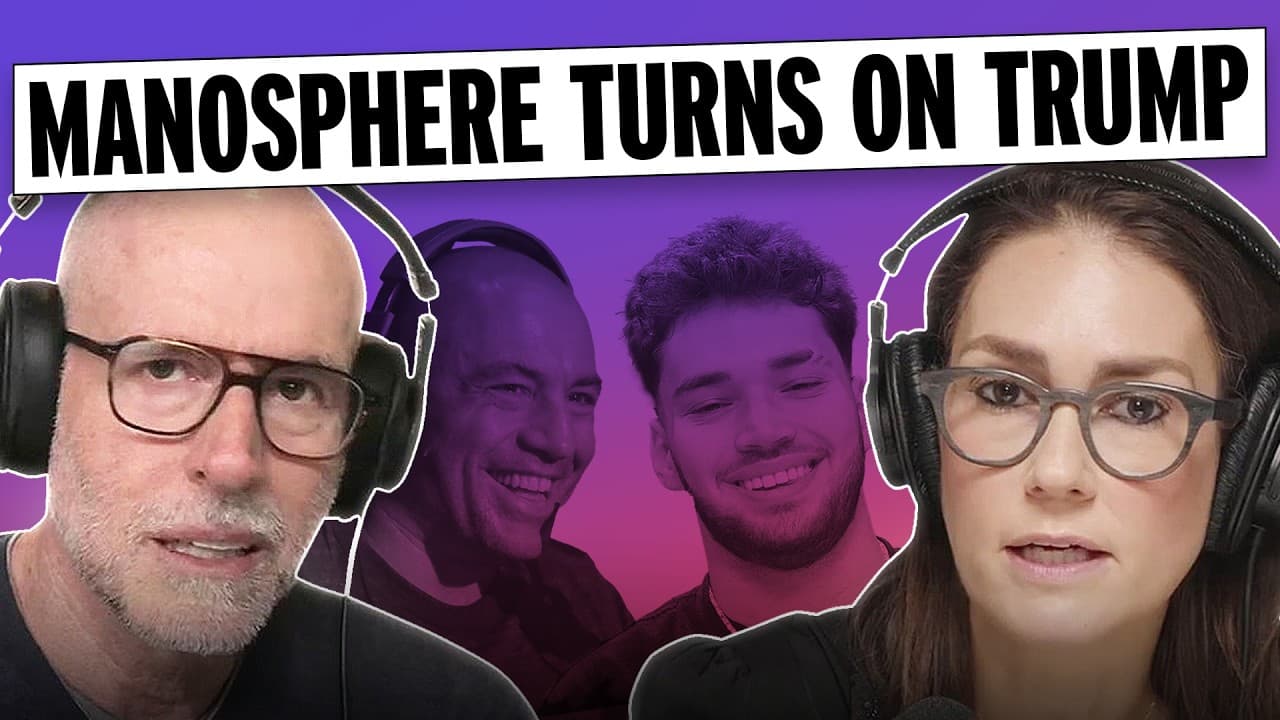
Why Are the Manosphere Bros Dumping Trump? | Raging Moderates
TL;DR
Voters are rejecting Trump’s proposed National Guard deployments because the discussion portrays them as unlawful federal overreach unsupported by conditions on the ground. Illinois and Oregon sued, a federal judge blocked troops from entering Portland, and polls cited by Raging Moderates show most voters disapprove. Read on for the potential electoral consequences, limits of public resistance, and effects on immigration enforcement and other public-safety priorities.
Transcript
The Trump administration is facing a legal standoff over its push to deploy National Guard troops to Democrat-led cities, including Chicago and Portland. Illinois and Oregon have sued, calling the deployments patently unlawful. And a federal judge recently blocked troops from going to Portland, calling the president's claims about unrest simply unt... Read More
Key Insights
- The National Guard deployment plan faces both legal and political resistance. Illinois and Oregon sued the administration, a federal judge blocked troops from entering Portland, and the discussion cites polling showing that most voters disapprove of deploying the Guard to Democrat-led cities.
- Political backfire can mean electoral losses or sustained public resistance. Tarlov expects Republicans could lose the midterms, but she argues that protests and other tangible responses have not matched the severity of what she considers an authoritarian expansion of federal power.
- Federal enforcement encounters are prompting residents to intervene through filming and public pressure. Tarlov describes a Chicago incident in which people left their cars, recorded two ICE officers attempting an arrest, shouted at them, and watched the officers abandon the effort after seven or eight minutes.
- Undocumented workers often possess extensive records connecting them to American institutions. Galloway lists phone contracts, driver’s licenses, insurance agreements, W-2s, Social Security numbers, tax records, bank accounts, and credit cards while arguing that the label "undocumented" obscures their established economic and social presence.
- Immigrant labor supports industries that affect household costs and daily life. Galloway argues that immigrants perform substantial work in caregiving, restaurants, gardening, housekeeping, and home construction, helping families keep relatives at home, dine out, and obtain housing at lower prices.
- American citizens can be caught in immigration enforcement actions, according to examples discussed by the hosts. Tarlov cites an Alabama construction worker allegedly arrested twice despite presenting Real ID, along with citizens removed from their beds during a Chicago apartment raid involving helicopters and restrained children.
- Immigration arrest quotas can redirect resources from other public safety work. Tarlov says personnel are being moved away from investigations involving drug smuggling, sexual exploitation, and organized crime to support Steven Miller’s stated goal of arresting 3,000 people each day.
- Trump is portrayed as disconnected from important policy details inside his administration. Tarlov says he reportedly did not know about a $187 million reduction to New York’s counterterrorism budget or details concerning projected Affordable Care Act premium increases, while Steven Miller and Russ Vought direct major initiatives.
Install to Summarize YouTube Videos and Get Transcripts
Explore YouTube Video Summarizer or Get YouTube Transcript Extractor
Questions & Answers
Q: Why are voters rejecting Trump’s National Guard deployments?
The discussion says most voters disapprove because the deployments to Democrat-led cities are viewed as federal overreach. Illinois and Oregon called them patently unlawful, while a federal judge said Trump’s claims about unrest in Portland were untethered to the facts.
Q: Why are the National Guard deployments facing lawsuits?
Illinois and Oregon sued over the administration’s attempt to deploy National Guard troops to cities including Chicago and Portland. A federal judge blocked troops from entering Portland after rejecting the president’s description of local unrest.
Q: How could the Guard deployments backfire politically for Trump?
Jessica Tarlov predicts Republicans will lose the midterms, although she notes that such losses would also follow historical patterns. She distinguishes that electoral result from a broader backlash involving sustained protests and enough public pressure to make the administration reconsider.
Q: Why do the hosts believe public resistance has been limited?
Tarlov says private anger expressed through conversations, calls, and texts has not consistently become tangible public action. She considers the No Kings protests too sporadic for the scale of the government overreach she describes.
Q: What happened when Chicago residents filmed an attempted ICE arrest?
Tarlov describes two ICE officers leaving an SUV and trying to handcuff a person she presumed was a migrant. People exited their cars, filmed the officers, and shouted at them until the officers abandoned the effort after about seven or eight minutes.
Q: What documents do undocumented workers possess, according to Scott Galloway?
Galloway lists phone contracts, driver’s licenses, insurance agreements, W-2s, Social Security numbers, tax records, bank accounts, and credit cards. He argues that the term “undocumented” obscures their extensive records and connections to American institutions.
Q: How does immigrant labor affect household costs and the economy?
Galloway says immigrant workers fill roles in caregiving, restaurants, gardening, housekeeping, and home construction. He argues that this labor helps families afford home care and dining while making housing less expensive, contrasting a $400,000 home with one costing $700,000.
Q: What other public-safety priorities may be affected by immigration enforcement?
Tarlov argues that personnel are being redirected from investigations involving drug smuggling, sexual exploitation, and organized crime to support immigration arrests. The existing discussion also presents domestic troop deployments as a distraction from counterterrorism and other national-security priorities.
Summary & Key Takeaways
-
The Trump administration faces a legal standoff over efforts to deploy National Guard troops to Democrat-led cities. Illinois and Oregon sued, while a federal judge blocked troops from entering Portland and rejected the administration’s characterization of local unrest. The hosts distinguish potential electoral consequences from broader public resistance to alleged authoritarian overreach.
-
The discussion portrays aggressive immigration enforcement as harmful to immigrants, citizens, local communities, and economically important industries. The hosts cite confrontational arrests, masked agents, detention of American citizens, and a Chicago apartment raid. They also argue that immigrant workers have long supported construction, restaurants, caregiving, and other parts of the economy.
-
Tarlov and Galloway argue that domestic deployments and immigration arrest targets divert federal personnel and attention from counterterrorism, organized crime, drug smuggling, sexual exploitation, Gaza, and Russia. Tarlov further contends that Steven Miller and Russ Vought exercise substantial operational influence while Trump remains poorly informed about policy details and economic conditions.
Read in Other Languages (beta)
Share This Summary 📚
Summarize YouTube Videos and Get Video Transcripts with 1-Click
Try YouTube Summary with ChatGPT & Claude or YouTube Transcript Generator
Explore More Summaries from The Prof G Pod – Scott Galloway 📚




Summarize YouTube Videos and Get Video Transcripts with 1-Click
Try YouTube Summary with ChatGPT & Claude or YouTube Transcript Generator