How to Fade White Spots from Sun Damage Effectively
TL;DR
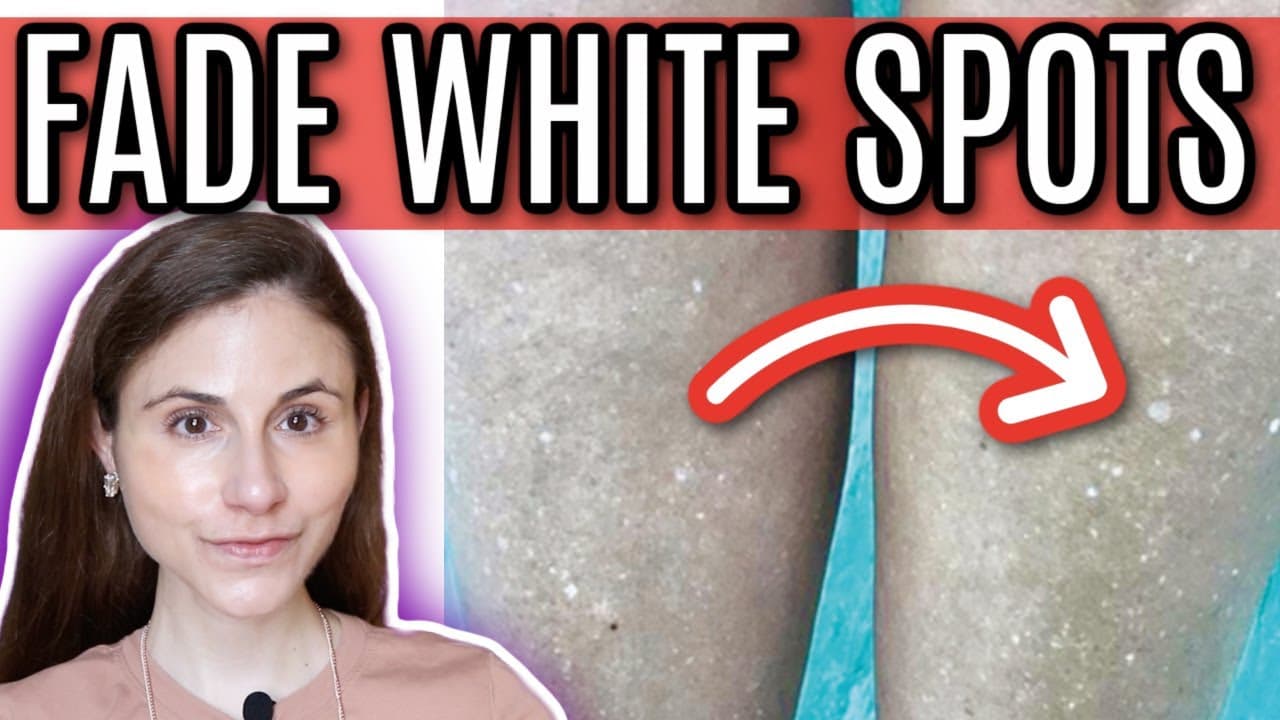
To effectively fade white spots caused by sun damage, known as idiopathic guttate hypomelanosis, protect your skin with sunscreen and sun-protective clothing. Topical treatments like tretinoin can help improve the appearance of these spots, while professional procedures such as cryotherapy, lasers, and chemical peels may provide further benefits for more significant results.
Transcript
well hey guys in today's video i'm going to be telling you all about how to fade white spots from sun damage most people are aware of the fact that the uv rays from the sun lead to increased pigmentation whether that be it from a tan or sun spots darkening of freckles but comment below did you know that sun damage can also lead to white spots what ... Read More
Key Insights
- 😷 "Idiopathic guttate hypomelanosis" is the medical term for white spots caused by sun damage.
- 🤍 Sun protection is crucial in preventing more white spots from forming.
- 🤍 Topical treatments like tretinoin and protopic, as well as in-office procedures like cryotherapy and lasers, can help fade white spots.
- ❓ Using topical treatments with vitamin A, such as adapalene and retinol, may also be effective.
- ❓ Chemical peels with trichloroacetic acid or phenol can stimulate repigmentation.
- 😎 Treating white spots from sun damage can be challenging and may require more intensive treatments.
- 🤕 Most adults over the age of 50 have these white spots in sun-exposed areas.
Install to Summarize YouTube Videos and Get Transcripts
Explore YouTube Video Summarizer or Get YouTube Transcript Extractor
Questions & Answers
Q: What causes white spots from sun damage?
White spots, known as idiopathic guttate hypomelanosis, are caused by a combination of skin aging and UV exposure. They commonly occur on sun-exposed areas like the forearms, lower legs, upper chest, and sides of the face.
Q: How can I prevent white spots from sun damage?
The most important prevention measure is protecting the skin from the sun. This includes daily use of broad-spectrum sunscreen and wearing sun-protective clothing, such as long sleeves and driving gloves.
Q: Can topical treatments improve white spots from sun damage?
Yes, topical treatments like tretinoin, a prescription form of topical vitamin A, can help fade white spots. Other forms of topical vitamin A, such as adapalene and retinol, may also be effective. Protopic, a prescription medication for eczema, can also improve these spots.
Q: Are there any in-office procedures to treat white spots from sun damage?
Yes, procedures like cryotherapy, lasers (such as CO2 laser and eczema laser), and chemical peels (using trichloroacetic acid or phenol) can help fade white spots. These procedures should be performed by a dermatologist.
Summary & Key Takeaways
-
White spots from sun damage, known as idiopathic guttate hypomelanosis, are small, flat spots that commonly appear on sun-exposed areas like the forearms, lower legs, upper chest, and sides of the face.
-
Protecting the skin from the sun with sunscreen and sun-protective clothing is crucial in preventing more white spots from forming.
-
Topical treatments like tretinoin, topical vitamin A, and procedures like cryotherapy, lasers, and chemical peels can help fade these white spots.
Read in Other Languages (beta)
Share This Summary 📚
Summarize YouTube Videos and Get Video Transcripts with 1-Click
Try YouTube Summary with ChatGPT & Claude or YouTube Transcript Generator
Explore More Summaries from Dr Dray 📚



Summarize YouTube Videos and Get Video Transcripts with 1-Click
Try YouTube Summary with ChatGPT & Claude or YouTube Transcript Generator