What Are the Best Protocols for Building Strength and Muscle?
TL;DR
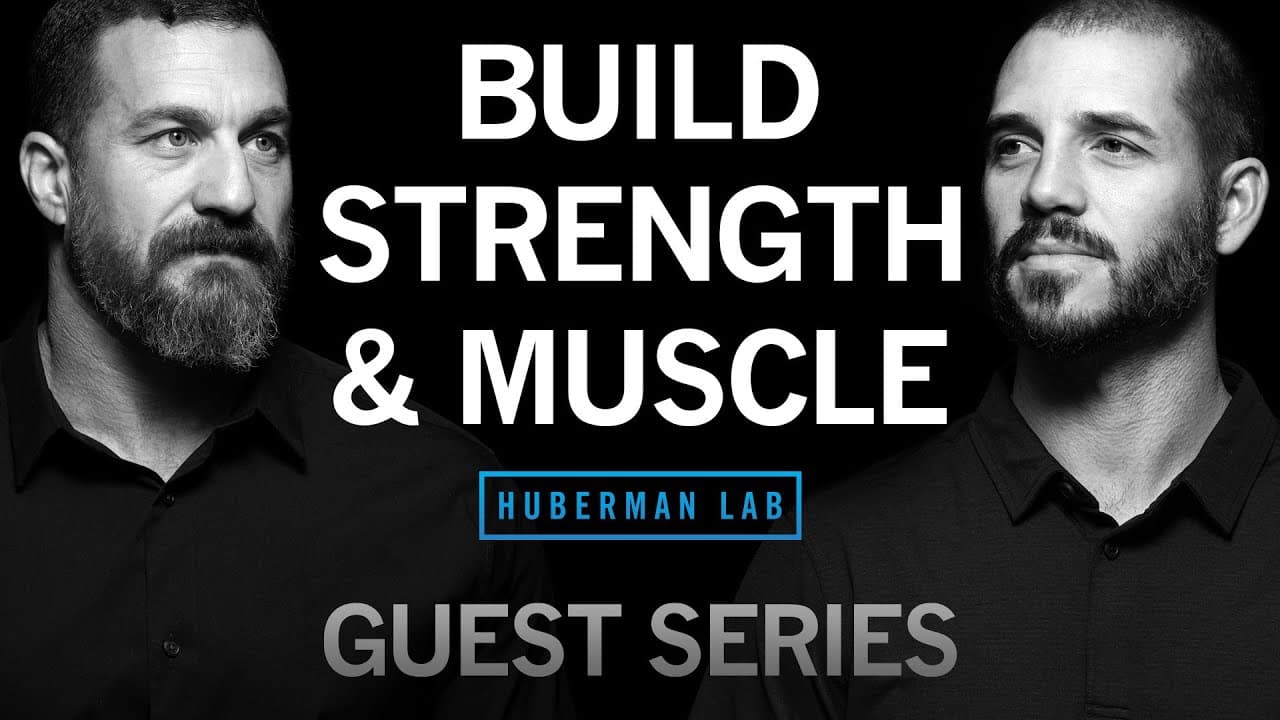
To effectively build strength and muscle, focus on a balanced training protocol that includes progressive overload, compound movements, and adequate recovery. Strength training preserves neuromuscular function and combats aging, while hypertrophy training increases muscle size and improves overall performance. Both training types involve adaptations in the neuromuscular system and are beneficial for individuals of all ages.
Transcript
welcome to the huberman lab guest Series where I and an expert guest discuss science and science-based tools for everyday life I'm Andrew huberman and I'm our professor of neurobiology and Ophthalmology at Stanford school of medicine today marks the second episode in the sixth episode series with Dr Andy Galpin a professor of kinesiology at Cal Sta... Read More
Key Insights
- 🤕 Strength training benefits people of all ages and fitness levels, as it helps preserve neuromuscular function and combat neuromuscular aging.
- 📶 Training for strength and hypertrophy can improve muscle power, strength, aesthetics, energy levels, and overall physical performance.
- 💪 Strength training is crucial for maintaining a healthy neuromuscular system, while hypertrophy training increases muscle size and improves muscular endurance.
- 💪 Both training modalities involve adaptations in the neuromuscular system, muscle fibers, and connective tissues.
- 🎙️ More videos with Andy Galpin:
Install to Summarize YouTube Videos and Get Transcripts
Explore YouTube Video Summarizer or Get YouTube Transcript Extractor
Questions & Answers
Q: Why should people train for strength and hypertrophy?
Strength training helps preserve neuromuscular function, combat neuromuscular aging, and improve muscle power and strength. Hypertrophy training increases muscle size, improves aesthetics, and enhances overall physical performance.
Q: Can strength training help keep your nervous system healthy?
Yes, strength training is the only exercise route available for maintaining and improving the health and function of the neuromuscular system. It enhances neuromuscular activation, synchronization, and motor unit recruitment.
Q: Does training for strength and hypertrophy lead to changes in ligaments and tendons?
Training for strength and hypertrophy can lead to adaptations and improvements in connective tissues, including ligaments and tendons. These adaptations help reduce the risk of stress and strain injuries.
Q: How does hypertrophy training contribute to muscle growth?
Hypertrophy training stimulates protein synthesis, leading to an increase in contractile proteins like myosin and actin. It also increases the diameter of muscle fibers to maintain spacing between these proteins.
Summary & Key Takeaways
-
In this episode of the Huberman Lab Guest Series, Dr. Andy Galpin discusses the benefits of training for strength and hypertrophy for people of all ages and fitness levels.
-
Strength training is essential for preserving neuromuscular function and combatting neuromuscular aging, as it helps maintain muscle power and strength.
-
Hypertrophy training, or muscle growth, increases muscle size and can improve aesthetics, energy levels, and overall physical performance.
-
Both strength and hypertrophy training involve adaptations in the neuromuscular system, muscle fibers, and connective tissues.
Read in Other Languages (beta)
Share This Summary 📚
Summarize YouTube Videos and Get Video Transcripts with 1-Click
Try YouTube Summary with ChatGPT & Claude or YouTube Transcript Generator
Explore More Summaries from Andrew Huberman 📚
Summarize YouTube Videos and Get Video Transcripts with 1-Click
Try YouTube Summary with ChatGPT & Claude or YouTube Transcript Generator